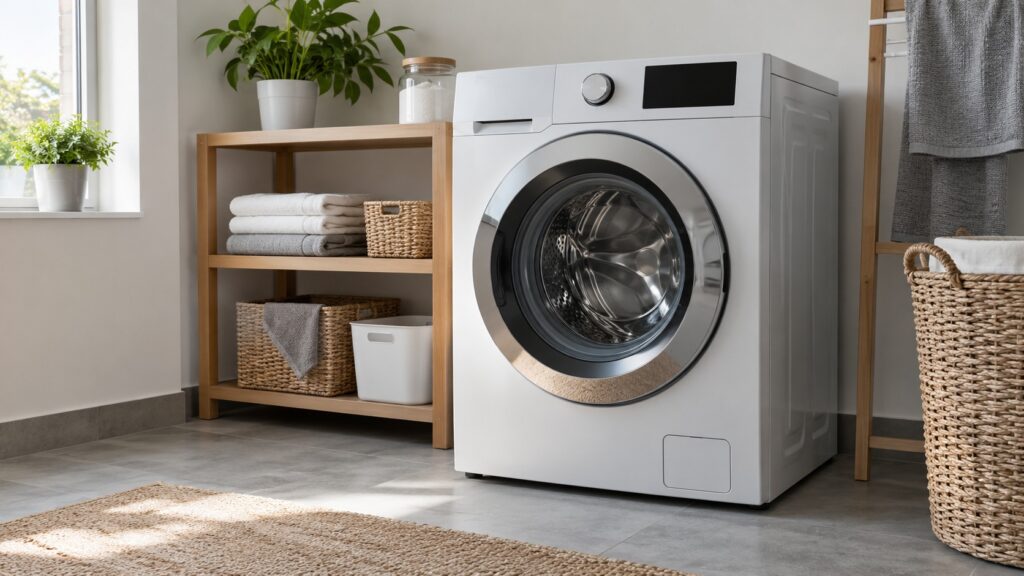
Bosch washer installation requirements come down to five things: a level, solid floor, hot and cold water connections with accessible shutoff valves, a drain that follows the manual, a correctly rated outlet and the removal of the transit bolts before the first cycle. The Bosch compact front-load washers on this site are 24 inches wide and range from 2.2 to 2.4 cu. ft., so the footprint is small, but the same rules apply as for any front-load washer. This guide covers the planning, the hookup and the first-run checks, and where to stop and call a professional.
What do you need before installing a Bosch front-load washer?
Start with the paperwork. Find the installation sheet and owner’s manual for your exact model, and note the data on the rating plate. Our model pages list the compact Bosch washers as 24-inch front-loaders: the 300 Series WAT28401UC and WAT28402UC, the 500 Series WGA24400UC, WGA252AXUC and WGA254AXUC, and the 800 Series WAP24201UC, WAW285H1UC, WAW285H2UC, WGB246AXUC and WGB24600UC. Their pages show a 1,400 RPM maximum spin speed, which matters for installation because a fast spin puts more load on the floor.
Gather the tools and parts you will need: a bubble level, an adjustable wrench, two new supply hoses if the old ones are worn, a bucket, towels and a helper. Plan the route from the front door to the laundry space, and measure the opening and the doorway. Our comparison of the 500 and 800 Series washers can help if you are still choosing, and the top-load versus front-load guide explains the trade-offs of the format.
Where should a Bosch washer go, and what must the floor be like?
Pick a spot with a solid, level floor, because a front-load washer spins quickly and any flex shows up as vibration and walking. A concrete slab or a well-supported wood floor is best. If you are installing on an upper floor, a soft subfloor or an older home, ask a contractor to check the framing before you commit. Leave the clearance that your manual asks for on the sides and behind the machine so hoses are not crushed and heat and moisture can escape.
Most manuals ask for a firm, hard floor, so avoid carpet: it traps moisture and makes leveling unreliable. If the room has no floor drain, think about a drip tray or a leak sensor, particularly above living space. AquaStop and AquaStop Plus, the leak protection named on the model pages, reduce the risk but do not replace good hoses and a dry floor. Our AquaStop glossary entry explains what the system covers.
How do you connect the water and drain?
Shut off the water valves before touching any hose. Connect the hot and cold supply hoses to the matching valves and washer inlets, hand-tight first and then only as much further as the manual says, so you do not crack a fitting. Use hoses in good condition and do not kink them behind the washer. Our washer and dryer stack installation guide recommends braided stainless steel supply hoses rather than rubber.
The drain hose goes to a standpipe or laundry sink drain. Follow the height and the loop that the installation sheet shows, so water cannot siphon out of the drum during a wash. Do not push the hose far down the standpipe or seal the joint airtight; follow the sheet for how far it should go. After the hookup, open the valves slowly and look at every connection for drips, using a dry paper towel. A hose that weeps now will not get better by itself.
Why must you remove the shipping bolts and level the washer?
A new front-load washer ships with transit bolts or braces that hold the drum still. Remove them according to the manual before running a cycle. Our stack-installation page calls this step critical, because leaving them in damages the drum suspension and the machine will shake violently. Store the bolts and the plugs somewhere safe, because moving the washer later calls for them again.
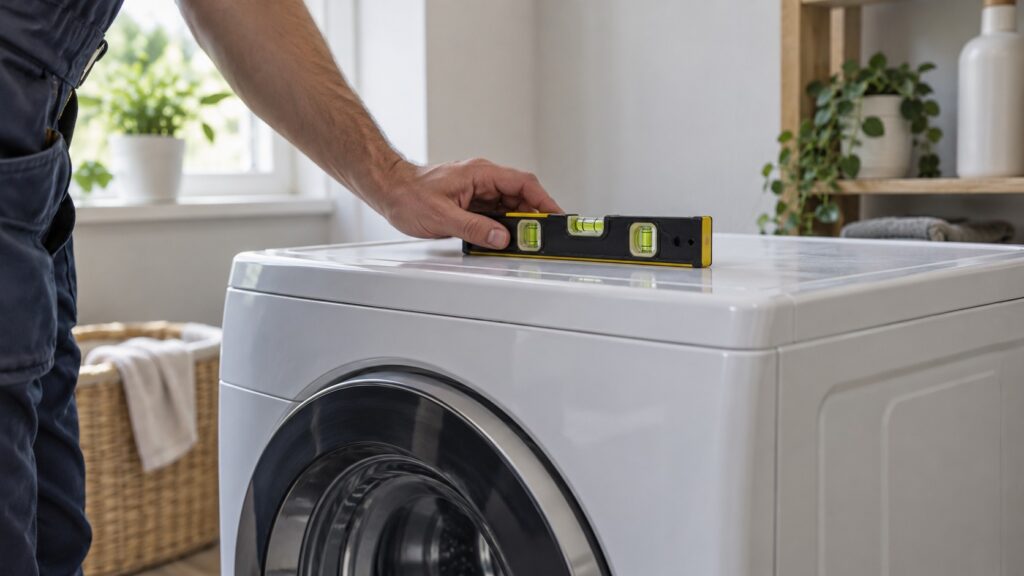
Level the washer next. Set a level on the top and adjust the feet until the machine is steady from side to side and front to back, then tighten the lock nuts on the feet. Push on each corner: there should be no rocking. If it still moves during a spin, read our guide to Bosch washer vibration issues. If you plan to stack a dryer on top, follow the manual and our washer and dryer stack installation guide, and use the stacking kit your model requires.
What about electrical power and when should you call a professional?
Electrical requirements vary by model, so rely on the rating plate and the installation sheet instead of a number from a website. Do not guess the supply from memory or from a general web page, and confirm it against your own manual and rating plate before plugging in. If the manual calls for a dedicated circuit and you do not have one, have an electrician provide it. Never use an extension cord, and never modify the plug. If the outlet does not match the cord, a licensed electrician should make the change.
Call a professional if the shutoff valves are corroded or will not close, if the drain is not accessible, if the floor is soft, or if you are not comfortable with any step that touches plumbing or wiring. If you see water near the outlet, switch the breaker off from a dry spot and stop.
What should you check on the first run?
Run a short cycle with no clothes. Watch the hoses for leaks, listen for knocking, and look at how the machine behaves at high spin. Check that the water drains fully at the end. If water stays in the drum, see our guide to Bosch washer drain pump filter cleaning, and if you find water on the floor, read about Bosch washer leaks. Keep the paperwork where you can find it, and note the model number for later.
We are an independent repair company, not the manufacturer. Our Bosch washer repair page explains how a visit works, and you can schedule a visit online if the washer misbehaves after installation.