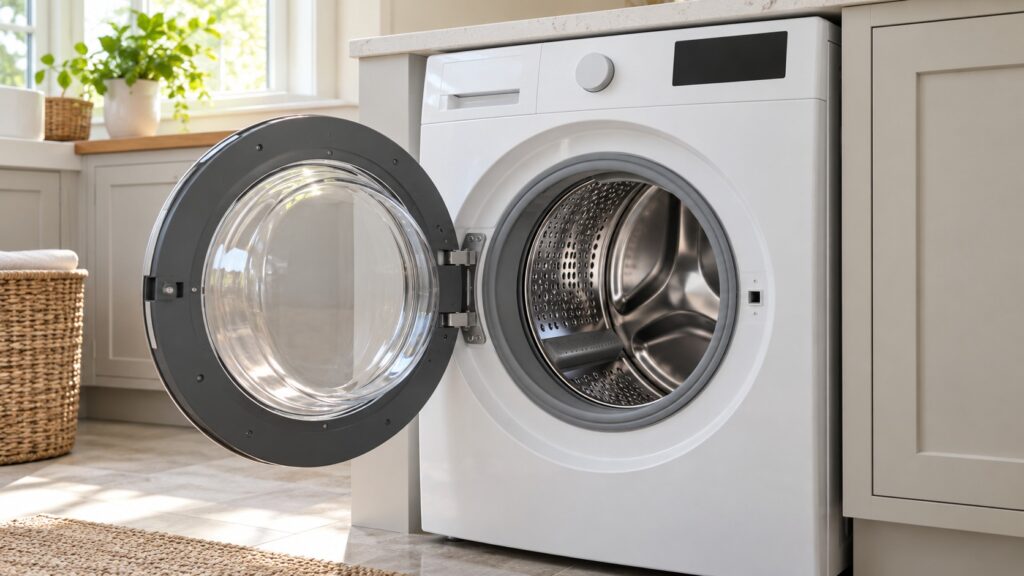
To keep a Bosch washer drum clean, run the machine’s own drum-cleaning or maintenance program if your model has one, wipe the door seal and detergent drawer, leave the door ajar between loads and use the amount of detergent your manual recommends. That short list handles most of the musty smell and gray film that owners notice inside a front-load washer. This guide explains why a drum gets dirty, what a drum-clean program is for, what you can safely do by hand, and when a smell or a leak is a service problem and not a cleaning problem.
Why does a Bosch washer drum need cleaning at all?
A washing machine cleans clothes by moving water and detergent through the drum, and some of that water and detergent stays behind. A little residue collects on the drum, in the folds of the door seal, in the detergent drawer and in the drain area. If the door is shut tight after each load, the damp interior stays warm and humid, and a film of detergent and lint can start to smell musty. High-efficiency front-load washers like the Bosch models use less water than older machines, which is good for your bills but means there is less water to rinse away residue, so a bit of upkeep matters more.
The most common causes of a smelly or dull drum are too much detergent, repeated cold or short cycles, leaving wet laundry in the machine and closing the door on a damp interior. None of these mean the washer is broken. They mean it needs cleaning and some airing out.
What is the drum-clean or maintenance cycle?
Many front-load washers include a program meant for the machine itself, run with no laundry in the drum. Owners often search for a Bosch washer maintenance cycle, and that phrase describes this idea. We cannot tell you the name of that program or how often to run it on your washer, because it differs between models and our pages do not give one name for all of them. Look for a drum-clean, tub-clean or maintenance entry in your owner’s manual, which also tells you whether to add a cleaner and which one.
When you run it, follow the manual to the letter. Run it empty, use only the product the manual names, if any, and do not add bleach and another cleaner together. Our guide on Bosch washer cycle settings explains how to read the programs on your dial or display, and is a good place to start if you cannot find the one you need.
What can you clean by hand, safely?
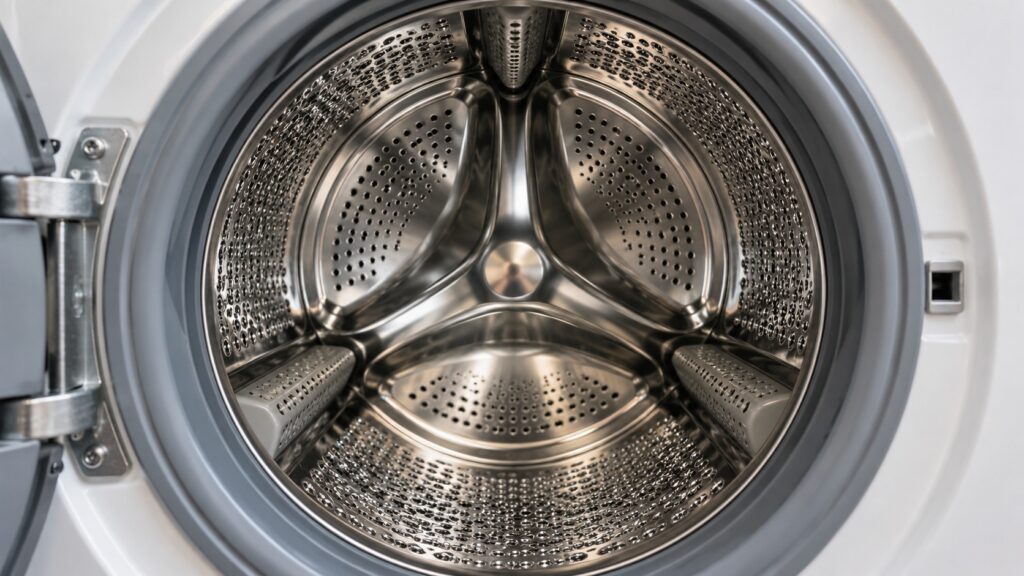
Start with the parts you can see and reach without tools. Wipe the inside of the drum with a soft cloth dampened with warm water and a little mild dish soap, and dry it. Do not use steel wool, abrasive pads or sharp tools on the stainless steel. Pull back the door seal and wipe each fold, since lint and moisture collect there; our guide on cleaning the door boot shows what to look for and what to avoid. Take care to check for small items such as socks, coins or hair ties that have slipped behind the seal.
Then look at the detergent drawer. Follow the manual to remove it if it is removable, rinse it in warm water and clean the recess it slides into; the guide on cleaning the detergent drawer covers it. Finally, the drain pump filter catches lint and small objects and needs occasional cleaning; see drain pump filter cleaning and keep towels ready, because water will come out.
What habits keep the drum clean between cleanings?
Small habits do more than any special cleaner. Leave the door and the detergent drawer slightly open after the last load so the inside can dry. Remove wet laundry as soon as the cycle ends. Measure detergent by the package instructions and the manual, not by eye, and do not add extra for a heavily soiled load unless the package says to. Use a normal cycle with warm water now and then rather than always the coldest short cycle, if the fabric care labels allow it. Wipe the seal after a load that left it visibly wet.
Also keep the washer level and the area around it dry. A machine that rocks or vibrates can slosh water onto the seal, and our guide on washer vibration issues explains how to tell a loose load from a real fault.
What should you avoid doing?
Do not mix cleaning products. Chlorine bleach combined with vinegar, ammonia or some other cleaners can release dangerous fumes. Do not pour a cleaner into the drum or the drawer unless the manual allows it for your model. Do not run a cleaning cycle with clothes in the drum, and do not use the washer to wash anything that sheds heavily and leaves a residue, such as pet bedding, without checking the manual. Never take off the cabinet or reach behind the drum; the inside of a washer holds the pump, motor and wiring, and that is a technician’s work.
If you notice water around the machine, switch off the washer’s breaker at the panel while standing on a dry floor. Do not pull a plug out of a wet outlet.
When is it more than a dirty drum?
A smell that comes back within days of a thorough cleaning, water on the floor, a drum that does not drain, a cycle that stops, black residue that keeps returning in the seal or noise from the drain area all point to something other than dirt. Our washer leak guide can help you narrow down where water is coming from. A technician can check the pump, the hoses and the seal.
We are an independent repair company, not Bosch. See our Bosch washer repair page, or schedule a visit online.