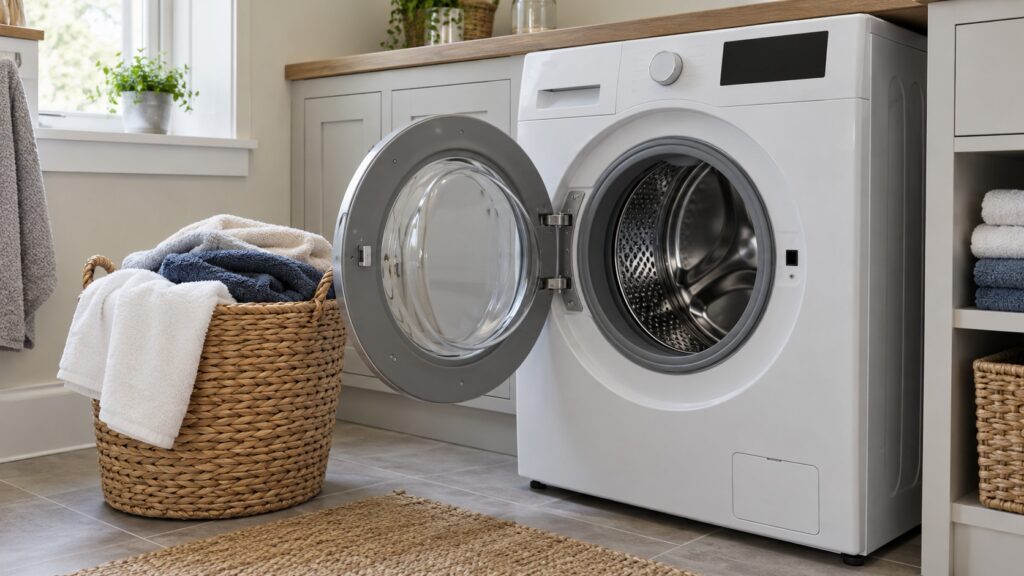
The Bosch 500 series vs 800 series washer question comes down to how much control and sensing you want, not to whether the machine will wash well. Both tiers are quiet front loaders built around the same idea of a gentle, efficient drum, so the 500 series is the sensible default for most households and the 800 series is the upgrade for people who will use its extra cycles, finer adjustments and added sensing every week.
What is the real difference between a Bosch 500 series and 800 series washer?
Bosch sorts its washers into tiers, and the tier mostly tells you how much the machine lets you adjust and how much it senses on its own. The 500 series gives you the dependable core: a front-load drum, the quiet drive Bosch is known for, a sensible set of programs and sizing that suits a stack with a matching dryer in many models. The 800 series keeps all of that and adds a richer control panel, more program choices and extra options for tuning a cycle to the fabric in the drum.
The two example models on our model list show the pattern. The WAT28402UC represents the 500 series approach, with the features most people actually use. The WAW285H1UC represents the 800 series approach, with a larger set of choices and finer control. Always confirm the exact feature list for the specific model number on the spec sheet, because Bosch changes features between production years while keeping the series name.
Which features should actually decide the purchase?
Start with what you wash. A household that does mostly towels, sheets, jeans and kids’ clothes will rarely touch a long list of specialty cycles, and the extra buttons on a higher tier become decoration. A household with a lot of delicates, activewear, wool, or items that need a precise temperature gets real value from a deeper program list and from adjustable options such as extra rinse, spin speed and temperature.
Next, think about water and noise. Both tiers are among the quieter washers on the market, and both use far less water than an old top loader, so neither choice is a bad one on that front. If the laundry room sits under a bedroom, either tier is a good fit, and the difference you will feel in practice is the interface, not the sound. Our guide to how the Bosch EcoSilence Drive works explains why the drive itself is quiet in both.
How do the cycles and controls compare day to day?
On a simpler panel you pick a main program, adjust a small number of options and press start. That is fast and hard to get wrong. On a fuller panel you can tune temperature, spin speed and soil level separately, add options such as an extra rinse, and choose from a longer list of fabric-specific programs. If you like to control the outcome, that is a pleasure. If you just want clean clothes, it is more to learn.
Whichever tier you buy, getting the settings right matters more than the badge on the door. Our Bosch washer cycle settings guide walks through what each setting changes, and it applies to both series. A good habit with any front loader is to use the right amount of detergent, leave the door ajar between loads and avoid overfilling the drum, since these three habits prevent most odor and vibration complaints.
Is the 800 series worth the extra money?
The honest answer is that it depends on use, not on the machine. A higher tier is worth paying for when you will use the extra programs and options regularly, when you want a more polished interface, or when you want the top of the range for a long-term kitchen or laundry remodel. It is not worth paying for if it simply sits on the shelf in a house where one cotton cycle runs most of the week.
Think in terms of cost per year of ownership. A well-maintained Bosch washer commonly lasts a decade or more, so a modest premium spread over that time is small. If the extra controls make you more likely to choose the correct cycle for delicate items, they can also extend the life of your clothes, which is a quiet saving of its own. Where the premium does not change how you actually do laundry, the 500 series is the better value.
What should you check before you order?
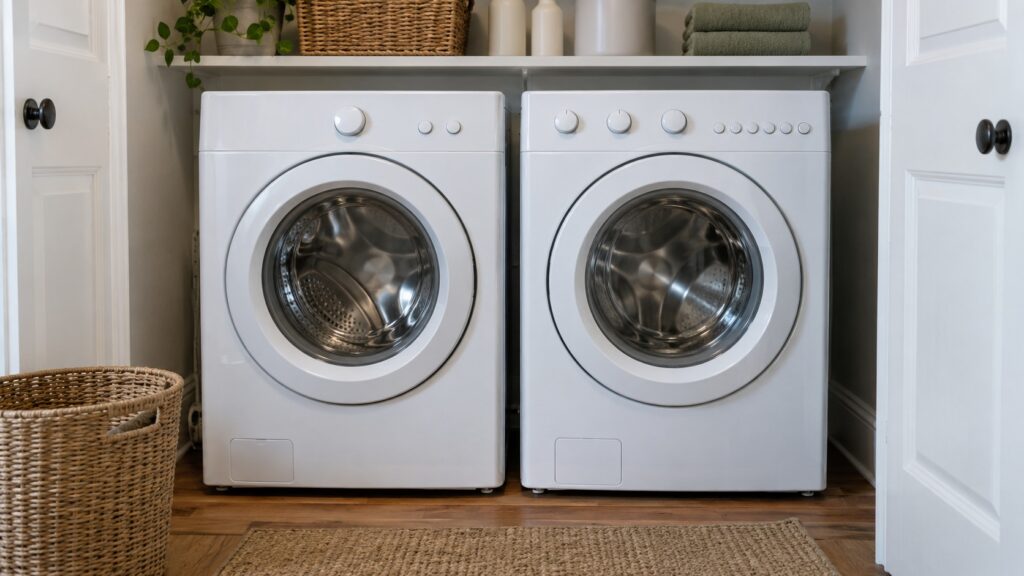
Measure the space first. Bosch front loaders suit tight rooms, but door swing, hose and drain clearance and the dryer beside or above them all matter. If you plan to stack, check that the dryer you want is compatible with the washer and that you have the correct stacking kit, since a mismatched pair cannot be stacked safely. Our guide to Bosch washer and dryer stack installation covers the steps and the clearances.
Check the hookups too. A front loader needs two water supplies with working shutoffs, a standing drain at the correct height and a grounded outlet, and it needs a level floor because a front loader that rocks will vibrate, walk and wear faster. If your floor is old, plan on a sturdy platform or a floor repair before the delivery. These small details cause more first-year problems than the difference between the two series ever will.
What if you are replacing an older Bosch washer?
If your current machine is failing, the repair-or-replace question comes first, and age is the main factor. A washer under about eight years old with a single failed part is usually worth repairing, while one with a worn bearing and a failing control board is a better candidate for replacement. Our Bosch washer repair or replace guide sets out how to decide. If you do replace it, buying the same tier you already know is the lowest-risk choice, and moving up a tier is a deliberate upgrade rather than a necessity.