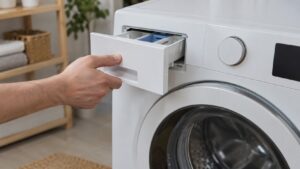
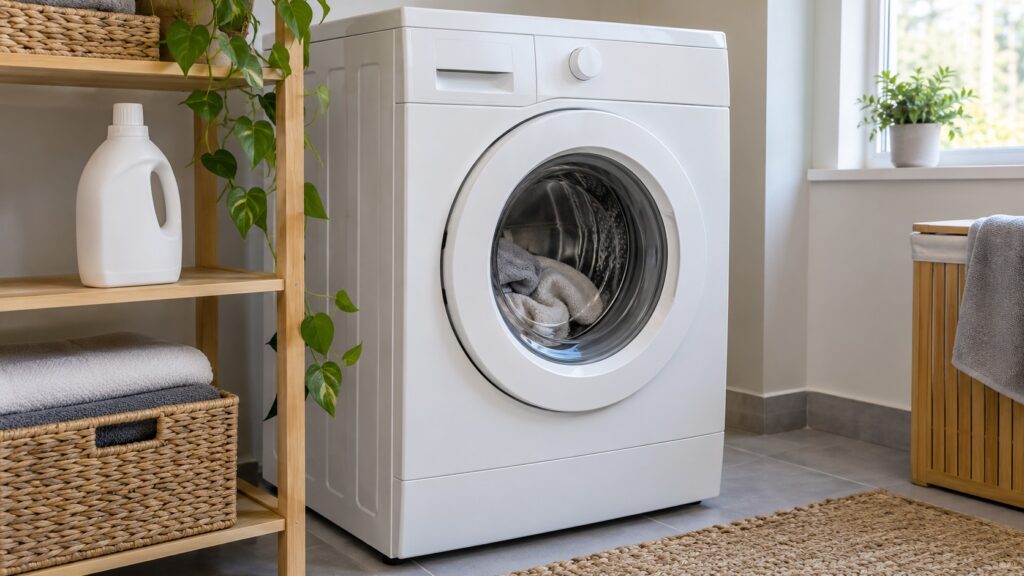
Bosch i-DOS is an automatic dosing system that measures the load and releases the right amount of liquid detergent and softener into the wash, so you stop guessing at the scoop. On the Bosch washers that have it, sensors read the load size and how dirty it is (and, on some models, the water hardness), the machine meters the liquid from built-in reservoirs, and you only refill them every so often instead of pouring detergent into the drawer for every load.
How does Bosch i-DOS decide how much detergent to use?
The washer treats dosing as one more thing to calculate, like water level. When you pick a program and start the cycle, the machine weighs the load, reads how soiled the load is, and on models that sense it takes the water hardness into account, because soft water needs less detergent than hard water. It then releases a measured amount of liquid detergent, and softener if you want it, at the point in the cycle where it does the most good. The 500 series WGA254AXUC and the 800 series WGB246AXUC use the same idea, so the benefit does not depend on the tier.
The real saving is consistency. People over-pour detergent far more often than they under-pour it, and too much detergent in a front loader leaves residue, extra suds and the musty smell that sends many owners looking for help. A metered dose avoids that without any effort on your part.
What detergent can you use in an i-DOS washer?
Use liquid detergent made for high-efficiency washers, and liquid softener if you want it. The system is described as dosing liquid detergent and softener, so powders, gel packs and pods do not belong in the reservoirs, and thick, concentrated gels can clog a metering path. Stick with one detergent for a while rather than topping one brand up with another, because some formulas thicken or separate when they are mixed in the tank. Your owner’s manual lists the detergent types Bosch approves for your model, and it is the final word on which reservoir takes what.
If you wash a load that needs something special, such as a bleach-based product or a heavy stain pretreatment, add it by hand as the manual directs rather than pouring it into the i-DOS reservoir.
How do you refill and look after the i-DOS reservoirs?
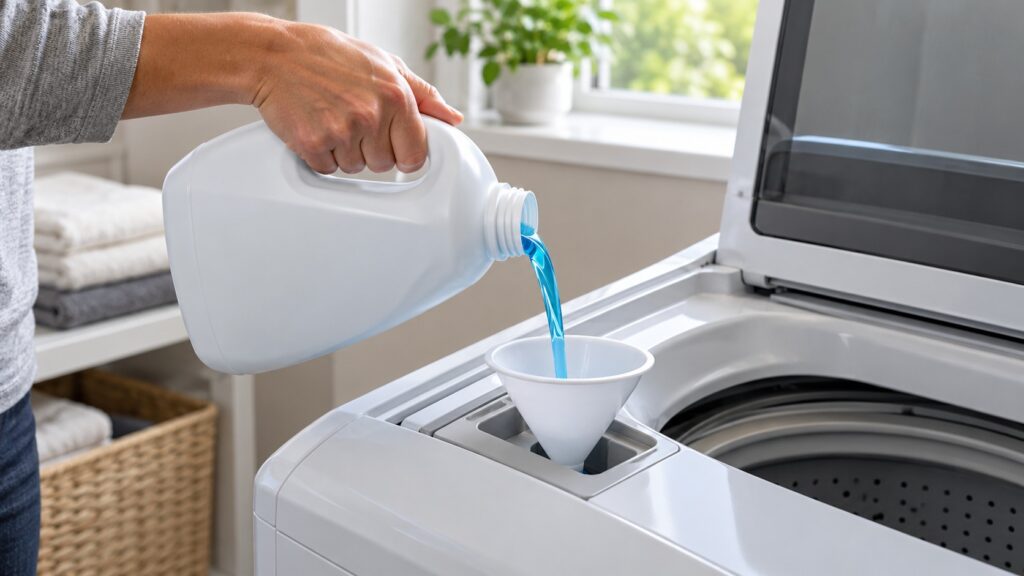
Refill each reservoir when the display tells you it is low, using a funnel if the neck is narrow and wiping any spill from the washer top before it dries into a sticky film. Do not overfill, and do not put detergent where softener belongs or the other way around; the labels on the washer and your manual show which is which. Every few months, check the reservoir openings and the area around the drawer for crusty detergent build-up and wipe it with a damp cloth.
If you go away for a long time, run the washer first so the dosing path is not sitting full of liquid that can thicken. Treat the dosing system gently and it needs almost no other care. For the rest of the washer, our guides on cleaning the Bosch washer detergent drawer and cleaning the drain pump filter cover the routine care that keeps a front loader fresh.
How does i-DOS pair with a Bosch dryer?
The WQB245BXUC heat pump dryer is listed as the matched pair for the WGB246AXUC washer. When both machines are connected to Home Connect, the washer can pass the program details to the dryer, and the dryer then suggests a suitable drying cycle for that load. It is a convenience, not a requirement; the dryer still works on its own if the washer is not connected. If you want to understand why the dryer finishes when it does, our guide to how Bosch heat pump dryers work explains the drying side.
Which Bosch washers have i-DOS, and is it worth it?
On our model list, the 500 series WGA254AXUC and the 800 series WGB246AXUC carry i-DOS, and both are compact front loaders with Home Connect and an AquaStop Plus leak protection system. It is worth having if you do a lot of laundry, if several people run the washer and sometimes over-pour, or if you simply want fewer chores. It is less compelling if you buy powder detergent in bulk or like to choose a specific product for each load. Our Bosch 500 series vs 800 series washer comparison helps you decide which tier fits your household.
What can go wrong with an automatic dosing system?
Most problems are simple. A reservoir that runs empty means nothing is dosed, and the machine will usually tell you. A thick or mixed detergent can slow the flow, and heavy residue in the dosing path needs cleaning. If you see suds, residue on the clothes or a persistent detergent smell, first confirm that you are using the right liquid and that the water hardness setting makes sense for your home. Leaks around the washer are a different matter, because the dosing system is not a water path; if you find water on the floor, switch the washer off and read our guide to Bosch washer leaks before running another load.
If the display shows a fault you cannot clear after checking the reservoirs, a visit is worth booking. Our Bosch washer repair page explains how it works.