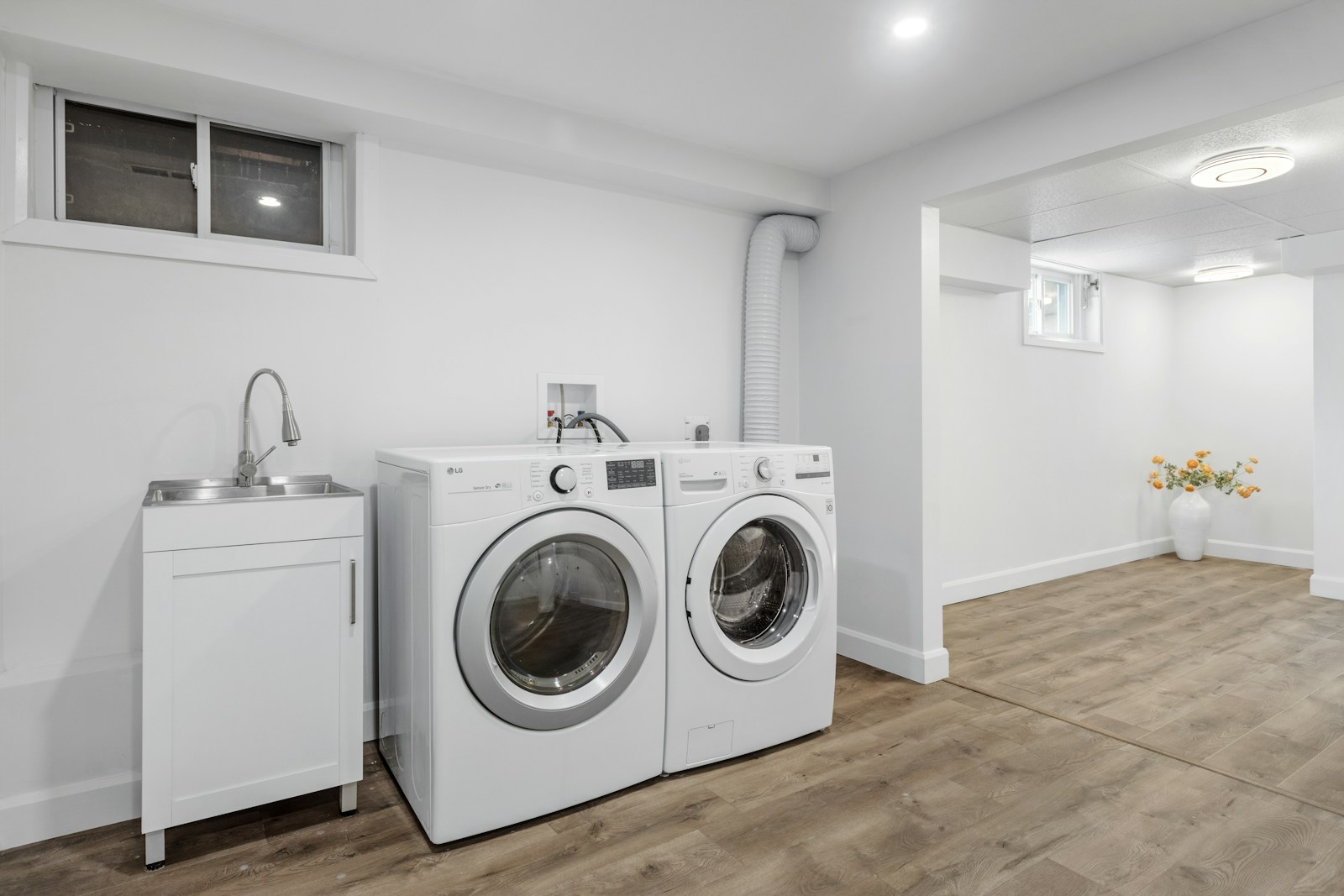
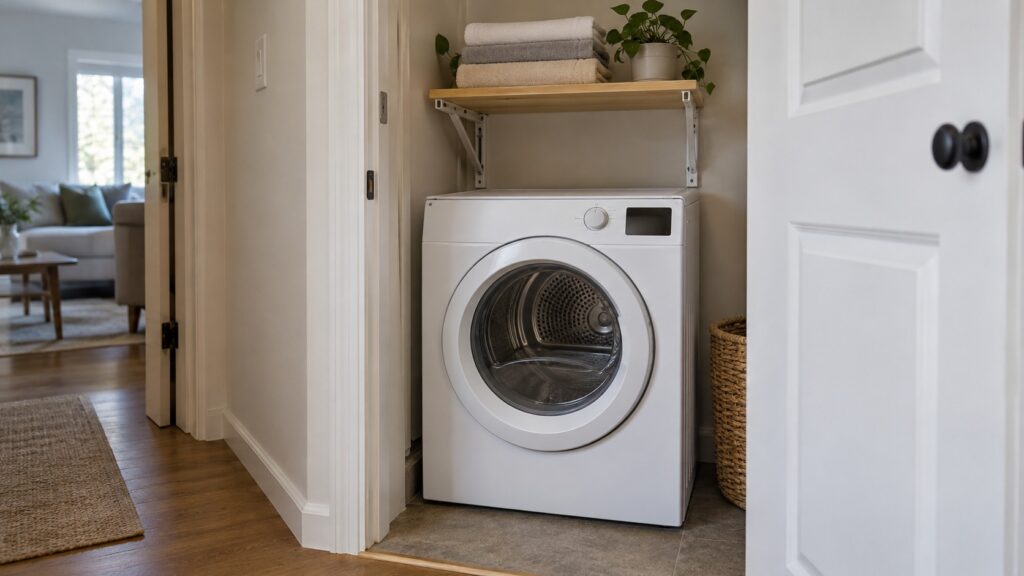
A Bosch ventless dryer installation needs no exhaust duct and no hole in the wall, but it does need a 240V outlet, a place for the water to go, a level floor and room for air to move around the machine. Every Bosch 24-inch dryer on our model list is a ventless condensation or heat pump model, so the same short list of requirements applies whether you own a 300 series WTG865H4UC or an 800 series WTW87NH3UC.
Does a Bosch dryer need a vent?
No. Bosch condensation and heat pump dryers dry the clothes in a closed loop. Warm air passes through the drum, picks up moisture, then passes over a condenser where the moisture turns back to water and the air is reused. Because the moist air never leaves the machine, there is no duct to run, which is why these dryers are popular in apartments, closets and basements. Our guide to how Bosch heat pump dryers work explains the loop in more detail. If you are looking at vent cleaning instead, that applies to vented dryers and not to this design.
Ventless does not mean zero airflow. The machine still needs room to breathe, because it takes in room air to cool the condenser. Keep the front clear and follow the clearance dimensions in the installation instructions for your model.
What electrical supply does a Bosch ventless dryer need?
The 24-inch Bosch dryers on our model list are listed at 240V, so they need a dedicated 240V circuit with an outlet that matches the plug on the cord. Do not use an adapter, a power strip or an extension cord. If the outlet is old, loose or does not match, have a licensed electrician install the correct receptacle on a circuit sized by the manual. Switch the breaker off before anyone works on the outlet, and confirm with a tester that it is dead.
Where does the water go, a tank or a drain?
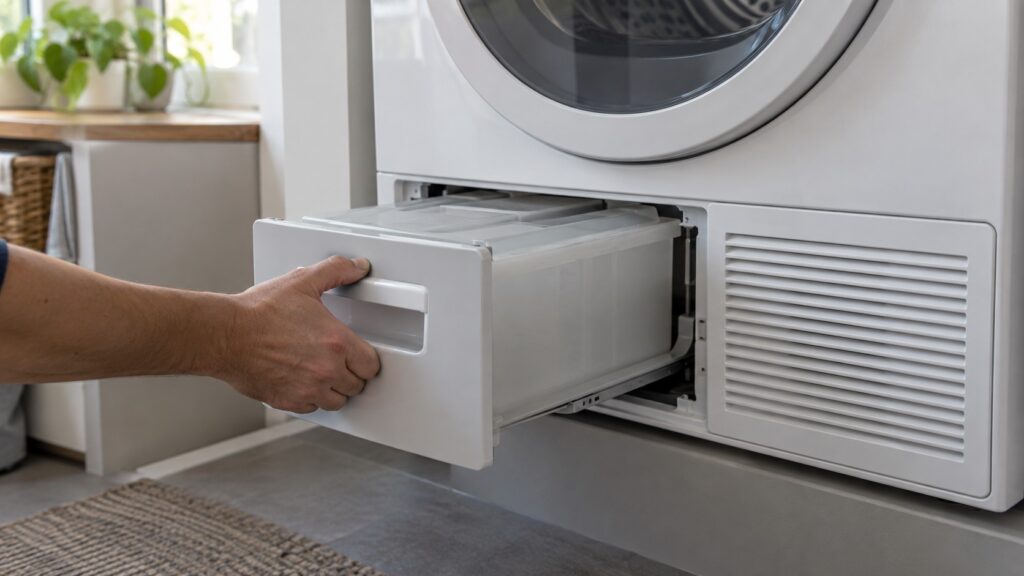
A ventless dryer removes a surprising amount of water from a load, and it has to go somewhere. On Bosch condensation models, the water is collected in a removable tank or drained straight to plumbing through the optional drain connection, as the WPG23100UC listing describes. A tank is the simplest choice: empty it after each load and the dryer needs no plumbing at all. A drain connection is the better choice if you dry a lot, because it removes the chore of emptying the tank.
If you drain to plumbing, route the hose so it rises first and then falls to a standpipe or laundry sink, secure it so it cannot slip out, and keep it free of kinks. A hose that sags into a loop can hold water and cause the machine to stop with a full-tank message.
How do you install a Bosch ventless dryer step by step?
- Pick the location. A level floor, a 240V outlet within cord reach and clearance on the sides and back as the manual specifies. Avoid a spot that gets freezing cold, because condensation dryers work best at normal room temperature.
- Unpack and remove all transit protection. Take out the foam and tape inside the drum and on the door before the first load.
- Position the dryer. Move it into place without dragging it across a finished floor and keep the door swing clear.
- Level it. Adjust the feet until the dryer does not rock in any direction, then tighten the lock nuts.
- Choose tank or drain. Slot the tank in, or fit the drain hose as described above.
- Plug in and run a short test cycle. Confirm the drum turns, warm air is produced and no error appears.
Never block the front of the machine or push a pile of laundry against it. If you plan to put the dryer inside a closet, check the manual for the ventilation opening it requires, because the machine releases a little heat and humidity into the room.
Can you stack a Bosch ventless dryer on a washer?
Yes, with the right kit and a compatible 24-inch Bosch washer. The WPG23100UC listing names the WTZ11400 stacking kit, and a mismatched kit or a dryer stacked without one is unsafe because the dryer can walk off the washer during a spin. Check both model numbers against the instructions before you buy. Our guide to Bosch washer and dryer stack installation covers the steps and the clearances, and it is worth reading before delivery day.
What should you check after the first few loads?
Look for water on the floor under the machine or the drain hose, listen for new rattles that point to an unlevel base and check that the lint filter and the tank stay clean. After the first month, clean the lint filter every load and follow the care steps in our Bosch heat pump dryer maintenance tips. If drying times start to stretch, the cause is usually airflow or the condenser, and our guide to a Bosch dryer that takes too long walks through the checks.