The Bosch dryer door seal and latch work together to keep hot air inside the drum during operation. When either component fails, you may notice hot air escaping from around the door, longer drying times, increased energy consumption, or the dryer refusing to start because the door switch does not register a closed door. This guide covers inspection, cleaning, and replacement for both components.
Bosch dryer door seal and latch system explained
The door seal is a flexible rubber or felt gasket that runs around the inside edge of the dryer door or around the drum opening on the dryer body. When the door closes, the seal compresses between the door and the cabinet, creating an airtight closure that keeps heated air circulating through the drum. The latch mechanism holds the door firmly closed against the seal. Inside the latch assembly, a door switch sends an electrical signal to the control board confirming the door is closed. If the switch does not register, the dryer will not start as a safety precaution.
Inspecting the door seal
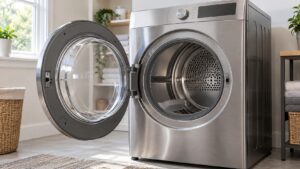
Open the dryer door and visually examine the seal around the entire perimeter. Look for cracks, tears, hard or brittle sections, areas where the seal has pulled away from its mounting channel, and flat spots where the seal no longer springs back when compressed. Run your finger along the seal to feel for gaps or thin spots that may not be visible. On Bosch dryers, the seal is typically a foam or felt strip attached with adhesive or seated in a retaining groove.
A simple test for seal integrity: with the dryer running, hold your hand around the door perimeter. If you feel warm air escaping at any point, the seal is not making full contact. This heat loss forces the dryer to run longer to reach the target moisture level, increasing energy costs and wear on the heating system.
Cleaning the door seal
Before replacing a seal, try cleaning it. Lint, fabric softener residue, and detergent buildup accumulate on the seal surface and prevent it from making clean contact with the door or cabinet. Dampen a cloth with warm water and mild dish soap, and wipe the entire seal surface. For stubborn buildup, use a soft brush. Avoid abrasive cleaners or solvents that can degrade the rubber or foam material. After cleaning, dry the seal completely and test the dryer again. Cleaning resolves about 30 percent of door seal complaints.
Replacing the door seal
If the seal is cracked, torn, or permanently compressed, replacement is necessary. Bosch dryer door seals are model-specific, so verify your model number before ordering. Replacement procedures vary by model type:
- Adhesive-mounted seals — Peel the old seal away from the door or cabinet. Clean the mounting surface thoroughly with rubbing alcohol to remove old adhesive residue. Apply the new seal starting at the top center and working around the perimeter, pressing firmly to ensure adhesion. Allow 30 minutes before closing the door to let the adhesive set.
- Channel-mounted seals — These seals press into a retaining groove and do not require adhesive. Pull the old seal out of the channel, clean the channel, and press the new seal into place. Start at the top and work evenly around both sides to prevent bunching.
Diagnosing latch problems
If the dryer door will not stay closed or bounces open after pushing it shut, the latch mechanism needs attention. The latch consists of a catch on the door and a strike on the cabinet (or vice versa depending on the model). Check the catch for cracks or a broken spring. Check the strike for bending or misalignment. A bent strike can sometimes be straightened with pliers, but a cracked catch requires replacement of the latch assembly.
If the door closes and stays shut but the dryer will not start, the door switch inside the latch assembly may have failed. Test the switch by pressing it manually with the door open. You should hear a click. If the switch does not click or feels mushy, it has failed. Test with a multimeter for continuity: the switch should show continuity when pressed and open when released.
Adjusting hinges
A misaligned door can prevent proper engagement with both the seal and the latch. If the door appears to sag or sit lower than it should, the hinge pins or hinge bushings may be worn. On most Bosch dryers, the hinges are accessible by opening the door and removing two to four screws on the hinge plate. Replace worn bushings or the entire hinge assembly if the pins are loose. Proper hinge alignment ensures the door presses evenly against the seal around the full perimeter. For Bosch-specific hinge part numbers and installation details, check the support section on bosch-home.com.
When to call a technician
Door seal cleaning and replacement are straightforward DIY projects that require no special tools. Latch catch and strike adjustments are manageable with basic pliers. Door switch replacement and hinge adjustment are moderately involved but doable with a screwdriver and multimeter. If the dryer still will not start after confirming the door switch has continuity when the door is closed, the issue may be on the control board side of the circuit. Schedule Bosch dryer repair for electrical diagnosis beyond the door switch. Schedule a certified technician for fast diagnosis.