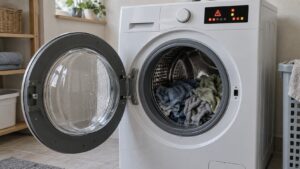
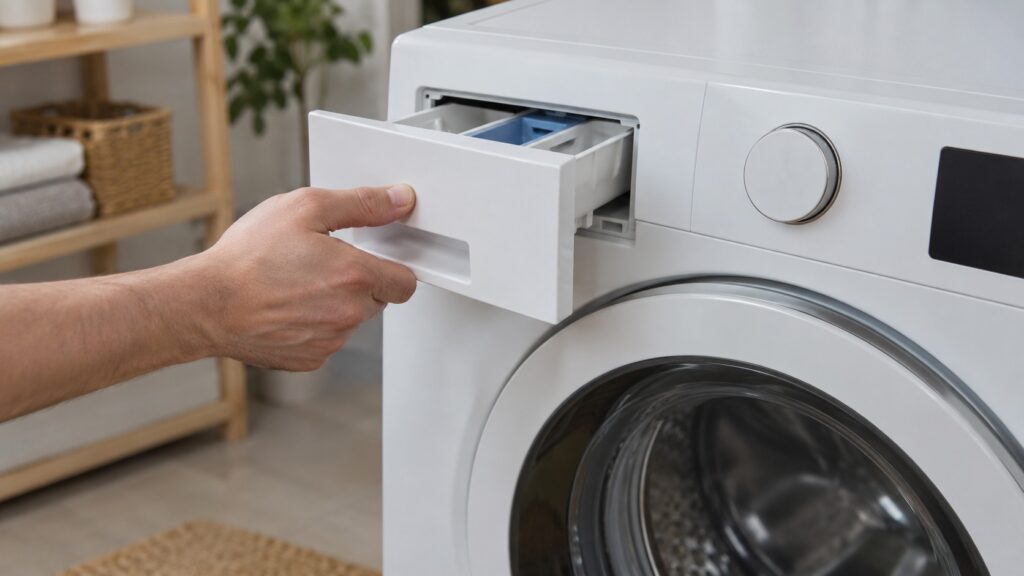
You clean a Bosch washer detergent drawer by sliding it out, taking out its inserts, soaking everything in warm water, scrubbing the drawer and the recess behind it with a small brush, and letting the parts dry before they go back in. It takes about ten minutes and is worth doing once a month, because built-up detergent and softener turn into a sticky, moldy film that makes the drawer stick, overflow and smell.
Why does a Bosch washer detergent drawer get dirty?
The drawer is the first place water meets detergent, and the last place it fully drains. Modern high-efficiency detergents are thick, liquid softeners are sticky and a front loader uses little water, so a film of residue is left behind after every load. That film absorbs moisture, which is the perfect place for mildew to start. Over weeks it hardens, narrows the channels the water flows through and makes the drawer difficult to open.
Too much detergent speeds up the problem. The label amount is meant for a full load of normal soil, and using more only leaves more behind. If the drawer stays wet and you find suds or caked powder in it, you are probably over-dosing. Our Bosch washer cycle settings guide covers matching the cycle and amount to the load.
How do you remove the drawer from a Bosch washer?
Open the drawer fully, then look for a release on the inside of the drawer, usually a small tab or a spot you press while pulling the drawer toward you. Bosch washer models differ slightly, so check your owner’s manual if the drawer resists. Do not yank it, because forcing it past the stop can bend the track or crack the plastic.
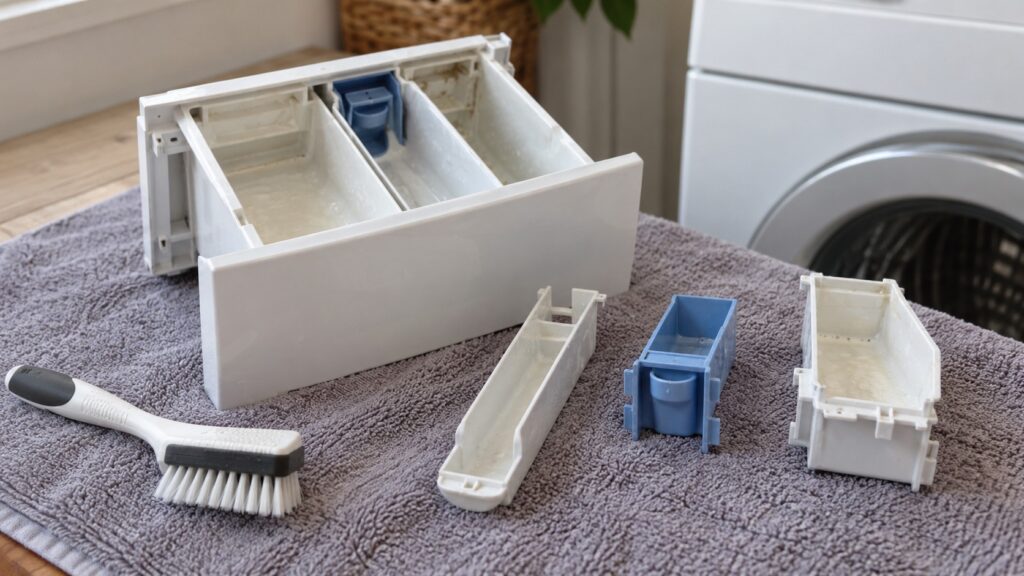
Once it is out, pull the removable inserts out of their compartments. These typically include the softener or fabric conditioner insert and, in some models, a cap or divider in the detergent compartments. Notice how each part fits so you can refit it correctly. A phone photo before you take it apart helps.
How do you clean the drawer and the recess?
Soak the drawer and inserts in warm water with a little dish soap for fifteen to twenty minutes. This loosens the residue so you do not have to scrub hard. Use an old toothbrush to work into the corners and channels, paying attention to the siphon cap in the softener compartment, which is often fully blocked with gel. Rinse everything under warm running water until no slippery film remains.
Then turn to the recess, the opening in the washer where the drawer sits. Use a flashlight to look inside. You will often see a build-up on the roof of the opening, where the water jets spray, and old detergent crusted along the sides. Wipe it with a damp cloth and the toothbrush, and work carefully so the residue does not drop into the washer. Clean the spray nozzles at the top of the recess with a toothpick, never a metal pin. Dry the drawer with a towel and put it back.
What should you do if the drawer is stuck or overflows?
If the drawer is stuck, run warm water over the front to soften hardened detergent and try again with gentle movement. If it overflows during a wash, check for a blocked siphon cap in the softener compartment, too much detergent or a drawer that has been pushed in at an angle. Overflow can also happen when the water supply pressure is low or the inlet screens are clogged, which prevents the water from flushing the drawer properly.
If the drawer is clean but you still see leaks around the front of the washer, the cause may be elsewhere. Our guide on Bosch washer leaks goes through the door seal, hoses and pump. A foul smell in the drum rather than the drawer points to the door boot, which our Bosch washer door boot cleaning guide covers.
How do you keep the drawer clean between cleanings?
Use the right amount of detergent and only high-efficiency products, measured with the cap. Leave the drawer slightly ajar after the last load of the day so the recess dries. Wipe the front of the drawer weekly. Once every month or two, run a hot maintenance cycle with the drawer empty, which flushes the dispenser channels along with the drum.
A few other habits help. Do not pour liquid softener to the top of the line, because it overflows into the housing. Do not mix powder and liquid in the same compartment. Dilute very thick softener with a little warm water if your drawer clogs often. These habits keep the siphon working and reduce how often you need to deep clean.
When is it more than a dirty drawer?
A clean drawer should open smoothly, drain after a wash and show no standing water. If the drawer is clean and the washer still fills slowly, shows an error or leaves detergent in the drawer after the cycle, the issue may be low water pressure, a clogged inlet screen or a faulty inlet valve. Those need testing with tools. Our guide to cleaning the Bosch washer drain pump filter is another routine maintenance step worth doing the same day.