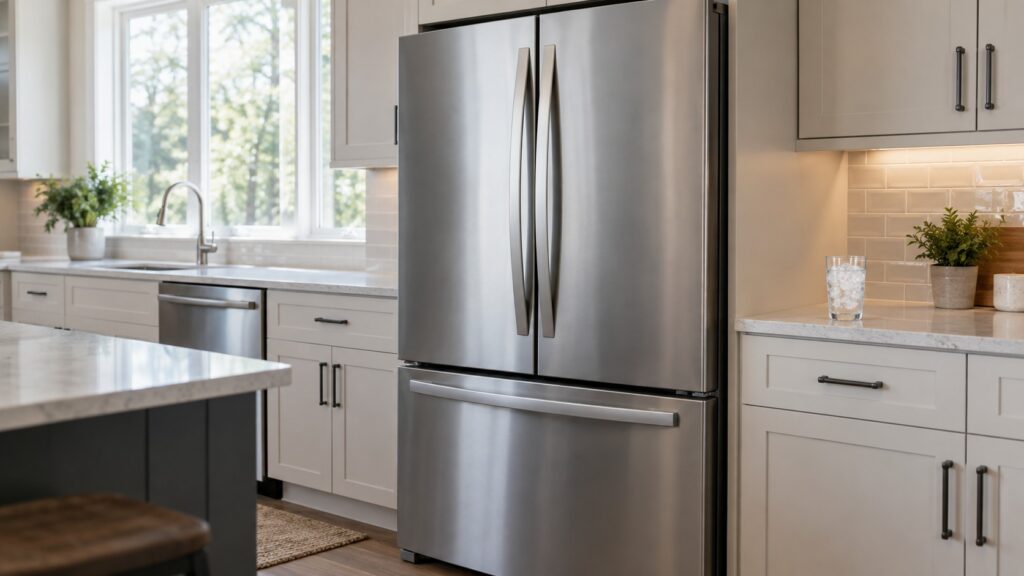
Bosch QuickIcePro is the name of the internal ice maker in four 36-inch Bosch French door refrigerators: the B36CT80SNS, B36FD80SNS, B36CT81SNS and B36CL80ENS. Some of the model pages say it produces ice up to 3x faster than conventional ice makers. Bosch does not publish the mechanism on our pages, so this guide sticks to what the pages say, explains how any household ice maker is supplied and paced, and shows what to check when ice slows down.
What is Bosch QuickIcePro?
QuickIcePro is the brand name for the ice maker built into these refrigerators. The spec table on each model page lists the ice maker as internal with QuickIcePro, which means the ice is made inside the freezer rather than in a countertop unit. The B36CT80SNS and B36FD80SNS pages say the ice comes up to 3x faster than from conventional or standard ice makers, and the B36CT81SNS page says 3x faster. The B36CL80ENS page lists QuickIcePro without quoting a speed. That figure is a claim repeated on our model pages, not something we have measured, and the pages do not say what it is compared against.
The four models are not identical refrigerators. The B36CT80SNS and B36CT81SNS are 21.0 cu. ft. counter-depth models, the B36FD80SNS is a 25.5 cu. ft. full-depth model and the B36CL80ENS is a 19.4 cu. ft. Benchmark counter-depth model. What they share, according to the pages, is a stainless finish, Home Connect Wi-Fi and the QuickIcePro ice maker.
Use the table to match the model number on your rating plate with the page for your refrigerator. If your model is not listed, it may use a different ice maker, and the same checks below still apply to it.
How does a refrigerator ice maker make ice?
Whatever the brand, an internal ice maker follows the same cycle. Water arrives through a supply line and a filter, a valve lets a measured amount into the mold, the freezer chills it until it is solid, and the cubes are released into a bin. Then the cycle starts again. QuickIcePro is described as faster at this job, but it still depends on the same ingredients: water reaching the mold, cold air around it, and a bin with room for more cubes.
Because the pages do not describe the internal design, we do not say how the speed is achieved. If you want the technical detail of your ice maker, your owner’s manual and the manufacturer’s literature are the right sources. The practical lesson is that fast ice depends on the supply and the temperature, which you can check, rather than on anything hidden.
What affects how much ice you get?
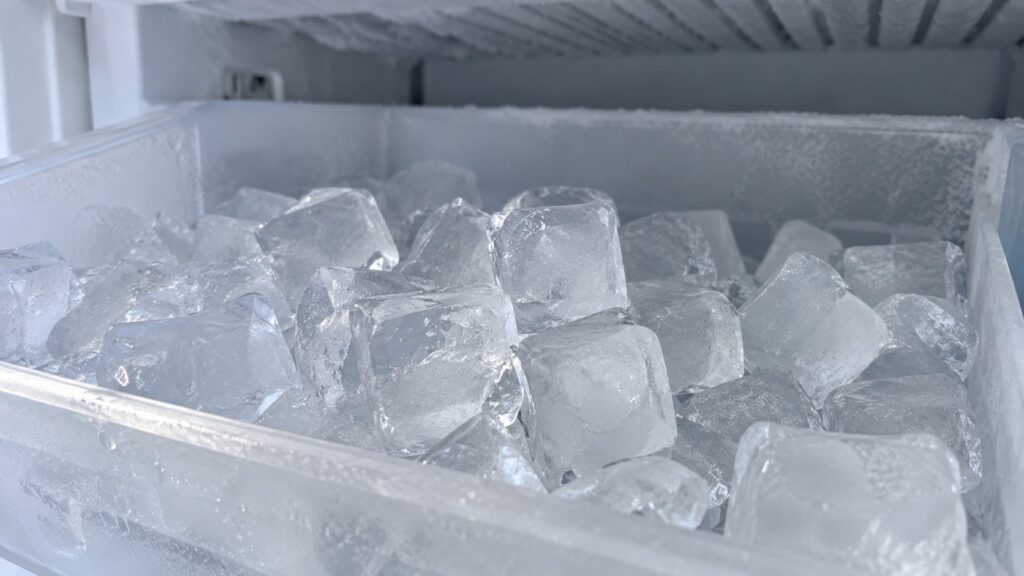
Our own ice maker maintenance guide makes several points that apply to any Bosch refrigerator. A household ice maker makes ice in batches, so an empty bin takes the better part of a day to refill, not an hour. A party that empties the bin will outrun it, and that is not a fault. A freezer set warmer than it used to be lengthens each cycle, and a door opened often lets in warm air, so a busy kitchen makes less ice than a quiet one.
A freezer packed full also hurts production, because it blocks the airflow around the ice maker. Leave the vents clear and keep the contents loose. The same guide says cubes fused into one block usually mean the bin partly melted and refroze, which points to a door that is not sealing or a freezer that is too warm. Check the door gasket before blaming the ice maker. Our Bosch ice maker maintenance guide goes through all of this in detail.
What does the water supply have to do with it?
A lot. Small or hollow cubes point to low water flow: a partly blocked filter, a kinked supply line or a valve that is not fully open. The water filter is the usual suspect when ice tastes or smells wrong, and changing it on a regular schedule keeps flow steady. Our guide to replacing the Bosch refrigerator water filter shows how, and the filter section of your manual gives the interval for your model.
If you see water on the floor or wet fittings behind the refrigerator, shut off the water supply and call us instead of tightening fittings hard. A weeping connection can do damage for months before anyone notices it.
When is it a service problem?
Work through the basics first: the ice maker is switched on, the water valve is open, the filter is not clogged, the freezer is cold and the bin is not jammed. Our Bosch ice maker problems guide lists these checks in order. If the ice maker fills but never releases, leaks inside the freezer or has iced over completely, those are signs of a failed part, and opening the freezer wall is not an owner job. Do not pry at the ice maker or take its cover off.
If you see water near the electrical parts or around a cord, switch off the breaker at the panel while standing on a dry floor, and never pull a plug from a wet outlet. Then call us. Our Bosch refrigerator repair page explains how a visit works.