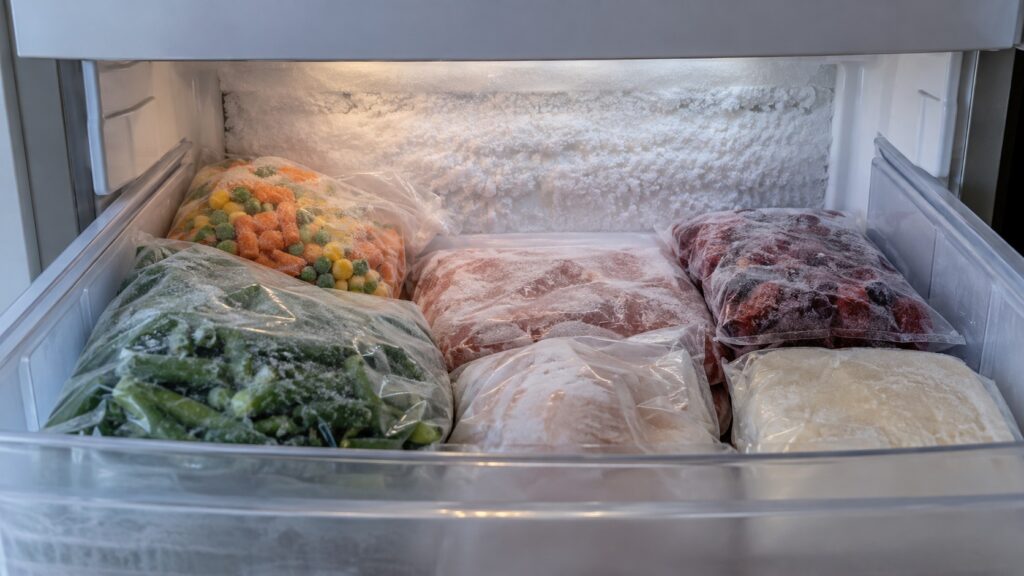
Bosch refrigerator frost on the freezer walls, on the back panel or around the vents means that moisture is entering the refrigerator or that the defrost system is not clearing the evaporator. Most Bosch refrigerators are no-frost designs, so they are not supposed to build visible frost at all. If you can see it, work in this order: check the door seal and how often the doors are left open, check that vents are clear, then suspect a failed defrost part.
Why does my Bosch refrigerator have frost in the freezer?
Frost is frozen moisture. In a sealed freezer there is very little moisture to freeze, so when frost appears, either moisture has been brought in or it is not being removed. The first is far more common. Every time the door opens, humid kitchen air flows in, and that moisture freezes on the coldest surface it touches. A seal that does not close tightly, a door that is slightly open or an overfilled drawer that props it ajar lets in a steady supply.
The second possibility is that the refrigerator’s no-frost system has stopped doing its job. In a no-frost design, the evaporator coil that makes the cold sits behind the back panel. It collects frost during normal running, and a defrost heater melts it on a schedule so the water drains away. If the heater, the sensor that tells it when to run or the control that triggers the cycle fails, frost builds up on the coil until it blocks the airflow, and then it appears in the compartment.
How do you check the door seal and door habits first?
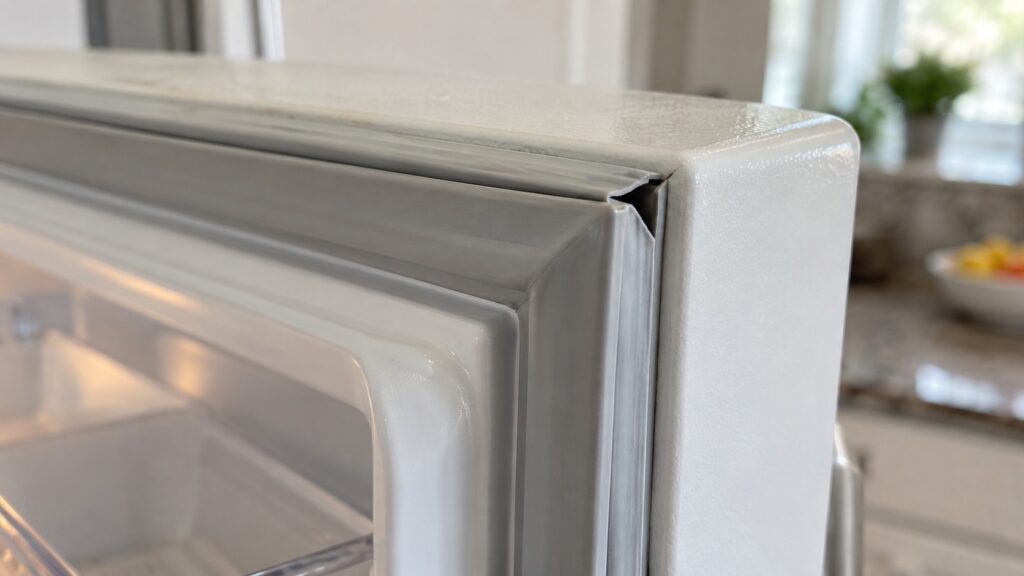
Start with the cheapest checks. Make sure both doors and the freezer drawer close fully, and that nothing sticks out of a drawer or leans on a shelf. Look at the rubber seal for tears, flattened sections, dirt or mold. Close the door on a sheet of paper at several points; if it pulls out without resistance, the seal is not gripping there. Cleaning a dirty gasket with warm soapy water sometimes restores the seal, and a worn one needs replacing.
Think about habits too. Putting hot food in the freezer, leaving the door open while you decide what to take out, or opening the doors often in humid weather all increase the moisture load. A short list of changes helps: let food cool before storing, wrap items so they do not release moisture and keep door openings brief. Our annual Bosch refrigerator maintenance checklist covers seals, coils and other routine checks.
Could blocked vents cause frost?
Yes. A no-frost refrigerator moves cold air from the evaporator through vents into each compartment. If food is packed against the vents, the air cannot circulate, one area runs warm and another gets too cold, and condensation freezes where the airflow is poor. Pull items away from the vents and leave a gap between the food and the back wall. Do not cover shelves with liners that block airflow.
The way the refrigerator moves air is an important part of the design. Our guide on how Bosch MultiAirFlow works explains how airflow keeps the temperature even, and why an obstruction defeats it. Also check the temperature setting. A refrigerator set colder than needed can freeze moisture on surfaces that should stay clear. The Bosch refrigerator temperature settings guide lists sensible set points.
How do you tell if the defrost system has failed?
The signs are quite specific. Frost forms mainly on the back wall of the freezer, often in a thick sheet, and the freezer may still seem cold at first. Over time, airflow drops, the refrigerator section warms up and food spoils faster, because the blocked evaporator cannot supply cold air to the fresh-food side. You may notice a sound of the fan struggling against ice, or a layer of ice at the bottom of the freezer where meltwater has refrozen in the drain.
A reliable home test is a full defrost. Unplug the refrigerator, empty it into coolers and leave the doors open until all ice is gone, usually around a day. Wipe it dry, plug it in and watch. If frost returns within a few weeks and your seals and habits are good, a defrost part has almost certainly failed. If the refrigerator also struggles to stay cold, see our Bosch refrigerator not cooling guide, and for fan noise, the Bosch refrigerator noises guide.
What repairs fix a Bosch refrigerator that keeps frosting?
The usual repairs are replacing the defrost heater, replacing the defrost sensor or thermostat, clearing a blocked drain and replacing a damaged door gasket. Occasionally the control board that schedules defrost is at fault. These repairs involve removing the freezer interior panels and handling electrical parts, so they are not good do-it-yourself jobs. A technician tests each part with a meter to find the one that has failed rather than replacing them blindly.
Unplug the refrigerator before anyone removes a panel. Once the fault is fixed, the unit needs a full defrost so that old ice does not keep blocking the vents. If the refrigerator is quite old and has several problems, our Bosch refrigerator repair or replace guide helps you weigh it up, and Bosch refrigerator repair describes what a visit covers.