
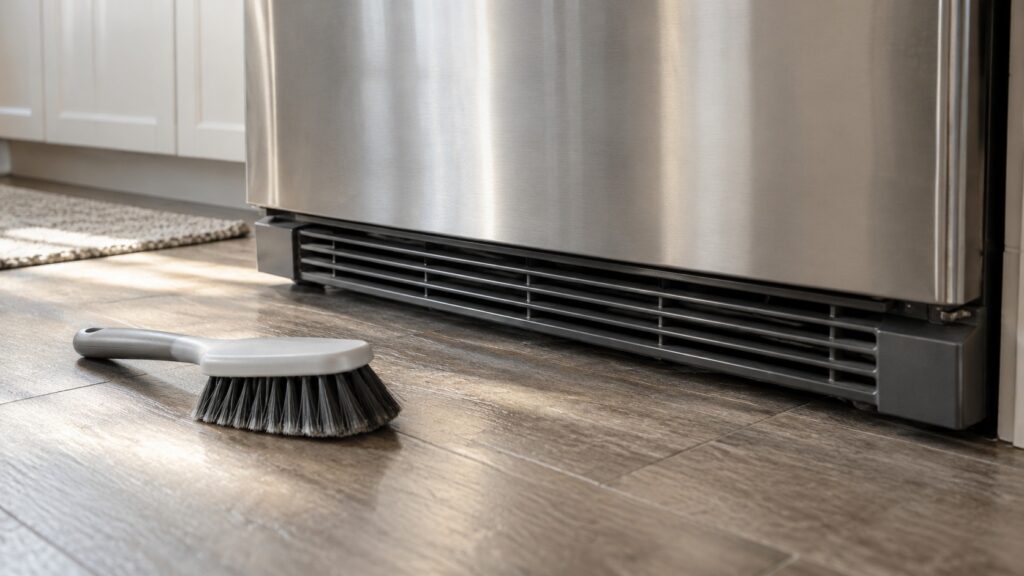
Bosch refrigerator condenser coil cleaning is the dusting of the part that dumps heat out of the cooling system. Pet hair, lint and kitchen dust settle on the coil and the grille in front of it, the refrigerator has a harder time shedding heat, and you see it as a refrigerator that runs more, runs louder and costs more to operate. On a refrigerator where you can reach the coil without taking anything apart, a soft brush and a vacuum are the whole job. If reaching it means removing a panel, the job is for a technician, and your owner’s manual shows which case you are in.
What does the condenser coil do in a Bosch refrigerator?
A refrigerator moves heat out of the cabinet and releases it into the room. The condenser is the part where the heat is released, and a fan usually moves room air past it. Cold air comes from the evaporator inside the cabinet, and the heat it picks up has to go somewhere, which is why the area around a refrigerator can feel warm. If the condenser is coated with dust, it gets rid of that heat more slowly.
Where the condenser sits depends on the model. On many refrigerators it is behind a grille at the bottom front or on the back, and some built-in designs place it out of reach on purpose. Our pages do not say where it sits on each Bosch model, so check your owner’s manual before you look. Bosch refrigerators come in a range of designs, from the 24-inch B11CB81SSS to the 36-inch B36CT80SNS, and they are not all cleaned in the same way.
How do you know the coil needs cleaning?
Look for symptoms that build slowly. The compressor runs for long stretches or seems to run nearly all the time. The refrigerator is louder than it used to be, or the air coming from the grille at the bottom feels warmer. The kitchen floor near it is warm. The compartment temperature drifts up in summer, and the electricity bill creeps up. None of these proves the coil is dirty, because a door that does not seal, an overloaded cabinet or a failing part can look similar, but a dusty coil is the cheapest cause to rule out.
Our guide to a Bosch refrigerator that is not cooling lists what else to check, and the one on refrigerator noises mentions that debris caught in the condenser fan can make a refrigerator rattle. If a pet sheds or the kitchen is dusty, plan on checking the coil area more often.
How do you clean the condenser coil safely?
Work only on what your manual lets you reach. First, unplug the refrigerator. Do it with dry hands on a dry floor. If the cord is hard to reach, switch off the breaker for the kitchen refrigerator circuit instead. Pull the refrigerator out a little way only if your manual shows the coil is reachable at the back, taking care not to scratch the floor or kink the water line to the ice maker or dispenser, and do not go behind a panel.
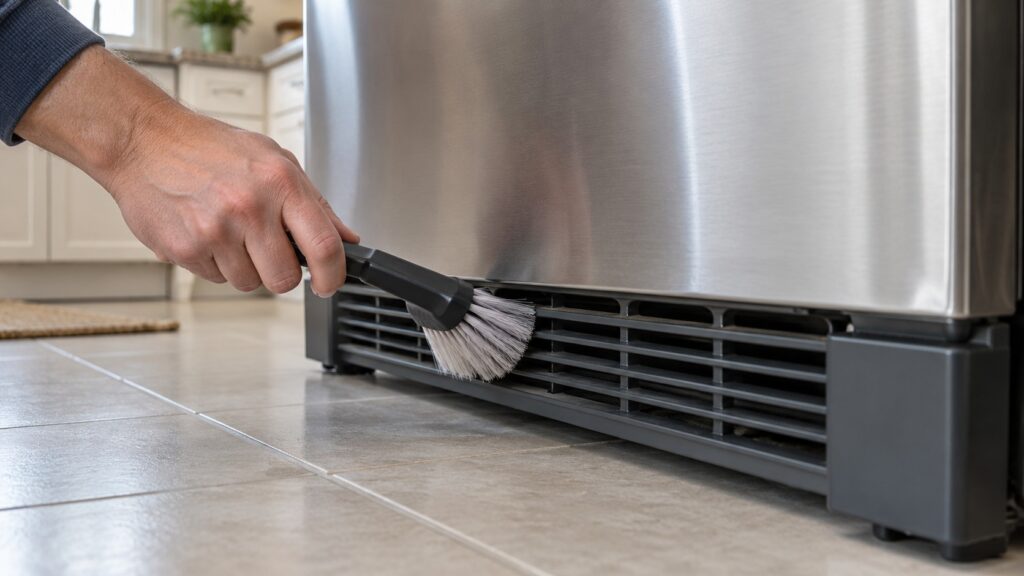
Next, use a vacuum with a brush attachment to pull the dust from the grille and from the coil or fins you can see. Use a soft brush to loosen packed lint. Work gently along the fins, not across them, because fins bend easily and bent fins block airflow. A flashlight helps you see into the corners, but keep your hands out of anything you cannot see. Wipe the grille with a damp cloth when you are done, and leave it to dry before you plug the refrigerator in again.
Do not use water or a spray on the coil, and do not use a stiff wire brush or a sharp tool. If the manual shows a grille that snaps off, take it off the way it describes. If the grille is held with screws, or you would have to remove a rear or side panel to reach the coil, stop. That panel is part of the sealed cabinet and sits close to the compressor and wiring.
How often should you clean it?
Our pages give no interval for the coil, and we will not invent one. A common habit is to include the grille and coil area in a regular refrigerator check, and our annual Bosch refrigerator maintenance checklist is a good place to fit it. Clean more often if you have pets, a dusty room or a refrigerator in a garage or a utility room, where lint and grime collect quickly.
After cleaning, put the refrigerator back with the clearance the manual asks for around the back and sides. A refrigerator crowded against a wall or a cabinet cannot shed heat even when the coil is clean. Our Bosch refrigerator installation guide covers the clearances in general terms.
What else affects how hard the refrigerator works?
A clean coil is only one part of the picture. A door gasket that is dirty or torn lets warm air in, a packed or poorly organized cabinet blocks airflow and a high ambient temperature raises the load. Our appliance energy saving tips cover simple habits, such as letting hot food cool before it goes in.
If you hear a refrigerator that clicks on and off in short cycles, hums constantly or gets hot at the back, do not keep cleaning in the hope that it will go away. See our guide on a faulty compressor to see how those symptoms differ.
When should you stop and call a technician?
Call if the refrigerator still runs constantly after the coil and grille are clean, if the compartment is warm, if you smell something burning or if you see water. If there are sparks or a smell of burning, or if water reaches an outlet or the cord, switch off the breaker at the panel while standing on a dry floor, and never pull a plug out of a wet outlet. Do not open back panels or touch the compressor area. We are an independent repair company, not the manufacturer, and our Bosch refrigerator repair page explains how a visit works. You can also book a visit online.