Whether to repair or replace a Bosch range hood blower motor depends on what the hood has been telling you and on what the rest of the hood is worth. A hood with a worn motor but sound filters, lighting, controls and housing is usually worth repairing, because our noise guide says worn motor bearings generally mean replacing the whole motor assembly, which a technician can do without changing the hood. A hood that is also corroded, damaged or no longer fits the way you cook is a better candidate for replacement, and the motor decision becomes part of a bigger one.
What does a range hood blower motor do?
The blower is the part of the hood that moves air. A motor turns a blower wheel, which pulls steam, smoke and grease through the filters and pushes it out through the duct, or through a charcoal filter on a recirculating hood. Our model pages describe the airflow of Bosch hoods in CFM, from the 280 CFM DUH36152UC under-cabinet hood to the 600 CFM island hoods such as the DPH30652UC and the HUI80553UC. The speed settings on those pages, three or four depending on the model, are different speeds of the same blower.
When the motor is tired, the hood is still a hood, but it no longer does the job. It may be loud, slow or may not start. The decision you are making is whether to replace one component or the whole hood.
How do you tell a blower motor problem from other problems?
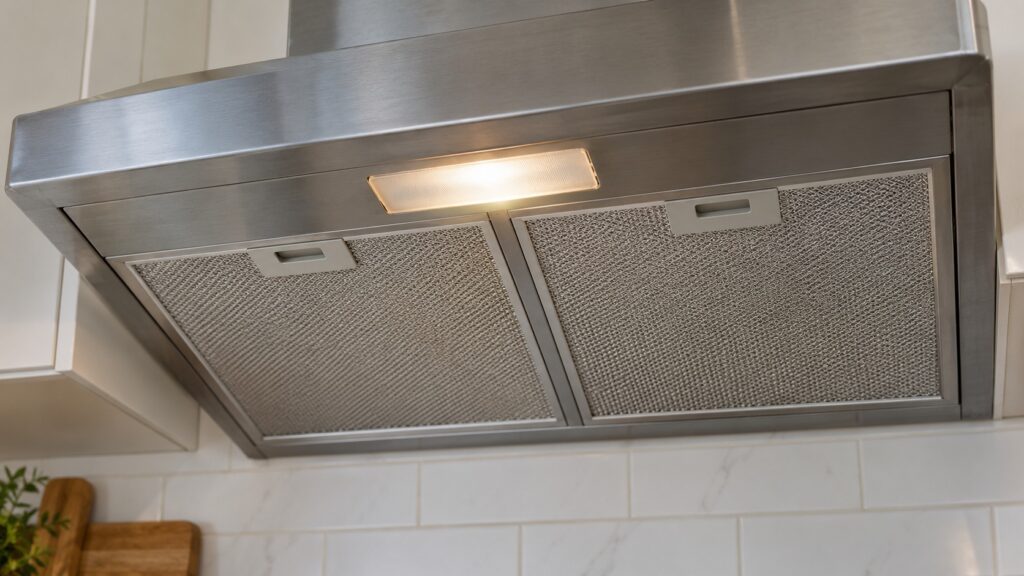
Do not assume the motor is at fault. Several far cheaper causes look like it. Grease filters that are clogged make a hood whistle and move less air, and our page on vent hood filter replacement explains how to clean or replace them. Our model pages say many Bosch hood filters are dishwasher-safe mesh, so a thorough clean is worth doing first. A duct that is crushed, too small or clogged, or a backdraft damper that is stuck, restricts the air and costs performance, as our range hood venting guide describes.
The noise guide on our site gives a useful way to read what you hear. Rattling is most often loose filters, loose ductwork or loose mounting. A hum that rises with fan speed usually indicates worn motor bearings, and grinding or scraping points to worn bearings or a blower wheel that is dirty, damaged or touching the housing. Read the full range hood noise troubleshooting guide before you decide, and do not take anything apart yourself.
When does it make sense to repair the blower motor?
Repair is the sensible choice when the motor is the only thing wrong. Check the rest of the hood honestly. Are the filters clean and the housing free of rust or dents? Do the controls respond, whether they are a rocker switch, push buttons or the LCD touch display our pages list on the larger models? Does the lighting work? Does the hood still ventilate the kitchen the way you need? If the answers are yes, a new motor assembly gives you a hood that works like the one you bought.
A repair also makes sense if the hood is a custom or built-in fit. A chimney hood in a design kitchen, or one built into a cabinet, is much harder and more costly to remove and replace than a motor, and replacing the hood can mean changing the duct, the opening or the surrounding finish. Our guide to choosing a Bosch vent hood explains how size and style limit your options.
When does it make sense to replace the hood?
Replace when the motor is only one of several problems. A hood that has a worn motor, corroded parts, a failing control and a damaged finish is nearing the end of its useful life, and each repair adds up. Replace it as well if it was never the right size or strength for your cooktop. If you have upgraded to a high-output range, a hood sized for a smaller one will struggle however good the motor is. The airflow numbers on our model pages, such as 600 CFM for the island hoods and the 500 Series chimney wall hood, are a starting point for comparison, and the right figure for your range and your duct is something to check with a ventilation professional and your local code.
A technician can tell you whether the parts are available for your model and what the work involves. We do not quote prices here. The general rule is that repairing is reasonable when the cost is clearly less than a comparable new hood and the rest of the hood is sound, and replacing is better when you would be paying a large share of a new hood to prolong an old one. Our appliance lifespan guide covers how long appliances typically last, which can help you judge how old is old.
What should you do before you call?
Clean or replace the filters, check that the damper opens and that nothing blocks the duct outlet outside, and note exactly what you hear and when: at which speed, with or without cooking, and whether the noise changed over time. Use only the controls on the hood. Do not remove the blower housing or touch the motor; it is mains-powered and sits inside the hood where grease collects.
If a hood smells of burning or the motor trips the breaker, switch it off at the panel while standing on a dry floor, and leave it off. Keep the area around the cooktop clear. If grease catches fire on the cooktop, cover the pan with a lid and turn off the heat, and do not turn the hood on or throw water on it; if the fire spreads, get out and call 911.
What does a technician visit involve?
A technician confirms that the motor is the fault and not a filter, a duct or a control, then tells you whether the motor assembly is available for your model and what the work involves. We are an independent repair company, not the manufacturer. Our Bosch vent hood repair page explains how a visit works,. You can book a visit online.