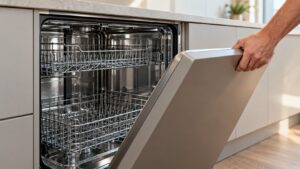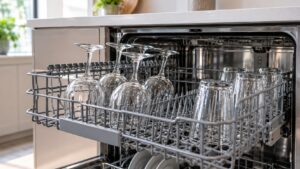
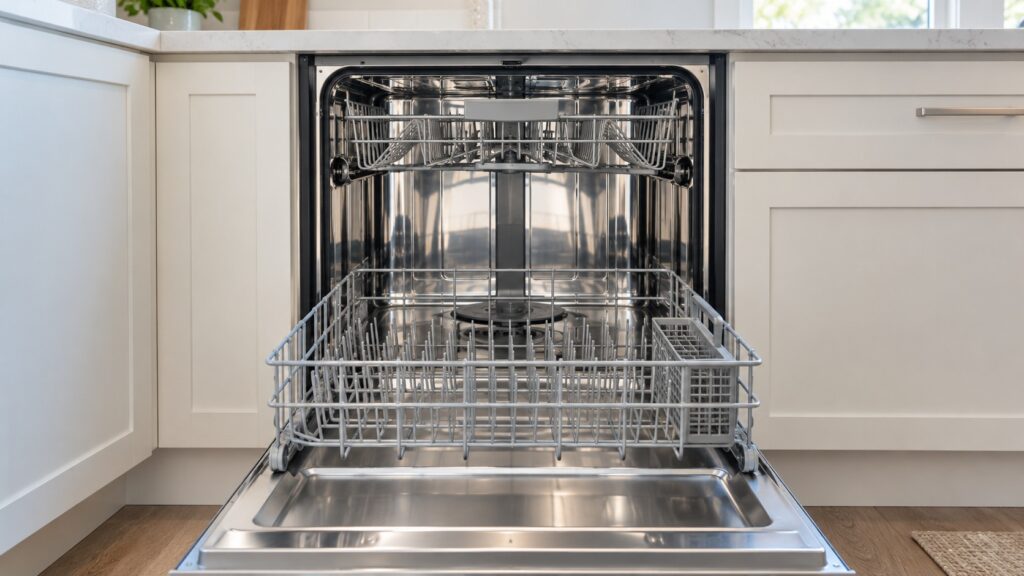
A Bosch dishwasher odor almost always comes from food, grease or standing water left in places the wash does not reach: the filter at the bottom of the tub, the door gasket, the edges of the tub and the drain path. The fix is routine care, not a repair. Clean the filter, wipe the gasket and door edges, check that the water drains fully, and run a hot empty cycle with a dishwasher cleaner as its label says. This guide shows the order that works, what not to mix, and the signs that an odor is really a drain problem for a technician.
Why does my Bosch dishwasher smell bad?
Dishwashers smell for the same reason a sink drain does. Small bits of food collect where water pools, bacteria feed on them, and the warm, damp tub keeps the smell going. Our filter guide lists an unpleasant odor when you open the door as one of the signs that the filter needs cleaning, together with water pooling at the bottom after a cycle and gritty residue on dishes. In other words, the smell is the symptom and the filter is the first place to look.
A second source is the door gasket and the lip of the tub. A film of grease and soap collects along the rubber and in the groove, and it stays wet whenever the door is shut. A third source is a drain that does not clear properly. If water is left in the base after the cycle, it turns sour. The fourth is simple habit: dishes that sit dirty for a day in a closed machine start to smell even if the dishwasher is spotless.
How do you clean the filter and the tub?
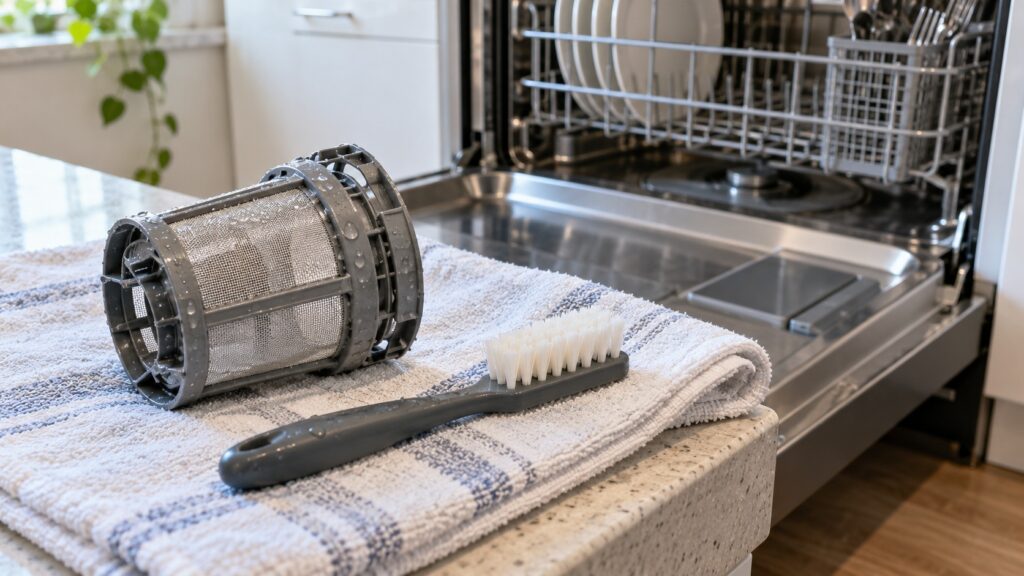
Start with the filter, since it is the most common cause. Our guide on cleaning your Bosch dishwasher filter gives the steps for the multi-part filter system at the bottom of the tub: pull out the lower rack, lift out the filter parts, rinse them under warm running water with a soft brush, wipe the housing, and refit them so they lock. Use a soft brush and mild dish soap, and avoid abrasive pads that can damage the fine mesh. Check the guide for your model’s details, and read your owner’s manual for how often it recommends cleaning the filter.
Then wipe the tub floor and the walls with a damp cloth, and look at the spray arms for stuck food. The spray arm maintenance guide shows how to clear them. Do not remove anything that is not meant to come out by hand. If a part needs tools, or you have to take off a panel to reach it, stop there.
How do you clean the door gasket and edges?
With the machine empty, run a cloth dampened with warm water and a little mild dish soap along the rubber gasket, into the groove and around the edge of the tub opening. Work in one direction so you do not push grease back into the corners. Wipe the inside face of the door and the bottom edge, where drips collect. Rinse the cloth and wipe once more with clean water, then dry the gasket with a dry cloth. A cotton swab helps in tight corners. Do not scrape with metal tools, which can nick the rubber and create a new place for dirt to hide.
Also check the dispenser area. Old detergent that has caked in the compartment can add its own stale smell, and the guide to rinse aid dispenser problems covers the neighboring dispenser.
How do you run a cleaning cycle safely?
After the filter and gasket are clean, run an empty cycle on the hottest setting your manual allows, with a dishwasher cleaner used exactly as its label says. The label and your owner’s manual decide the amount and where the cleaner goes. If you prefer white vinegar, check first that your manual allows it. Never combine vinegar with bleach or any chlorine-based cleaner, and never put one in right after the other without a full rinse cycle between them, because the mixture releases a harmful gas. Do not add other chemicals, and keep the room ventilated.
When the cycle ends, wipe any moisture off the tub floor and gasket and leave the door slightly open for a while so the inside can dry. Keep the path to the dishwasher clear so nobody trips on the open door. A dry tub is the best long-term protection, along with scraping plates before loading, which our loading mistakes guide covers, and running the dishwasher when it is full so food does not sit for days.
When is a smell really a drain problem?
If the smell comes back within a few cycles, or you find water left in the base after a cycle, the drain is the more likely cause. A kinked drain hose, a blocked connection to a garbage disposal or a weak drain pump all leave water behind. Read our dishwasher not draining guide and the guide to the drain hose high loop, which explains why the hose route matters. Our E22 page, dishwasher E22, covers a code our filter guide links to filter blockage.
A sewage-like smell that appears at the sink as well as at the dishwasher points to the household plumbing, not the machine. That is a plumber’s call, not something to chase inside the dishwasher.
When should you call a technician?
Call when the smell returns after the filter, gasket and cleaning cycle, when water stays in the tub, when a code returns, or when you smell burning. If you notice a burning smell or see sparks, switch the breaker off at the panel while standing on a dry floor and stop using the dishwasher. Do not take off the lower front panel to look for the cause. We are an independent repair company, not the manufacturer. Our Bosch dishwasher repair page explains how a visit works, and you can schedule a visit online.