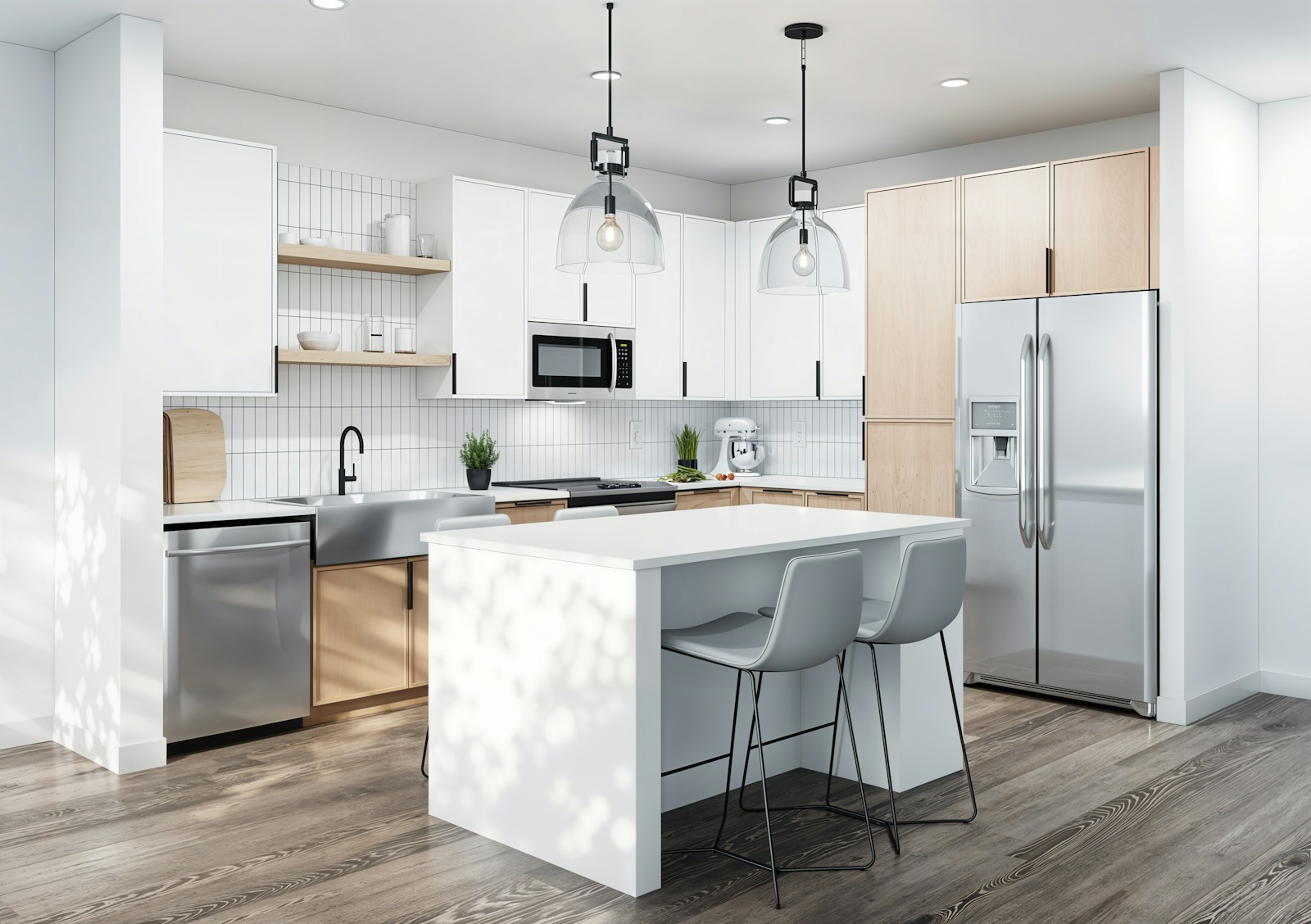
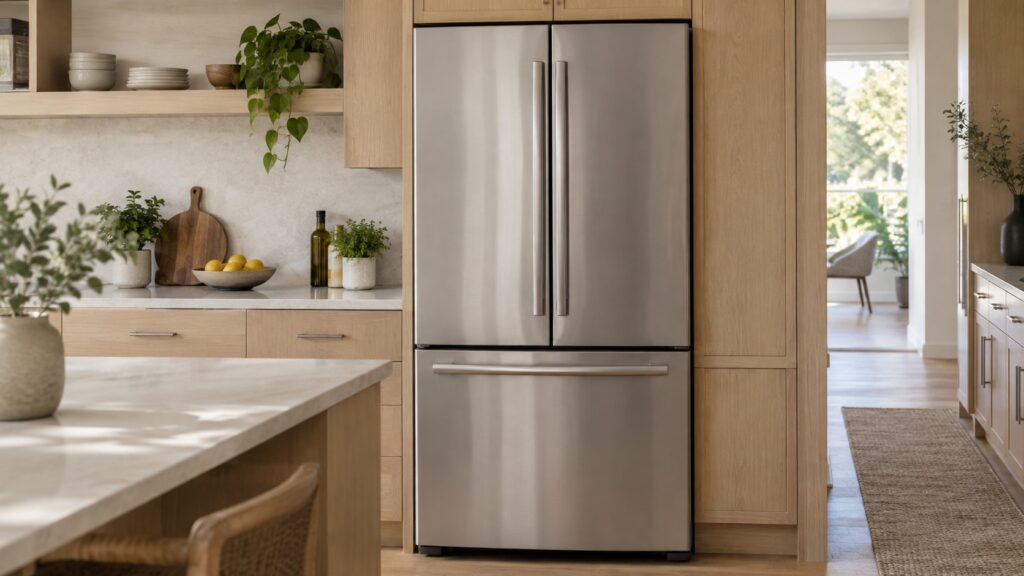
A Bosch counter-depth refrigerator is not a smaller version of a standard-depth one. It is a different shape solving a different problem: it sits nearly flush with your cabinet fronts instead of protruding several inches into the room. That single change costs storage volume and buys back walkway, sightlines and, in a galley kitchen, the ability to open an oven door opposite it.
What you actually lose, and where
The lost volume is almost entirely shelf depth. A counter-depth shelf holds fewer items front to back, which means less stacking and less of the archaeology that happens at the back of a deep refrigerator. Plenty of households find that a feature rather than a loss: things at the back of a standard-depth shelf are frequently forgotten until they are thrown away.
Where the loss does bite is bulk. A large weekly shop, a party, or a household that buys cases of anything will feel the difference immediately. Freezer capacity is the sharper pinch, because frozen goods are rigid and stack badly in a shallow drawer.
Measure the opening, not the appliance
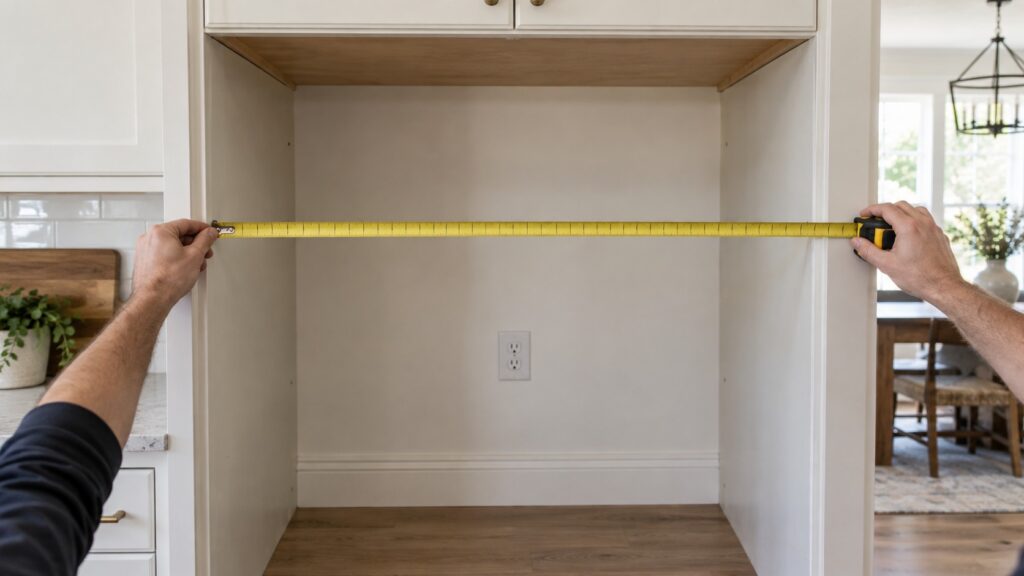
Almost every disappointing counter-depth installation comes from measuring one number. You need four.
- Cabinet opening width, at the narrowest point, including any trim or filler already fitted.
- Height to the underside of the upper cabinet, remembering that hinges on a French door model need clearance to open past 90 degrees.
- Depth from the wall to the front edge of the counter, not to the cabinet face. An overhang changes where flush actually is.
- Door swing against whatever is adjacent — an island, a wall return, or a run of drawers whose handles meet the refrigerator door.
A counter-depth cabinet is flush; the doors and handles are not, and that is normal rather than a fitting error. Our Bosch refrigerator installation guide covers the clearances and the water line.
The formats within counter-depth
Counter-depth is a depth, not a door arrangement, and the door arrangement changes how usable that depth feels. A French door model puts two narrow doors on the fresh-food side, which is the format that suits a counter-depth cabinet best: each door swings in a small arc, so an island opposite is far less of a problem. A side-by-side puts a tall narrow door on each side, which keeps swing small but makes a shallow shelf shallower still — a wide platter simply will not fit. A bottom-freezer with a single wide fresh-food door gives the most usable shelf of the three and needs the largest swing to open it.
Freezer format matters just as much. A pull-out freezer drawer in a counter-depth cabinet is shallow front to back, and everything in it has to be stacked flat rather than stood up. If most of what you freeze is bagged and flat that is fine; if it is boxes and tubs, look at the drawer with a tape measure before committing.
Ventilation is not optional at either depth
A refrigerator rejects heat, and a counter-depth cabinet built tightly into joinery has less room to do it. The specified clearances at the top and rear are not padding — they are the path the warm air takes out. Boxed in without them, the compressor runs longer, the appliance is louder, and its service life shortens quietly.
This is the single most common thing we find behind a complaint that a nearly new refrigerator “runs all the time”. Before assuming a fault, check what is behind and above it, and read our guide to temperature settings.
What does not change with depth
Nothing mechanical. The compressor, the sealed system, the defrost arrangement and the electronics are the same families of parts across both formats, so reliability and repairability do not follow depth. Neither does the feature list in any consistent way — ice and water, dual evaporators, flexible temperature zones and internal filtration all appear at both depths depending on the range.
The one real trade beyond volume is price. Counter-depth models generally cost more for less internal space, because the format is a design choice and it is priced as one. If the refrigerator lives in a utility room where nobody sees it, that premium buys you nothing at all.
Water, ice and the line behind the cabinet
An ice and water model needs a supply line, and in a counter-depth installation that line has less room to live in. A rigid copper stub in the wrong place holds the cabinet several inches out from the wall and quietly undoes the whole reason for buying counter-depth. The answer is a recessed box in the wall, set at the height the model specifies, so the connection sits inside the wall plane rather than behind the appliance.
The same goes for the power outlet. A standard receptacle with a plug in it projects, and a refrigerator pushed back against a plug body is both a fitting problem and a fire risk. Recess the outlet, or position it where the cabinet’s own service gap already exists. Both details are cheap at the planning stage and expensive once the counter is in.
Deciding, and what to do with the old one
Stand in the kitchen and look at the walkway. If the current refrigerator forces people sideways, blocks a dishwasher door, or stands proud in a room you sit in, counter-depth is worth the volume it costs. If it lives in a corner nobody walks past and the household buys in bulk, standard-depth is the better appliance and the cheaper one.
Before replacing anything, find out whether the current unit is worth keeping. A refrigerator that is not cooling can be a fifteen-dollar seal or a failed compressor, and the symptoms are indistinguishable from the kitchen side — see our appliance lifespans guide. We are an independent repair company, not a dealer, so we have nothing to sell you on the buying side. Bosch refrigerator repair starts with a diagnostic visit, we confirm the estimate before any work begins, and you can schedule a visit online.