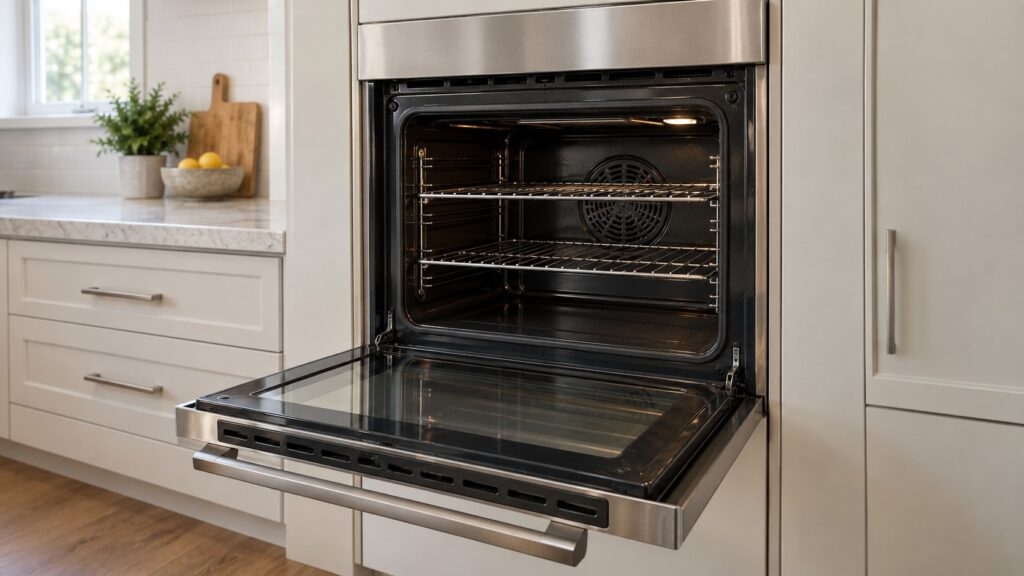
Bosch EcoClean is a coated oven liner that absorbs grease splatter while you cook, so the oven needs the full self-clean cycle less often. To keep it working, do not scrub it, do not spray oven cleaner on it and do not line the oven with foil; wipe the cool oven with a damp soft cloth after heavy roasting and let normal high-heat cooking do the rest.
What is the Bosch EcoClean oven liner?
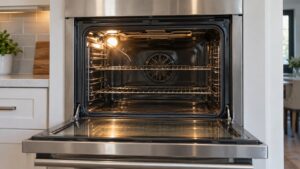
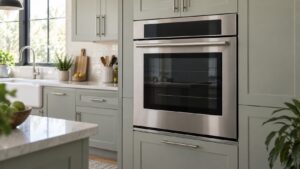
EcoClean is a special coating on the inside surfaces of the oven cavity. Instead of leaving grease splatter to bake into a hard brown film, the coating takes up the splatter and, when the oven reaches roasting temperatures, helps break it down. Our model list shows an EcoClean direct liner on the 800 series HBL8454UC single wall oven and the HBL8753UC double wall oven, and the listing for the HBL8454UC says it absorbs splatter continuously so the self-clean cycle is needed less often.
It does not make an oven maintenance-free. A boil-over of sugar, cheese or a casserole is more than a liner can absorb, and those spills still need to be wiped out. What the coating changes is the everyday film that normally builds up after months of roasting.
What damages an EcoClean liner?
The coating is porous by design, which makes it easy to harm by cleaning it the wrong way. Avoid these:
- Spray oven cleaner. The chemicals soak into the porous surface and can leave a residue that smokes the next time you bake. They can also dull the coating.
- Steel wool, scouring pads and abrasive powders. They wear the coating away, and a worn patch no longer absorbs grease.
- Aluminum foil on the floor or walls. Foil blocks airflow and heat, can melt onto the enamel and can mark the cavity permanently. Use a baking sheet on a lower rack to catch drips instead.
- Soaking with a wet towel. A very wet liner is slow to dry and can spot.
If a previous owner used oven cleaner on the liner, you may notice a faint chemical smell for the first few hot cycles. Run the oven empty with the kitchen well ventilated until it clears.
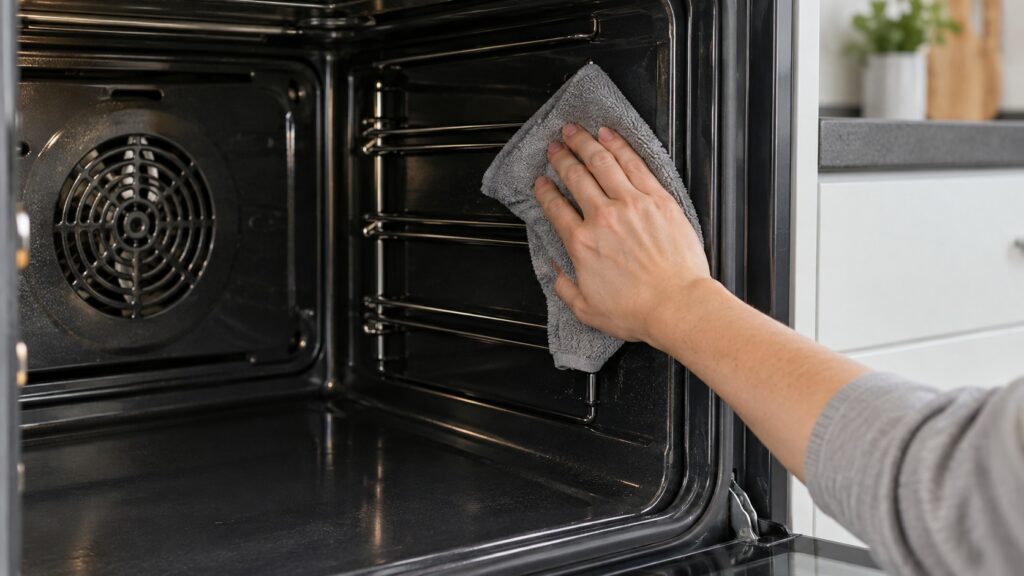
How do you clean a Bosch oven with an EcoClean liner day to day?
- Let the oven cool completely. Never wipe a hot liner, because you can burn yourself and the cloth.
- Wipe up spills early. Use a soft damp cloth on the liner and the door glass. Sugary or cheesy spills are the ones that harden quickly.
- Remove loose crumbs from the floor of the cavity, since they burn and smoke on the next preheat.
- Wash the racks separately in the sink with warm soapy water and a soft brush, and dry them before putting them back.
- Leave the door open a few minutes after wiping so the cavity dries fully.
Do the door glass and the seal area last, with a separate cloth, so that grease from the glass does not get rubbed back onto the liner. Check the door gasket at the same time: a gasket that is torn or hardened lets heat and steam escape, and it is far easier to notice during a quiet wipe-down than during a busy dinner. Make this a monthly habit and a roasting oven rarely gets bad enough to need harsh methods.
Our general guide to cleaning and maintaining a Bosch range covers the door, the knobs and the cooktop around the oven.
Does the EcoClean liner work better if you roast hot?
Coatings of this kind work best when the oven runs hot enough to break the grease down, which is why many owners notice the liner staying cleaner in a household that roasts and bakes at high temperatures. Short, low-temperature warming does not help, and a wall of grease that builds up from slow cooking at low heat may need a manual wipe or a full self-clean. If the liner looks dark or sticky after a month of low-temperature cooking, do a normal roast at a higher temperature with the oven empty or with a roast in it, and then wipe it when it cools.
When should you run the self-clean cycle instead?
Use self-clean when there is heavy baked-on soil that wiping does not shift. The EcoClean models on our list also have a self-clean cycle, but follow the owner’s manual for your model about racks, locks and what to remove first. A self-clean cycle gets the cavity very hot, so remove pans and loose items, keep the room ventilated and keep pet birds out of the kitchen, because some of them are sensitive to the fumes. Our guide to Bosch range self-clean mode walks through the cycle.
What if the oven smokes or smells after cleaning?
A small amount of smoke on the first hot run after a spill is normal as the splatter burns off. Persistent smoke, a strong chemical smell or a burnt odor that does not fade after two or three runs suggests cleaner residue, a spill on the floor of the cavity or a food-soaked element. Clean up the visible cause, then run the oven empty at a high temperature with the windows open. If the oven also heats unevenly or shows a fault, our guide to Bosch oven heating problems can help, and our Bosch oven repair page explains how a visit works.