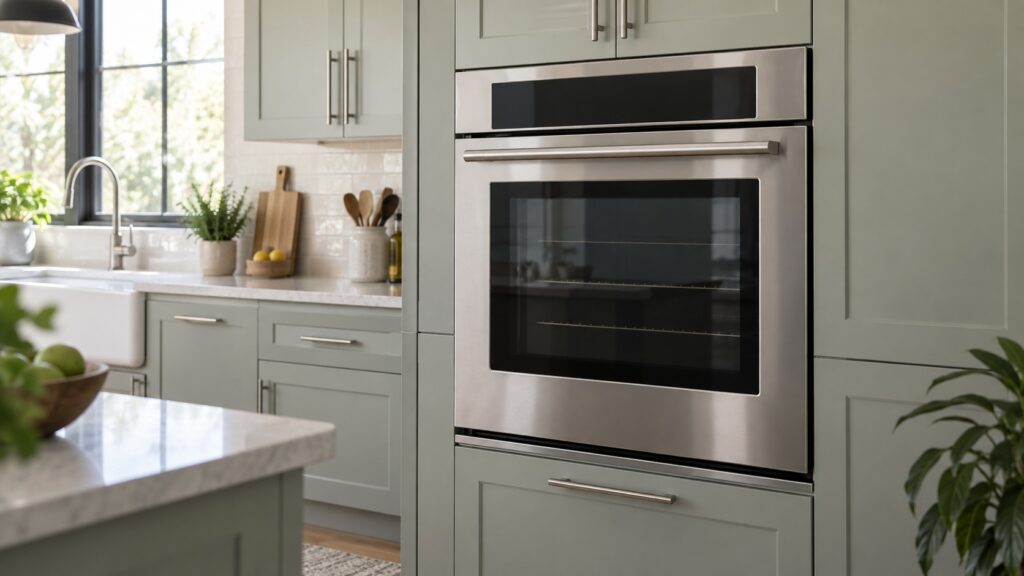
The Bosch oven repair or replace question usually arrives after a failure that feels final — no heat, a locked door, a display that has gone dark. Almost none of those are final. An oven is one of the more repairable appliances in the kitchen, because the parts that fail are discrete, accessible from the front or the back, and mostly inexpensive. What changes the arithmetic is not the fault, it is whether the oven is built in.
Why built-in shifts the answer
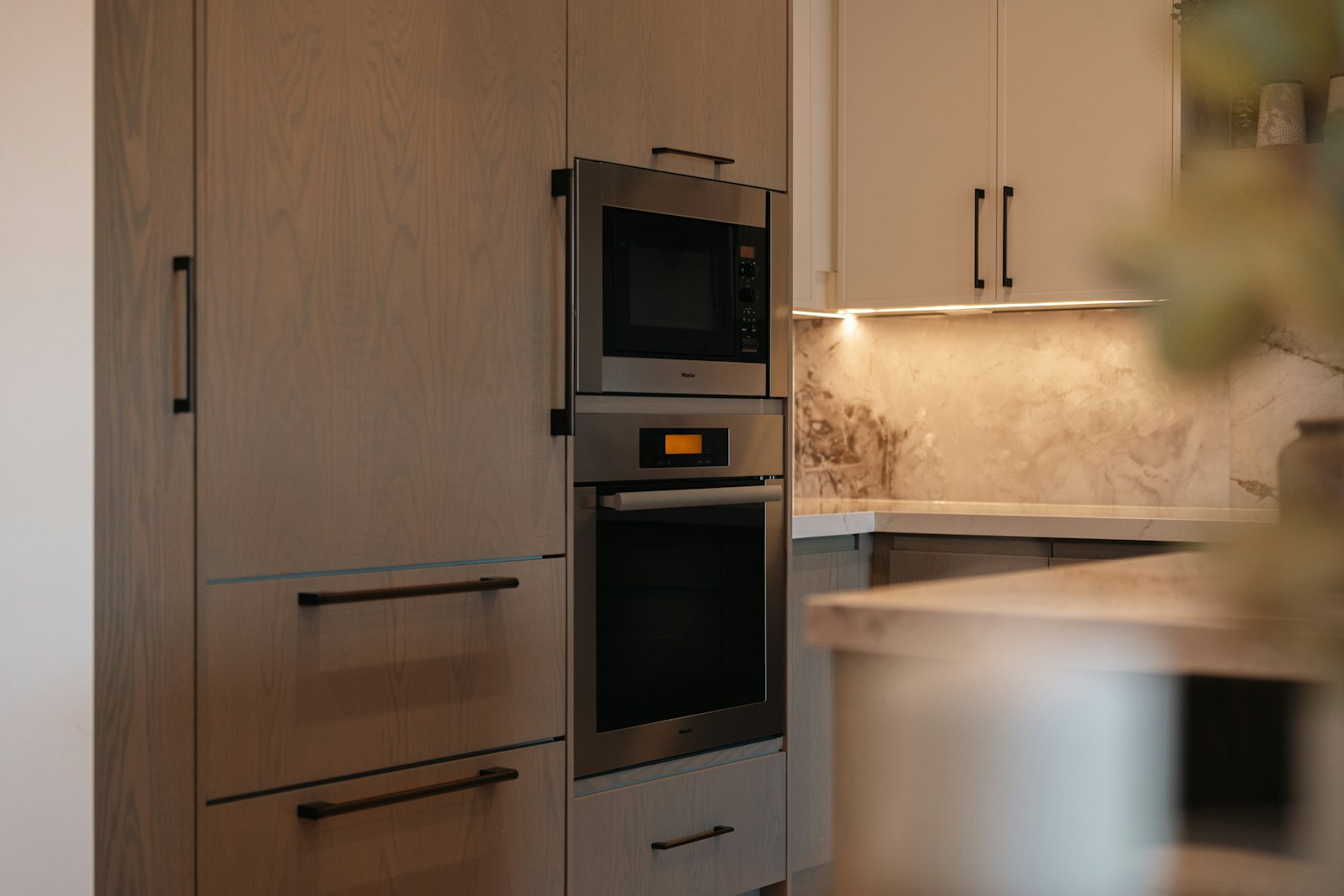
A freestanding range can be pulled out and swapped in an afternoon, and the sum is the ordinary one: repair cost against replacement cost. A built-in wall oven was installed into an opening sized for it, with a dedicated circuit and a trim that covers the gap. A replacement that differs even slightly in height or width turns an appliance purchase into a joinery job — and cabinet openings have changed dimensions over the years more than people expect.
That is why we will recommend repairing a built-in oven at a price where we would recommend replacing a freestanding one. Before deciding, measure the opening and find out whether a current model fits it. Our wall oven installation requirements guide covers what the opening has to provide.
The failures that are not worth worrying about
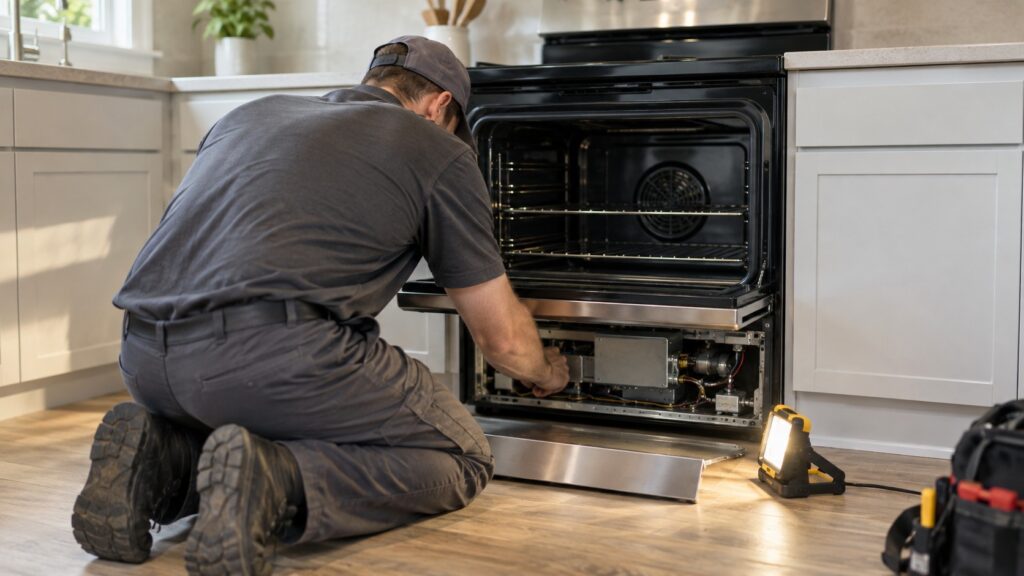
An oven that has stopped heating is usually an element or an igniter, and both are ordinary parts. A door that will not stay shut is hinges or springs. A door that seals badly and lets heat escape is a gasket. A display that has gone dark while the oven still heats is often the cooling fan having failed and the board protecting itself. None of those touch anything structural.
Uneven baking, which people often treat as terminal, is most often either a level problem or a calibration drift — see our calibration guide. Both are adjustments, not replacements.
Where the line actually sits
The line is the control board, and it moves with two things: the age of the oven and the availability of the part. A board on an eight-year-old built-in oven that is otherwise sound is usually worth doing, because everything else in the appliance is untouched. A board on a fifteen-year-old oven where the part is scarce and priced accordingly is a different conversation.
- Under about ten years and built in: repair is usually the better value, including a board.
- Over about fifteen years and freestanding: a board replacement rarely is.
- Any age, and the cavity is corroded or the door glass is cracked on an obsolete model: replace.
- A second board failure within a year or two: investigate why before spending again. Something is stressing it — often a failed cooling fan.
Self-clean is where several ovens die
This is worth knowing before you run one. A self-clean cycle takes the cavity far above normal cooking temperature for hours, and that heat is hard on the thermal fuse, the door lock motor and the control board. A meaningful share of “the oven died for no reason” calls we take begin with a self-clean cycle run the day before.
If your oven is older, clean it by hand rather than running the cycle. If you do run it, take the racks out, run it when someone is home, and do not run it the night before a holiday you need the oven for. A locked door after a self-clean is common enough to have its own page — see the oven error code archive.
Rule out the things that are not faults first
A share of the ovens we are asked to price for replacement are not broken. A demo or showroom mode left on from delivery makes an oven light up and never heat. A child lock engaged by accident makes controls unresponsive. A door that does not close fully — usually a rack pushed slightly out — lets enough heat escape that everything cooks long and pale, which reads as a dying element.
The subtlest of these is a calibration that has drifted a few degrees over years. Nothing has failed; the oven simply runs cooler than the number on the dial, and every recipe has slowly stopped working. An oven thermometer on the middle rack costs very little and settles the question in one preheat.
What a diagnosis establishes
Only a few questions decide the recommendation, and none of them can be answered over the phone. Is the fault a heating component, a door component, a sensor or the board? Is the part still available for this model and at what price? Is the cavity, the door and the wiring sound? And is the oven built in, with a current model that fits the opening?
An oven that will not heat can be an inexpensive element or an obsolete board, and from the kitchen side the two look identical. That is the whole reason to establish it before pricing a replacement.
Getting an honest number
We are an independent repair company, not a factory service arm and not a dealer, so we have nothing to sell you on the replacement side. Where a repair is not worth doing, we say so and explain why. Pricing starts from a diagnostic visit and we confirm the estimate before any work begins.
Bosch oven repair covers heating, door, sensor and control faults, and you can schedule a visit online. Our appliance lifespans guide sets expectations across the kitchen, and the hidden features guide is worth reading if the oven works and simply is not doing what you expected.