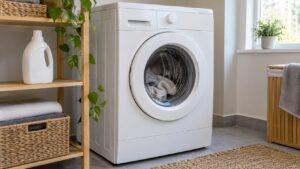
When your Bosch washer leaking water becomes apparent, identifying the exact source quickly prevents floor damage and mold growth. Water leaks in front-load washers come from several possible locations, and each has a different cause and fix. This guide helps you pinpoint where the water is coming from and what to do about it.
Bosch washer leaking water: identify the source
Before troubleshooting components, determine where the water appears. Place dry newspaper or paper towels around and under the washer, run a short cycle, and check which area gets wet first. Front leaks, rear leaks, and bottom leaks each point to different components.
Front of the washer — door boot seal
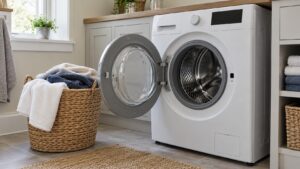
The rubber door boot (gasket) creates a watertight seal between the door and the drum. If the boot is torn, cracked, or has debris lodged in its folds preventing a proper seal, water will leak from the front during the wash or rinse cycle. Open the door and run your fingers around the entire boot, checking for cuts, hard spots, or foreign objects like coins or small garments wedged in the folds. A small tear can often be temporarily sealed with appliance-grade silicone, but replacement is the permanent fix.
Also check whether the boot is properly seated in its retaining ring. If the ring has slipped, the boot pulls away from the tub and allows water to escape. Repositioning the ring and securing it resolves this issue without replacing the boot.
Detergent dispenser drawer area
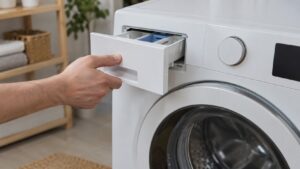
Water dripping from the dispenser drawer area during the fill cycle indicates one of several problems. The dispenser drawer may be clogged with detergent residue, causing water to overflow instead of flowing into the drum. Remove the drawer completely (press the release tab and pull straight out) and clean it thoroughly with hot water and a brush. Clean the housing cavity as well, paying attention to the siphon cap and water jets at the top of the cavity.
Excessive detergent is a frequent cause. Bosch front-load washers require high-efficiency (HE) detergent, which produces fewer suds. Regular detergent or too much HE detergent generates excess suds that overflow through the dispenser housing and leak down the front of the machine. Use the amount recommended on the HE detergent label, which is typically less than most people expect.
Underneath the washer — drain pump
Water pooling under the center or front of the washer often comes from the drain pump. The pump has a housing with a seal that can crack or degrade over time. It also has a filter access panel on the front lower panel. If the filter cap is not properly tightened after cleaning, it will leak during drain cycles. Open the filter access panel, place towels underneath, and check that the filter cap is snug. Clean the filter while you have it open, as trapped debris can prevent the pump impeller from sealing correctly.
Rear of the washer — fill hoses and water inlet valve
Leaks at the back of the washer typically come from the hot and cold water fill hoses or the water inlet valve. Pull the washer forward and inspect both hose connections at the wall valves and at the washer inlet valve. Tighten any loose connections by hand and a quarter turn with pliers. Check the rubber washers inside each hose fitting. These flat rubber gaskets deteriorate and crack, allowing water to seep past the connection. Replace them with new washers if they are stiff, cracked, or flat.
The water inlet valve itself can develop cracks in its plastic housing, especially in freezing conditions or after a water hammer event. If the valve body is cracked, it must be replaced. The valve is located behind a rear panel on most Bosch models and is held in place with two screws.
Bottom of the tub — tub seal and bearing
A slow, persistent leak from directly underneath the drum, especially noticeable after spin cycles, indicates a worn tub seal. The tub seal sits where the drum shaft passes through the outer tub. When it wears out, water seeps past and drips from the bottom of the machine. A failing tub seal is often accompanied by a rumbling noise during spin, which indicates the bearings behind the seal are also compromised. Tub seal and bearing replacement is a major repair that requires complete drum disassembly. See our Bosch washer repair page for service options.
Preventive measures
- Use only HE detergent in the recommended amount
- Inspect fill hoses every six months and replace them every five years
- Clean the dispenser drawer monthly
- Check the door boot for debris after every load
- Clean the drain pump filter monthly to prevent seal damage
For additional care tips, visit the Bosch washer support section at bosch-home.com.
When to call a technician
Hose tightening, dispenser cleaning, and drain filter maintenance are easy DIY tasks. Door boot replacement is moderately difficult. Tub seal and bearing replacement requires specialized tools and expertise. Schedule Bosch washer repair if the leak originates from inside the tub area or if you cannot identify the source after checking all external connections.