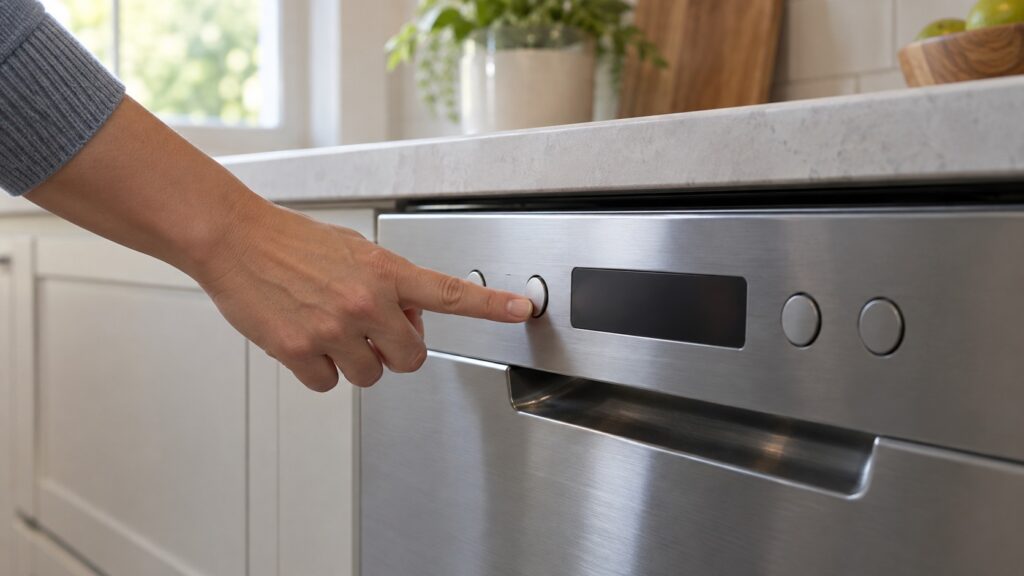
Bosch SpeedPerfect is a dishwasher option, not a cycle of its own: you select a normal wash program and press SpeedPerfect, and the dishwasher completes that program in noticeably less time by running the wash harder. It is a trade of speed for efficiency, so it is ideal for a load you need in a hurry and a poor habit for every load, every night.
What does Bosch SpeedPerfect actually do?
SpeedPerfect compresses the time a program takes. A dishwasher normally spends most of a cycle heating water, soaking soil, rinsing and drying slowly. With the option selected, the dishwasher raises the intensity of the wash, using stronger spray and higher water temperature to do in less time what the slower program would do gently. The result is a shorter run, usually with similar cleaning on an everyday load.
The word to hold on to is option. SpeedPerfect has no program of its own to choose. It needs a cycle underneath it, such as an auto or normal wash, and it modifies how that cycle runs. If the button does nothing, the cycle you picked may not support it, and your owner’s manual lists which programs can be combined with it.
When is SpeedPerfect worth using?
It is worth using when time is the constraint. Guests arriving, a rack of glasses you need for tomorrow morning, or a load that has to be clean before you leave for work are the right moments. A normally soiled load of plates, bowls and glasses is the sweet spot: the faster, harder wash handles it, and there is little baked-on residue for a shorter soak to miss.
It is not worth using for the usual overnight load. Running slower is gentler on dishes and uses less energy per cycle, and there is no benefit to speed if you will not unload until morning. Keep it as a tool for the occasional rush, and let the regular program do the everyday job. Our guide to Bosch dishwasher cycles and settings explains how to pick the base program.
What are the trade-offs of the SpeedPerfect option?
There are three. First, the shorter run uses more power while it runs, because water is heated and pumped harder, so the saving is in your time, not in your utility bill. Second, drying can be less complete. A Bosch dishwasher dries mainly by condensation on the cooled stainless or plastic tub walls, and a shorter cycle gives that process less time, so plastics may come out damp. Third, heavy soil may need a second pass, since a quicker soak gives dried-on food less time to loosen.
None of these is a defect. They are the cost of finishing sooner, and they explain most complaints about wet dishes after a fast cycle. If a load comes out damp, open the door a few inches and leave it a few minutes, or run the normal program next time. Our Bosch dishwasher drying tips go into the loading habits that help.
How is SpeedPerfect different from a short cycle?
A short cycle, sometimes called a quick or 1-hour program, is a program built to be short from the start, with its own sequence of fills, heating and rinses. SpeedPerfect works differently: it takes whatever program you have chosen and shortens it. The practical effect is similar, but the two behave differently on soil. A purpose-built quick program is tuned for light soil, while SpeedPerfect applied to a heavier program tries to keep that program’s cleaning power while saving time.
If you only ever need a fast wash for lightly soiled glasses, a quick program is simpler. If you want a familiar program done sooner, SpeedPerfect gives you that control. Reading the program list on your control panel tells you which of the two your model offers.
Which related terms appear next to it on the panel?
Several words sit near SpeedPerfect and are easy to confuse. The table below separates them.
Combining options changes the outcome. SpeedPerfect with a delay start is a sensible pairing, since you choose when the load begins and finishes. SpeedPerfect with a heavy-duty program is a gamble on very dirty pots. When in doubt, use the base program alone and add an option only when the load asks for it.
What should you do if SpeedPerfect seems to make things worse?
If dishes come out dirty or wet more often since you started using the option, stop using it for a week and compare. Most of the time, the cause is not the option but a clogged filter, a blocked spray arm or an empty rinse aid reservoir. A shorter cycle is less forgiving of these small faults. Our guide on how to clean your Bosch dishwasher filter is the first thing to try, followed by checking the spray arms for blocked holes.
If a clean filter and full rinse aid do not fix poor results, an error code or a heating or pump fault may be involved, and that is a job for a technician. You can read about Bosch dishwasher repair for what a visit covers.