Bosch dishwasher drying works by condensation, not by blowing hot air, so the best drying tips are about helping water leave the dishes rather than boosting heat. Keep the rinse aid dispenser full, load plastics tilted on the upper rack, choose the extra dry option when the cycle offers it and crack the door open when the cycle ends. Do those four things and most wet-dish complaints disappear.
Why are my dishes wet in a Bosch dishwasher?
A Bosch dishwasher finishes with a hot rinse that warms the dishes and the air inside. When the heater stops, the dishes are hot but the stainless steel or plastic tub walls are cooler, so the moisture in the air condenses onto the walls and runs down to the sump. Dishes dry because water evaporates off their warm surface and lands on the cooler wall. It is a quiet and energy-efficient system, but it depends on the dishes holding heat and the water leaving them freely.
That is why plastic is the usual troublemaker. Plastic holds less heat than ceramic or glass, so water on it does not evaporate well and tends to remain as droplets. Another cause is water pooling in concave surfaces, such as the bottoms of cups and the dishes with a rim. Understanding this tells you where to focus: help the water drain off, and make the dishes as warm as possible at the end of the cycle.
How should you load the dishwasher for better drying?
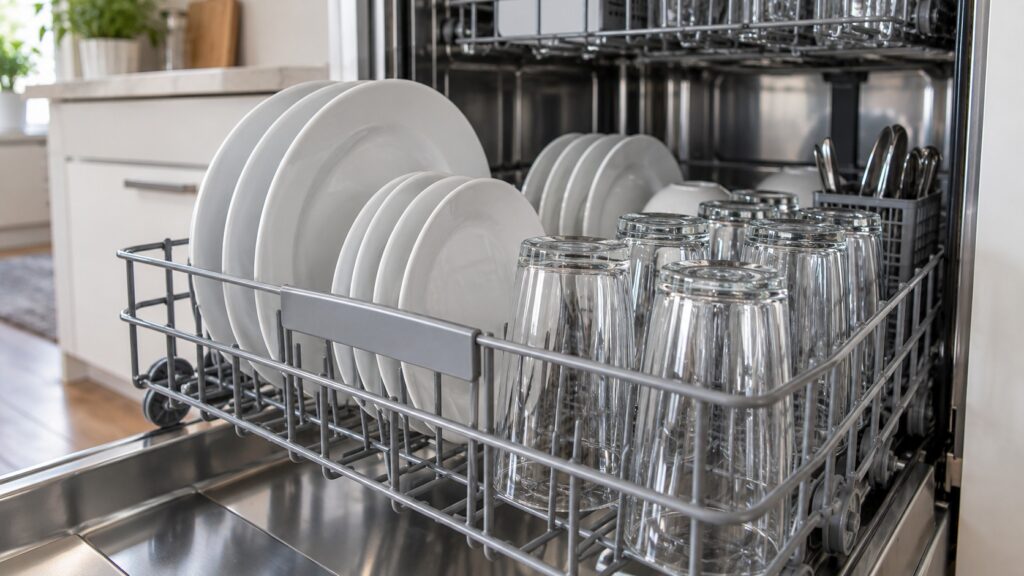
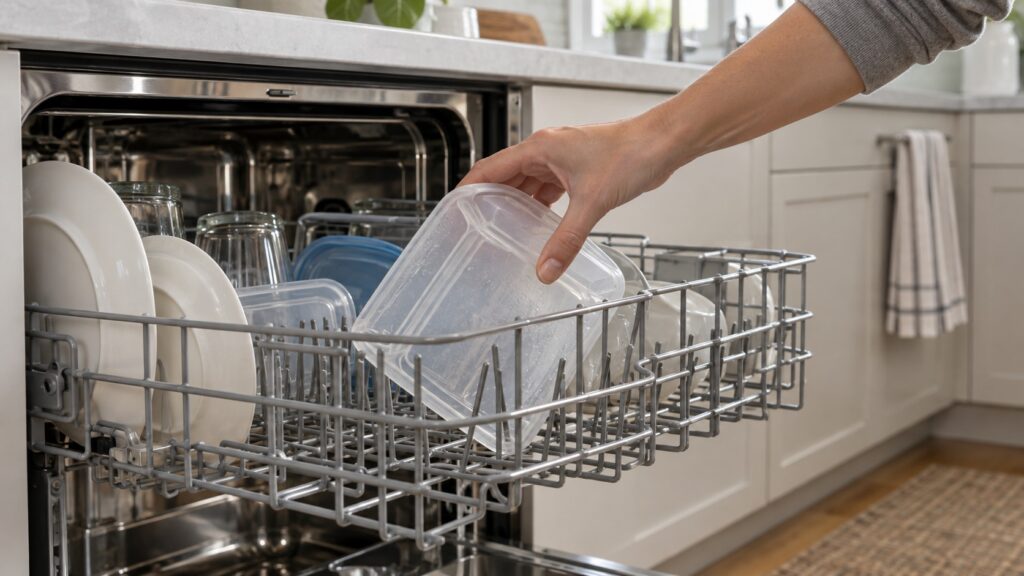
Angle everything so water can run off. Tilt cups, bowls and plastic containers at a slant on the upper rack so they cannot hold a puddle on their base. Do not nest bowls or stack plates so closely that the surfaces touch, since water trapped between two surfaces will not evaporate. Give each item a clear line of sight to the spray arms and the airflow.
Put plastic on the upper rack, away from the heating element at the bottom, and keep the biggest and heaviest items on the lower rack, where they hold heat well. Do not block the sides of the tub with tall items, because the condensation needs a path to the wall. Our Bosch dishwasher loading mistakes guide lists the errors that cause both poor cleaning and poor drying.
What does rinse aid do for drying?
Rinse aid lowers the surface tension of water so that it forms thin sheets that run off the dishes instead of beading into droplets. It is the single most effective drying aid, and an empty reservoir is behind more wet-dish complaints than any hardware fault. Check the dispenser, fill it to the marked level and adjust the dosage setting if your model has one. A higher setting helps in hard-water areas and when plastics stay wet.
If rinse aid disappears too fast or leaks out, the dispenser may be at fault. Our guide to Bosch dishwasher rinse aid dispenser problems explains the common causes. Do not use dish soap in place of rinse aid, as the foam can overflow and damage the machine.
Which cycle and options help drying?
Quick programs sacrifice drying time to save minutes, so a plastic-heavy load in a quick cycle will almost always come out wet. Choose a normal or auto program for everyday use, and use the extra dry option if your model has it. Extra dry typically adds heat or time near the end of the program, so it costs a little more energy but dries stubborn loads more thoroughly.
The speed option works against drying. Our Bosch SpeedPerfect glossary entry explains why a shortened program leaves less time for condensation. On higher series, drying technology is more advanced, which our CrystalDry glossary describes. Whatever your model, the fundamentals are the same: warm dishes, water that runs off, and time for condensation to work.
What should you do when the cycle ends?
Open the door a few inches as soon as the cycle finishes, or when the display shows it is done. Releasing steam lets the remaining moisture escape and cuts wetness on plastics noticeably. Wait a few minutes before unloading, and empty the bottom rack first so that water pooled on top items does not drip onto the dishes below. Keep a dry towel handy for the small number of items, such as cup bottoms, that still hold a bead of water.
If you want hands-free drying, leave the door ajar by a small gap after the cycle ends, if your kitchen layout allows it. Some Bosch models open the door automatically at the end of the cycle for this reason. Keep the opening small if children or pets are around, since an open door is a tripping hazard.
When is wet dishware a sign of a fault?
If dishes stay wet in every cycle, even with full rinse aid, tilted plastics and extra dry selected, a hardware fault is possible. A weak or failed heating element means the final rinse never gets hot enough, so condensation drying cannot work. The signs are lukewarm dishes at the end of the cycle and, sometimes, an error on the display. Our Bosch dishwasher heating element problems guide explains the checks.
A dirty filter or clogged spray arm can also make a load look wet, because dirty water stays in the tub. Clean the filter first, then run a test cycle. If the water is hot, the rinse aid is full and the filter is clean, but the dishes are still wet, a technician can test the element, the thermistor and the control board. Read about Bosch dishwasher repair to see what a visit covers.