Bosch dishwasher glassware comes out clean and clear when it is loaded so that nothing touches, the filter and spray arms are clean, the detergent amount is right and the rinse aid dispenser is filled. Most cloudy, spotted or chipped glasses are caused by loading, detergent or water, not by the dishwasher itself. This guide gives practical care tips for glasses, wine glasses and stemware, explains how to tell a removable film from permanent damage, and lists what is better washed by hand.
How should you load glasses in a Bosch dishwasher?
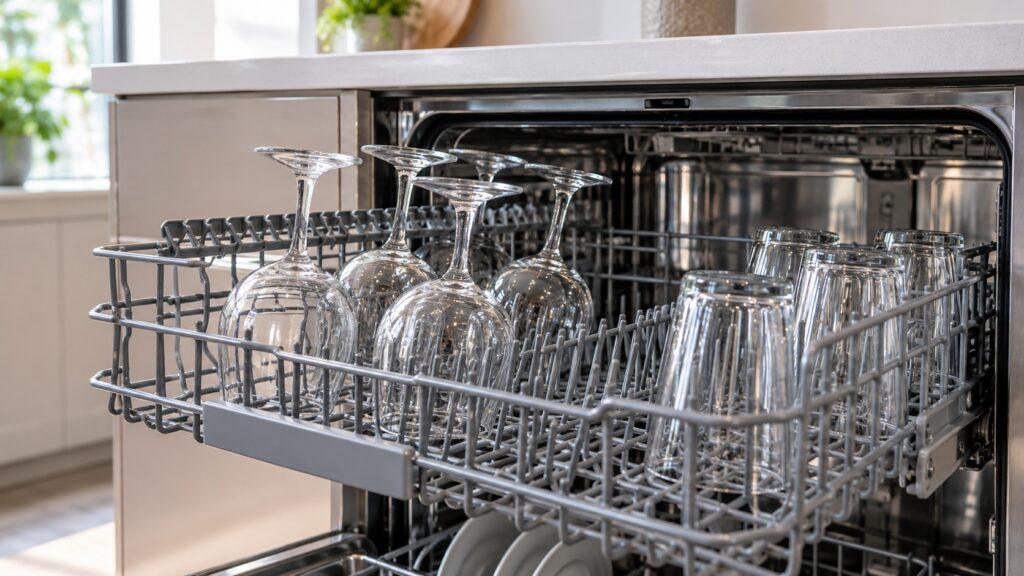
Glasses go in the upper rack, because the lower rack is for heavier items and the spray there is more forceful. Place them upside down so that water cannot collect in the base, and tilt them slightly where the rack allows it. Leave a gap between glasses. Glasses that touch rattle against each other during the cycle, and that is how chips and scratches begin. Our guide on dishwasher loading mistakes lists the most common errors and explains why crowding hurts both cleaning and drying.
Do not lean glasses over the tines so that the rim bears the weight, and do not push a glass down on a tine so hard that it wedges. Short glasses and tumblers are happiest on a row with space around them. If your dishwasher has a third rack, use it for utensils and small items, not for tall glasses, unless your manual says it is meant for them. Our third rack tips go through what it suits best.
How do you wash wine glasses and stemware?
Stemware is the most fragile category. Rest the bowl of a wine glass against the side of a tine or place it in the stemware holder that comes with your rack, if your model has one. Do not let the stem rest against another glass, and never wedge a stem between two tines. Keep stemware away from the spray arm path and away from the edge of the rack, where the door can strike it when it opens.
Check your owner’s manual for any statement about glassware on your model, since racks and holders differ between series. Many people hand-wash their best crystal anyway, and that is a sensible choice. Antique pieces, anything with gold or platinum trim, hand-painted glass and glass that the maker labels as hand-wash only should not go in the dishwasher, because heat, strong detergent and movement can wear the decoration away.

What causes cloudy or spotted glasses?
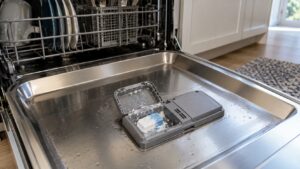
Three causes account for most of it. The first is hard water, which leaves mineral spots when droplets dry on the glass. The second is too much detergent, which does not rinse away fully and leaves a thin film. The third is the lack of rinse aid, which helps water run off the glass in sheets, so there are fewer droplets left to dry into spots. Our guide on the rinse aid dispenser explains how to check that yours is filled and releasing, and the one on drying tips helps if the glasses come out wet.
Dirty filters and blocked spray arms can leave a gritty film as well. Clean the filter by following our filter cleaning guide, and check that the spray arms spin freely and that their holes are clear, as our spray arm maintenance guide explains.
Is it a film or permanent etching?
A removable film usually looks like a haze that is worse when the glass is dry and may rub off partly with a damp cloth. Permanent etching is damage to the glass surface, often showing as an even, rainbow-tinted or frosted look, and it does not wipe off. Etching is associated with very soft water, too much detergent and repeated hot cycles, but we cannot diagnose it from a description and the cause may differ by glass. If a haze does not change after you have cleaned the dishwasher, reduced the detergent and tried again, assume the damage may be permanent and treat the glass gently.
Do not promise yourself a quick home fix. Mixing products such as vinegar and bleach is unsafe, and we do not recommend any home mixtures for glass. If you want to try a cleaning step, use only what your dishwasher manual names for cleaning the machine, then run a normal cycle and see whether the haze changes.
What cycle and settings are kind to glass?
Choose the program your manual recommends for glassware or delicate items if your model has one, and avoid the most intense settings for a load made up mostly of glasses. Our guide on Bosch dishwasher cycles and settings explains how to read the programs on your display. We do not give a temperature or a time because they differ by model and our pages do not list one value that fits all.
After the cycle ends, let the glasses cool and dry for a short time before you unload, and unload the lower rack before the upper one so that drops from above do not fall on dry dishes below. Hold glasses by the base, not the rim, and wipe any remaining drops with a clean, lint-free cloth if you want them perfect for guests.
When should you call a technician?
Call if glasses are still dirty or wet after you have corrected the loading, detergent and rinse aid, if the dishwasher does not drain, if water stays in the bottom, or if the machine shows a repeating fault. Do not take the door or the lower panels apart yourself. If you see water leaking, smell something burning or notice sparks, switch the breaker off at the panel while standing on a dry floor and do not use the dishwasher.
We are an independent repair company, not Bosch. See our Bosch dishwasher repair page, or schedule a visit online.