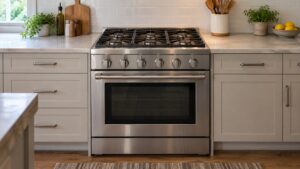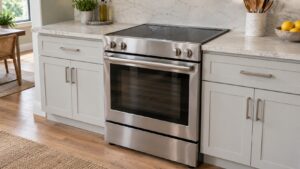
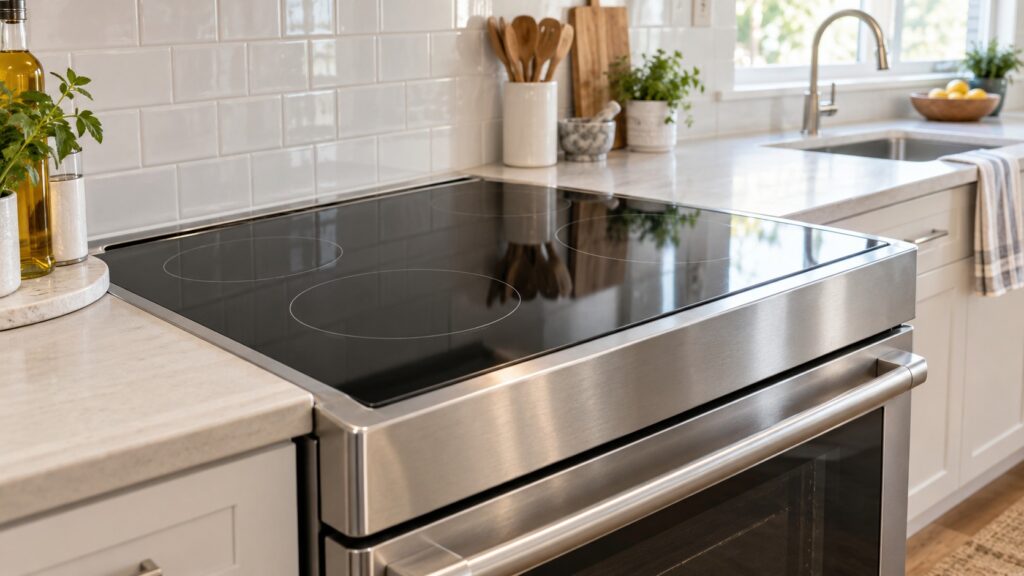
Bosch induction cooktop cleaning comes down to four habits: wait until the glass is fully cool, wipe with a soft damp cloth and a drop of mild dish soap, dry it, and keep abrasive pads and harsh chemicals off the surface. The glass itself is not what heats, so spills do not bake on the way they do on a gas grate or a radiant element, but they still stain and can scratch the glass if you scrub them dry. This guide covers the routine for ranges such as the HII8046U, HII8056U and HII8057U, and where to stop.
How do you clean a Bosch induction cooktop?
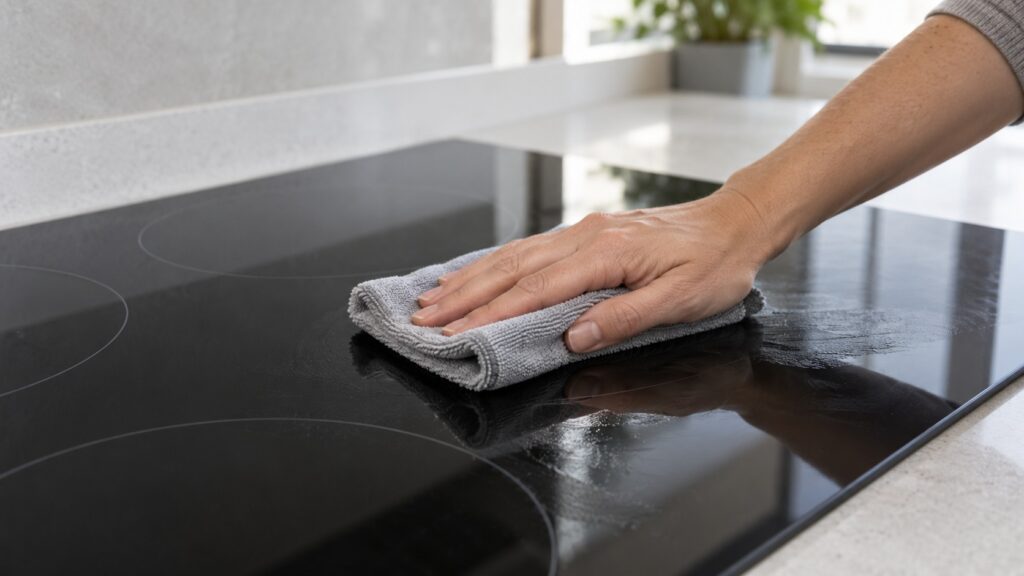
Start by switching every zone off and letting the glass cool. Wipe away loose crumbs with a dry or barely damp soft cloth. Then use a clean cloth with warm water and a drop of dish soap, working in even passes, and finish with a dry cloth so no streaks are left. Do that after any significant spill and at the end of each cooking day, and the surface will rarely need more.
That routine is deliberately plain. Our general Bosch range cleaning guide recommends a damp microfiber cloth with a drop of dish soap for the stainless parts and says to avoid abrasive pads, bleach and ammonia-based cleaners because they scratch and discolor. The same logic applies to the cooktop glass, and your owner’s manual is the final word on which cleaners Bosch approves for it.
Why can the glass still be warm when no zone is on?
Induction heats the pan, not the glass. Our explainer on how Bosch induction cooktops work says any warmth you feel on the glass is residual heat transferred back from the hot pan. That is why you should not assume the surface is cool just because the zone indicator is off. Wait until the cooktop has been off for a while and any hot-surface indicator your model has is out before you wipe; do not test the glass by touching it or holding a hand over it, and do not press a cloth on a spot where a pan has just been.
A wet cloth on warm glass can leave streaks, and a spill that has dried in the warmth is harder to lift. Patience is cheaper than scrubbing.
What should you use on stubborn marks?
Do not reach for something rough. Lay a damp cloth over the spot and let it rest until the residue softens, then wipe it off with the cloth rather than scraping at it. Repeat if needed. If your owner’s manual approves a particular cooktop cleaner or scraper for your model, use it exactly as written and not otherwise.
Never use commercial oven cleaner, a steel pad or a gritty powder on the glass. Our FlexInduction guide points out that scratches on the glass are cosmetic damage that no repair reverses, so prevention matters more than any cleaner.
How do you avoid scratching the glass?
Most scratches come from pans, not from cleaning. Lift cookware straight up and set it down, rather than dragging it across the surface. Our FlexInduction guide calls sliding a heavy oblong pan the most common cause of scratches. Wipe the bottom of each pan before you put it on the cooktop, because dried food and grit on the base act like sandpaper.
The HII8057U page describes FlexInduction zones for griddles and fish pans. Large, heavy cookware is where this matters most, because it is hard to lift cleanly with one hand. Use two hands, and check the pan base is clean and flat first.
How do you clean the knobs and controls?
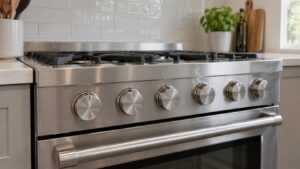
On the knob models, our cleaning guide says the knobs on most Bosch ranges pull straight off for cleaning. Check your owner’s manual before you remove any on your own range. Wipe them with a damp cloth and a drop of dish soap, dry them completely and put them back.
For any panel or display, spray the cleaner onto the cloth, not onto the range. The same guide warns that liquid dripping behind touch controls can cause erratic behavior or short circuits. Keep water away from the gaps around the knobs and the edge of the glass.
What general habits keep induction glass looking new?
Induction glass lasts longest when it is treated like a good countertop. Wipe spills soon after the glass is cool, because sugary spills and dried splatter are harder to lift the longer they sit. Keep a dedicated soft cloth for the cooktop so grit from the sink or a dish rag does not end up on the glass. Use pans with smooth, flat bases that suit induction; a rough or warped base scratches the glass and heats unevenly.
Do not put hot pots on the cooktop edge or use the surface as a shelf for heavy items, a cutting board or a cold pan straight from the freezer. Check your owner’s manual for the way Bosch wants the glass cared for on your model, and for any cleaner it recommends.
When is cleaning no longer the problem?
Some issues are not dirt. A crack, a chip or a deep gouge in the glass means the cooktop should not be used until a technician looks at it. Switch the range off at the breaker on the panel while standing on a dry floor, and do not try to repair the glass. A zone that does not heat, a display that shows a fault or a smell of burning is also a repair call; our guide to an induction zone that is not heating explains the pan test and what happens next.
Do not lift the cooktop, remove panels or open the underside of the range. Those parts sit against mains wiring beneath a glass surface that is costly to replace. The oven cavity is a separate job; for it, see our self-clean mode guide and your manual.
We are an independent repair company, not the manufacturer. If the glass is damaged or a zone has failed, Bosch range repair starts with a diagnostic visit. You can see our model page for the HII8046U to check the type of range you own.