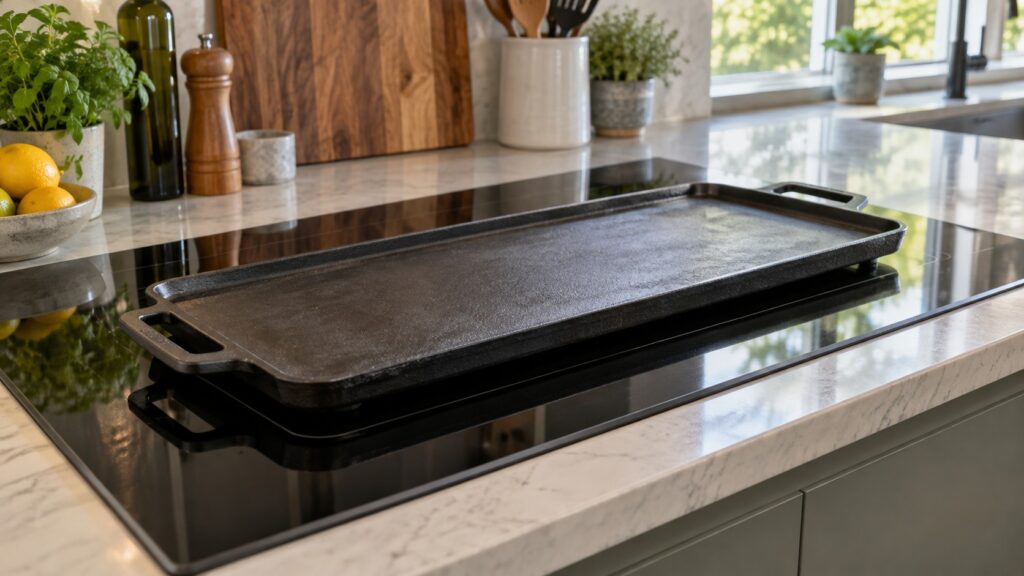
Bosch FlexInduction is the feature that lets two induction zones behave as one. Instead of a fixed circle that a rectangular pan overhangs, a FlexInduction area can be driven as a single long field, so a griddle, a fish kettle or a roasting pan heats evenly across its whole base. It is one of the few cooktop features that changes what you can physically cook rather than how you set it.
Why a round zone fails an oblong pan
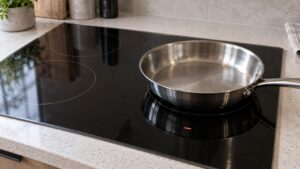
An induction zone heats the pan directly, through a magnetic field generated by a coil beneath the glass. The field is shaped like the coil, which is round. Put a rectangular griddle on it and the middle sits over the coil and gets hot while the two ends sit over nothing and stay comparatively cool — the classic result is a griddle that scorches in the center and refuses to brown at the ends.
FlexInduction solves this by putting two coils under one continuous area and driving them together as a single field. The pan sees heat along its whole length because there is coil along its whole length. This is a hardware arrangement, not a software trick, which is why it only exists on the models built with it.
Cookware is the requirement, not a recommendation
Everything induction needs is amplified by a bridged zone, because the pan is larger and there is more of it to go wrong.
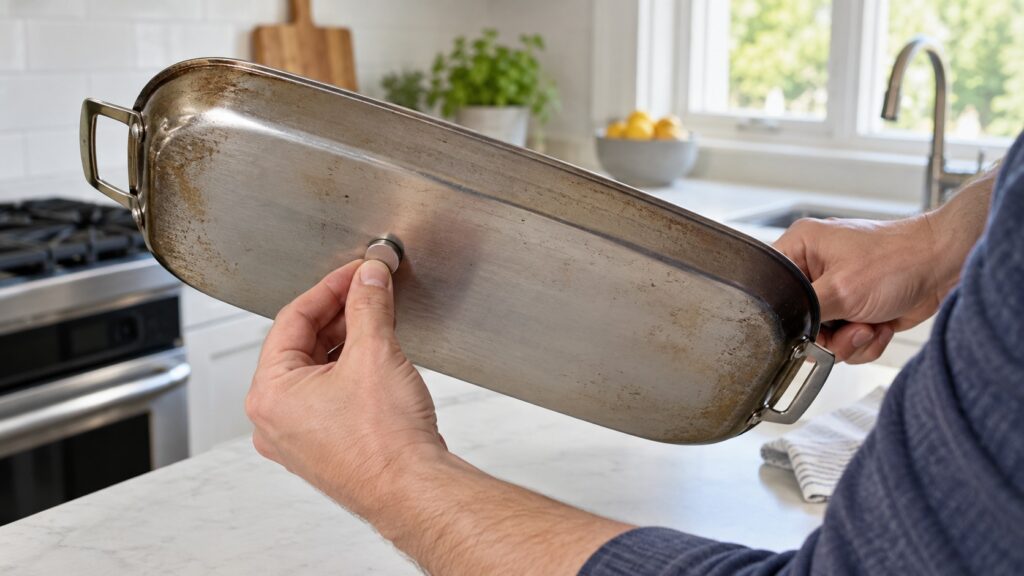
- Magnetic across the whole base. Test with a fridge magnet at both ends and in the middle. Many oblong griddles are aluminum with a steel disc only under the center — exactly the wrong construction here.
- Flat, not domed. A base that has warped touches the glass at the rim and lifts in the middle, and a long pan warps more easily than a small one.
- Heavy enough to stay flat hot. Thin steel griddles bow as they heat and then heat unevenly for the rest of the session.
- Lift, never slide. A heavy oblong pan dragged across the glass is the most common cause of scratches, and scratches are cosmetic damage no repair reverses.
How the cooktop decides what you meant
Depending on the model, a bridged area is engaged either by pressing a control or by the cooktop recognizing that a pan covers both zones. Automatic detection is convenient and it is also where confusion starts: a large round pan that happens to overlap the second zone may bridge when you wanted a single zone, and a correctly placed oblong pan may fail to bridge if one end is not quite over the second coil.
If bridging is not behaving, move the pan square onto the marked area before touching any settings. Nine times out of ten that is the whole problem. Our explainer on how Bosch induction cooktops work covers the detection side in more depth.
Power sharing, and the number that surprises people
A cooktop has a total power budget, and induction zones share it. Bridging two zones into one does not add power — it spreads the same power over a larger area. A bridged griddle will therefore come up to temperature more slowly than a single small zone under a small pan, and that is correct behavior rather than a weak cooktop.
The same budget explains why a fourth zone sometimes runs at reduced power when three are already working hard, and why a boost function on one zone can quietly step another down. None of it is a fault, and none of it is worth adjusting around; it is the physics of a fixed supply.
Cooking on a bridged area in practice
A bridged zone behaves like a long, shallow hotplate rather than like two burners, and that changes technique. Heat still concentrates slightly over each coil, so a griddle has two marginally warmer bands along its length — useful once you know it is there, because you can park finished items between them instead of taking them off. On a fish kettle the same effect is invisible, because water moves heat around faster than the difference can build.
Two habits make the most of it. Preheat longer than you would a small zone: there is more metal and the same power spread wider, so a griddle that feels ready in two minutes is not. And use the whole surface rather than crowding the middle out of habit — the reason to bridge in the first place is that the ends are now usable.
What goes wrong, and what it looks like
FlexInduction has no moving parts, so the failures are the ordinary induction ones. A zone that stops responding while its neighbors work points at that coil or its driver. A cooktop that cuts power after ten or fifteen minutes and recovers once cool is its own thermal protection, usually because the vents under the counter are blocked by stored packaging. A panel that ignores a finger is normally wet or greasy rather than broken.
The one symptom specific to bridging is a pan that heats along one half of its length and not the other — that is one of the two coils not participating, and it is a diagnosis rather than a setting. See the error code archive for what a display is reporting.
When to call
Stop at anything that involves lifting the cooktop out of the counter or opening its underside. Those parts sit against mains wiring under a glass surface that is expensive to replace and easy to crack in handling.
We are an independent repair company, not a factory service arm. Pricing starts from a diagnostic visit and we confirm the estimate before any work begins. Bosch range and cooktop repair covers induction electronics, and you can schedule a visit online. For the energy side of induction cooking, our energy saving guide is worth a read.