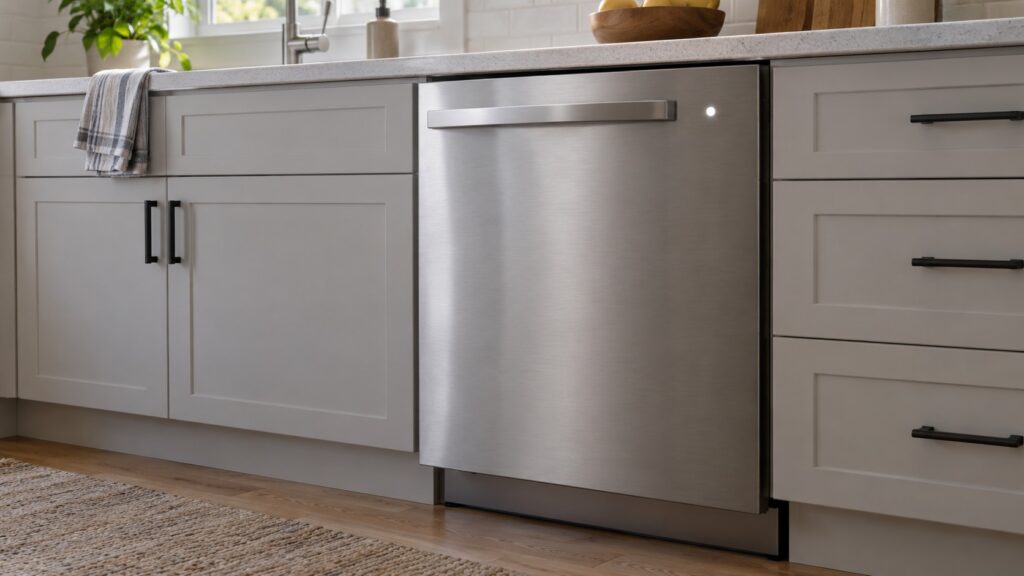
The Bosch dishwasher sanitize option raises the final rinse temperature so the load finishes hotter than a normal cycle, and Bosch describes it as eliminating 99.9% of bacteria. According to our cycles guide it adds about ten minutes to the run time and is NSF-certified on most Bosch models. It is a modifier you add to a cycle, not a cycle of its own, and it earns its place for things like cutting boards, plastic food containers and items that touched raw meat. These tips explain how to use it, what to load, and what it does not do.
What does the Bosch dishwasher sanitize option do?
Sanitize makes the last rinse hotter. Our guide to Bosch dishwasher cycles and settings lists it among the modifier settings: it raises the final rinse temperature to eliminate 99.9% of bacteria, adds about ten minutes to the cycle, and is NSF-certified on most Bosch models. The model page for the 100 Series SHE4AEM6N says the same in short form, listing the Sanitize option next to ExtraDry. Not every Bosch model has it, and some name it differently, so look for it on the control panel or in the manual of your exact model.
A hotter final rinse also means the dishes come out hotter, so wait before unloading and handle plastic and glass with care. The extra heat helps drying too, a secondary benefit that is easy to notice with plastic containers, which are normally the hardest items to dry.
When is it worth using Sanitize?
Save it for loads where hygiene matters more than the extra minutes: cutting boards, plastic food storage containers, sponges that your manual says are dishwasher-safe, pet bowls, and kitchen tools that touched raw meat or eggs. For everyday plates and cups, the Auto cycle is usually enough, and our cycles guide suggests using Auto for most loads because it adapts to the soil.
Use it as a spot tool and not a habit. A hotter rinse uses more energy, and some items do not tolerate it. Check care labels on plastics, wood and bonded handles. If you are unsure, leave the item out and hand-wash it.
A few things should never go in with a sanitize rinse: items your manual says to hand-wash, thin plastics that warp, knives with wooden handles and anything with a glued or bonded part. If you are not sure whether a container is dishwasher-safe, look for the symbol on its base. Put plastic on the top rack, and let the load cool a few minutes before unloading so hot condensate on the lids does not spill onto you.
It also helps to think about the kitchen as a whole. A sanitize option does little if the sponge, the sink and the towel that touch the dishes afterward are dirty, so dry items with a clean towel or let them air dry.
Can you sanitize baby bottles in a Bosch dishwasher?
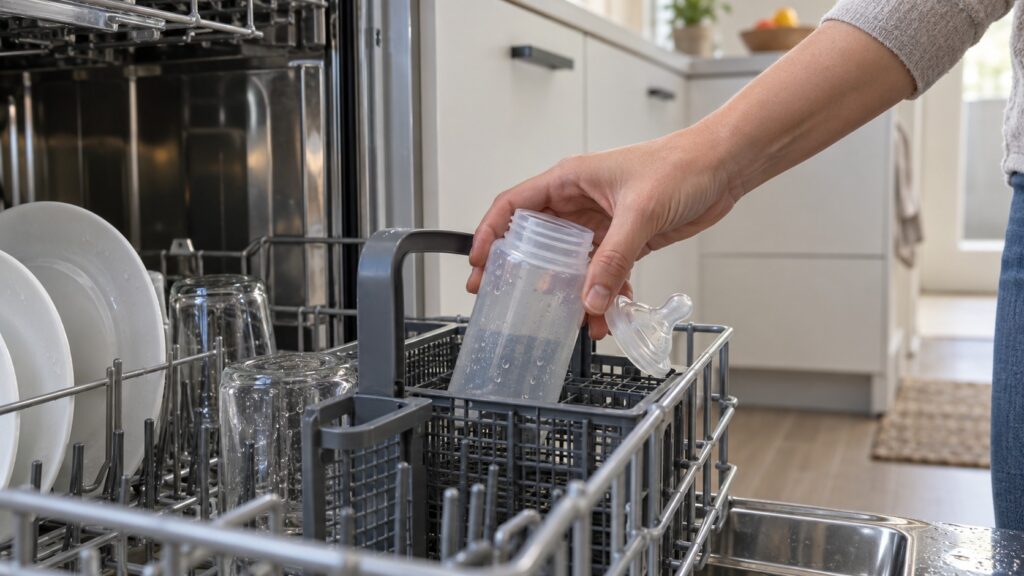
Many parents run bottles and nipples through the dishwasher, and a sanitize option is attractive for that. Be careful with the claim, though. A sanitize rinse reduces bacteria on dishes. It is not the same as sterilizing, and our pages make no promise about baby gear. Follow the bottle maker’s care instructions, take the bottles apart, and place small parts in a closed basket so they do not fall into the filter area. For guidance on infant feeding hygiene in your situation, ask your pediatrician.
Two practical points: put bottles upside down on the top rack so water drains out, and keep nipples and rings in a small basket. After the cycle, let everything cool and air dry before assembly, and clean the filter regularly so food does not bake onto the surfaces. Our filter cleaning guide shows how.
How do you get the best result from a sanitize cycle?
Sanitizing only works well on clean, properly loaded dishes. Scrape large food into the trash and check your manual on whether pre-rinsing is needed. Face the dirty side toward the center spray, keep items from nesting, and keep the spray arms free to rotate. Our dishwasher loading mistakes guide covers the common errors. Use detergent and rinse aid as the manual says, and keep the rinse aid dispenser topped up, which our rinse aid guide explains.
Do not open the door in the middle of a sanitize cycle, because the hot water and steam can scald you.
What if sanitize does not seem to work?
If the cycle ends with cold dishes, a flashing code or wet loads even after the hot rinse, check the basics before blaming the option. A closed hot water valve, a clogged filter or a heater problem can stop the water from reaching a high temperature. Our guide on Bosch dishwasher heating problems explains that Bosch uses a flow-through heater and condensation drying, so there is no exposed coil to inspect. Do not take off the kick plate or touch wiring yourself. Switch the breaker off from a dry spot and call a technician if you see leaks near electrical parts.
We are an independent repair company, not the manufacturer. Our Bosch dishwasher repair page explains how a visit works, and you can schedule a visit online.