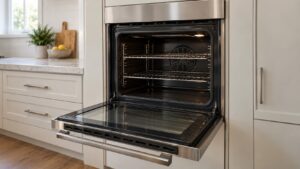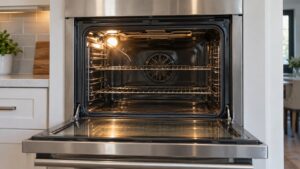
Unusual Bosch oven noises can be alarming, but not every sound indicates a problem. Bosch ovens contain fans, relays, heating elements, and metal panels that all produce sounds during normal operation. This guide categorizes six common noise types, explains what causes each one, and tells you exactly when a noise means you should stop using the oven.
Bosch oven noises: clicking and ticking — usually normal
A clicking or ticking sound during preheating and throughout the baking cycle is the oven thermostat relay cycling the heating element on and off to maintain the set temperature. The relay clicks when it sends power to the element and clicks again when it cuts power. This cycling happens every few minutes and is completely normal. You may also hear clicking from the gas igniter on gas models as it sparks to light the burner. If the clicking continues without the burner igniting, the igniter may be weak and unable to open the gas valve. See our oven error code guide for ignition error codes.
Humming and whirring — usually normal
A steady hum or whir during and after oven use is the cooling fan. Every Bosch oven has a cooling fan separate from the convection fan. The cooling fan prevents the control panel, surrounding cabinetry, and countertops from overheating. It activates when the oven cavity reaches a certain temperature and continues running after you turn the oven off until the temperature drops below approximately 150 degrees Fahrenheit. After a self-clean cycle, the cooling fan may run for 60 to 90 minutes. This is engineered behavior, not a problem.
On convection models, the convection fan behind the rear panel produces a noticeable whirring during convection cycles. This fan circulates hot air for even cooking. If the whirring becomes intermittent, louder, or includes a scraping sound, the fan motor bearings may be wearing and the motor should be inspected.
Rattling — check for loose items
Rattling during operation is almost always caused by something loose inside the oven cavity. Check for a broiler pan stored in the bottom drawer or on the oven floor, racks that are not fully seated in their tracks, or a thermometer or utensil left inside. Remove all items and test again. If the rattling persists with an empty oven, a heat shield or interior panel may have come loose. Open the oven after it cools and check that all panels are secure. On Bosch wall ovens, the mounting screws can loosen over time, causing the entire unit to vibrate against the cabinet.
Booming or popping — thermal expansion
A single boom or pop when the oven first heats up or when it cools down is thermal expansion. Metal panels inside the oven expand as they heat and contract as they cool, producing a popping sound. This is common in all ovens and is not a defect. If the sound is extremely loud or occurs repeatedly, a panel may be warped. This does not affect cooking performance but can be addressed by a technician if the noise is bothersome.
Grinding or screeching — stop using the oven
A grinding, screeching, or high-pitched squeal during operation is a serious warning sign. This typically indicates a failing fan motor with worn bearings. The convection fan motor or cooling fan motor has bearings that can deteriorate over time, especially if the oven is used frequently at high temperatures or runs self-clean cycles regularly. A motor with failed bearings can overheat, seize, and potentially cause an electrical problem.
If you hear grinding or screeching, turn off the oven immediately and do not use it until the fan motor is inspected and replaced. Continued use risks motor seizure, which can damage the wiring and the control board. Replacement fan motors for Bosch ovens range from $70 to $150 depending on the model. Installation requires accessing the rear panel of the oven cavity.
Clunking or knocking — door lock mechanism
On Bosch ovens with a self-clean cycle, a clunking or knocking sound at the beginning and end of the self-clean cycle is the automatic door lock engaging and disengaging. The lock mechanism uses a motor to slide a latch into position, and the mechanical action produces a distinct clunk. This is normal. If the clunking occurs outside of the self-clean cycle, the lock motor may be malfunctioning. Consult the Bosch support page at bosch-home.com for self-clean lock troubleshooting steps specific to your model.
When to call a technician
Clicking, humming, thermal popping, and door lock clunking are normal operating sounds. Rattling usually resolves by securing loose items. But grinding or screeching requires immediate professional attention because a failing fan motor can escalate to an electrical problem. Schedule Bosch oven repair for fan motor diagnosis and replacement.