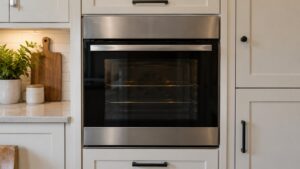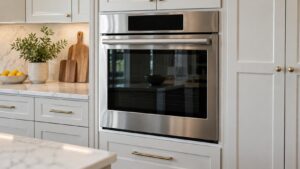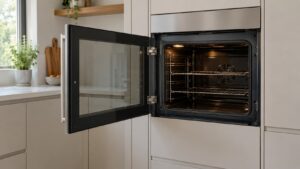
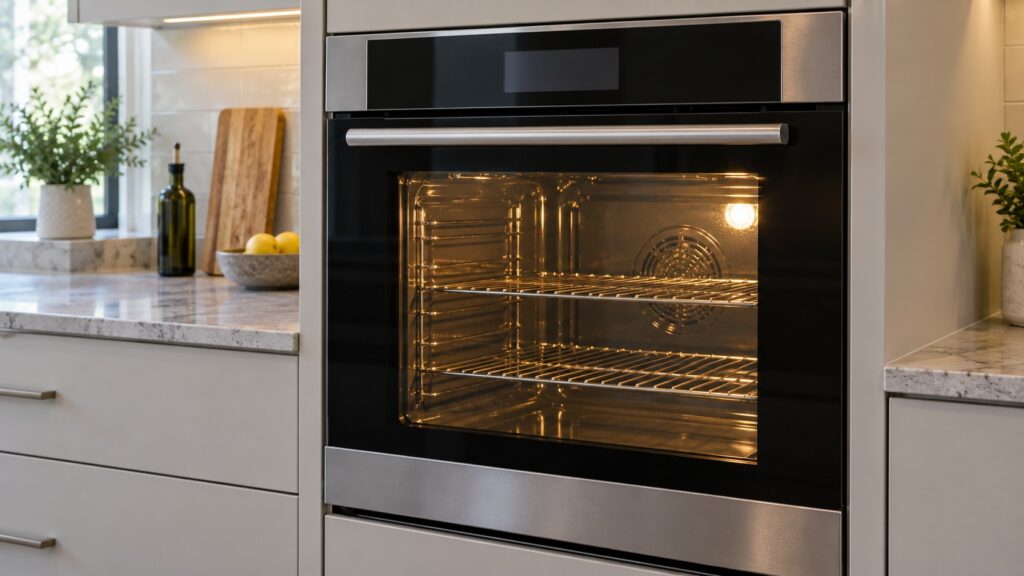
Bosch oven symbols are small pictures that stand for a heating mode: which elements are on, whether the fan runs, and whether the heat comes from above, below or both. Many Bosch wall ovens show the mode as a symbol or a short word on the control panel, and the exact picture set differs by model and series. This glossary explains the common symbol families in plain words, shows how they map to the mode names on our model pages, and tells you where to look for the one definitive source: the symbol page in your owner’s manual.
What do the symbols on a Bosch oven mean?
Oven makers share a loose visual language. A square or rectangle stands for the oven cavity, a thick line at the top stands for the top element, a thick line at the bottom stands for the bottom element, and a small fan stands for the circulation fan. Combining those pieces gives you the mode. That is why a picture of a box with lines at the top and bottom is generally read as a conventional bake, and a picture with a fan added reads as a convection mode.
Because Bosch builds several series, the way modes appear changes. Our model pages show the pattern: the HBL3551UC is listed with 8 cooking modes (bake, broil, convection bake, convection broil, roast, pizza, warm and self-clean), the HBL8443UC with 11 modes on a color touch display, including pizza, bread proofing and dehydrate, and the Benchmark HBLP451LUC with 14. A higher count means more specialized modes, and on a touch display the mode often appears as a name and a picture together. Check your own model page, such as HBL3551UC or HBL8443UC, to see how many modes your series offers. What each mode does on your exact model is described in the owner’s manual; this glossary only gives the general reading.
What is the difference between bake, convection bake and European convection?
In a plain bake mode, the heat comes from the elements and the air barely moves. In a convection mode, a fan circulates the air so that heat reaches the food from every side. Bosch ovens with European convection place a heating element around the fan, so the air is heated right where it moves. Our guide on how a Bosch convection oven works explains the parts and when to choose each mode, and it notes the common habit of lowering a recipe temperature by about 25 degrees Fahrenheit when you switch to convection. Always follow your recipe and your manual when you pick a mode.
So when you see a fan symbol, you can expect moving air, a fan hum while it runs and faster browning. When you see the plain bake picture, expect gentler, still-air heat, which suits cakes and breads that need to rise without being blown around.
What do the broil, roast and pizza symbols mean?
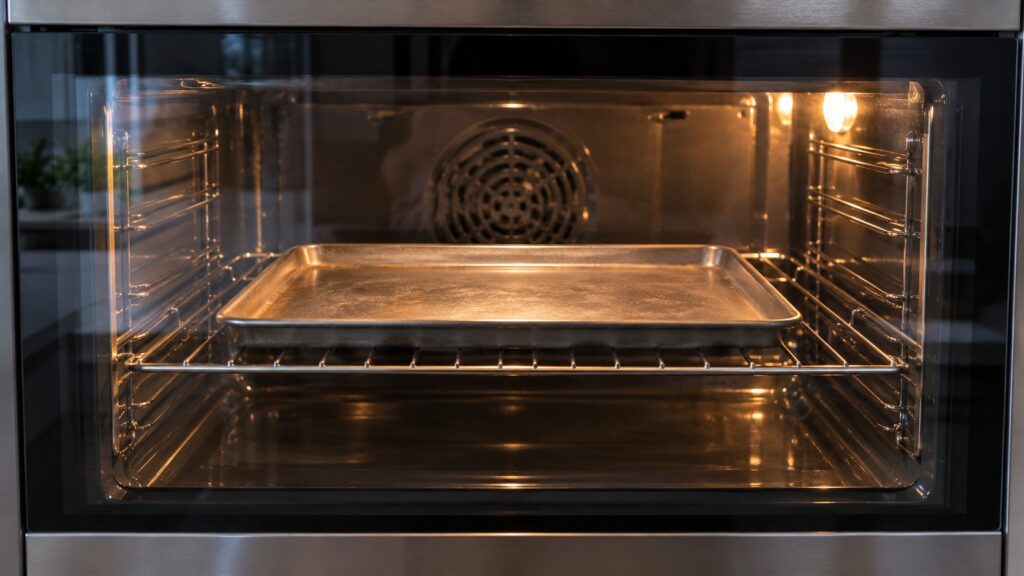
A broil symbol points to the top element, which gives strong radiant heat from above. It suits browning, melting and finishing, and it works best when you keep an eye on the food. A convection broil or convection roast symbol adds the fan, and our Bosch oven hidden features guide describes convection roast as the fan combined with the broil element for a crisp outside on larger cuts of meat. The roast mode listed for the HBL3551UC is the one to read about in your manual if you cook whole birds or joints.
A pizza mode is listed on several of the models above. It is a program built for pizza and similar bakes, and which elements and fan it uses depends on the model, so we do not describe the heat pattern here. The manual for your oven explains it, and a recipe card that names the mode is the best guide. The same applies to proofing and dehydrate on the 11 and 14 mode ovens: they are specialized low-heat modes, and the model’s instructions say how to use them and which accessories they need.
What other symbols appear next to the heating modes?
Beyond heating, control panels use a few other pictures. A clock or bell relates to the timer, cook time or delayed start. A key or padlock relates to a control lock that stops buttons from being pressed by accident. A thermometer or probe picture relates to a meat probe on models that include one. A wireless symbol relates to Home Connect on models that have it, such as the HBL8454UC. A lock on the oven door usually shows that the door lock is engaged during a self-clean. Treat these as typical meanings and verify them in the manual, since pictures are not standardized across every model.
If a symbol disappears, flashes or the panel stops responding to touch, that is a different problem from reading a symbol. A panel that ignores your input can point to a keypad fault, and our page for oven F43 explains that code family. Do not take the control panel off yourself. Behind it are the board and wiring, and that work belongs to a technician.
How do you check what a symbol means on your own oven?
Start with the model number on your oven; the owner’s manual shows where the rating plate is. Then open the owner’s manual to the chapter about operating modes, which normally shows each symbol next to its name and purpose. If you no longer have the paper manual, use the model number to find the digital copy. Our site does not publish manuals, so we do not link to one, but the model number is what you need to find the right one.
If an oven does not heat the way the symbol suggests, for instance a bake that does not warm the cavity or a convection mode with no fan sound, read Bosch oven heating problems. If the temperature itself seems off, the temperature calibration guide is the next stop. For a hot oven, never reach inside to inspect the elements; let it cool fully first.
When should you call a technician?
Call when a mode symbol is lit but the oven does not heat in the way it describes, when the panel behaves strangely or shows a code that returns, or when the fan makes grinding noises. We are an independent repair company, not the manufacturer. Our Bosch oven repair page explains what a visit covers, and you can schedule a visit online. If you smell burning or see sparks, switch the breaker off at the panel while standing on a dry floor and leave the oven off.