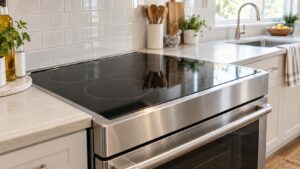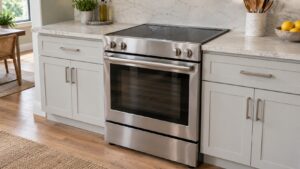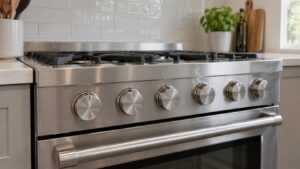
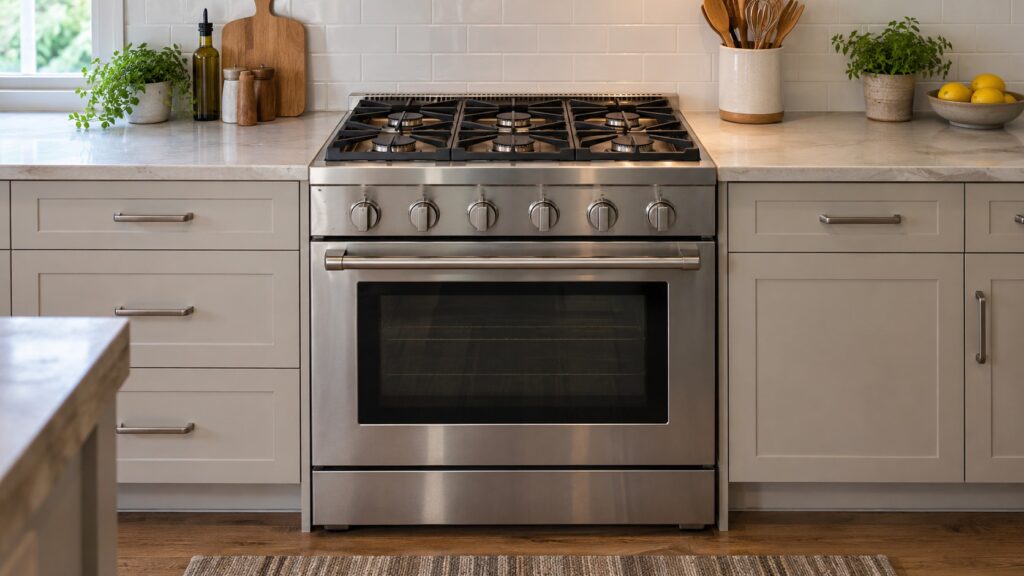
Bosch gas range propane conversion is a job for a qualified technician with the correct orifice kit for your model, because a gas range runs on propane only if it has been set up for propane. It is not a setting on the display and not a job for the owner. Our freestanding range installation guide says the same thing in one line: natural gas or propane is decided at order time, and conversion needs the correct orifice kit and a qualified technician. This guide explains what to know before you ask for one, and what you should never try yourself.
Can you convert a Bosch gas range to propane yourself?
No. A gas range burns the fuel it was built and set up for, and moving from natural gas to propane changes the part that meters gas to each burner. Our installation guide calls it an orifice kit job for a qualified technician. The gas side of an appliance is regulated work, and a mistake there is not a cosmetic problem; it can leak gas or produce a poor, unsafe flame.
That is why we do not publish a step list. The exact kit, the burner list and the order of work depend on the model, and the owner’s manual or the conversion kit instructions for your range are the only correct source. If a video or forum post gives you a procedure, treat it as general background and do not use it on your range.
Which Bosch gas ranges does this apply to?
Our model pages list several gas ranges. The HGS5053UC is a 500 Series 30-inch gas slide-in with five sealed burners and a 16,000 BTU maximum. The HGS8655UC is an 800 Series 36-inch gas slide-in with six sealed burners and an 18,000 BTU maximum, and the HSG8655UC is a 36-inch freestanding model with the same burner count. The 30-inch 800 Series gas slide-ins, the HGI8046UC, HGI8054UC and HGI8056UC, are listed with five sealed burners.
Our pages do not say which of these were sold set for natural gas or for propane, or which kit fits which model. Do not assume that a model number alone tells you the fuel. Your range’s rating plate and manual do.
What should you decide before the range arrives?
The cheapest conversion is the one you do not need. Before you order, find out what your home supplies: a gas line from a utility is normally natural gas, while a tank outside the house is propane. If you are not sure, ask the gas company or the person who installed the line. Then tell the seller which fuel you have and ask them to confirm that the range is set for it.
If you are moving a range from one home to another, or a house switches fuel, plan the conversion before the range is connected. Our Bosch range installation guide covers the rest of the preparation: the opening, the shutoff valve that can be reached without pulling the range out, a flexible connector that is not reused, an anti-tip bracket and leveling.
What does the technician do, and what should you expect?
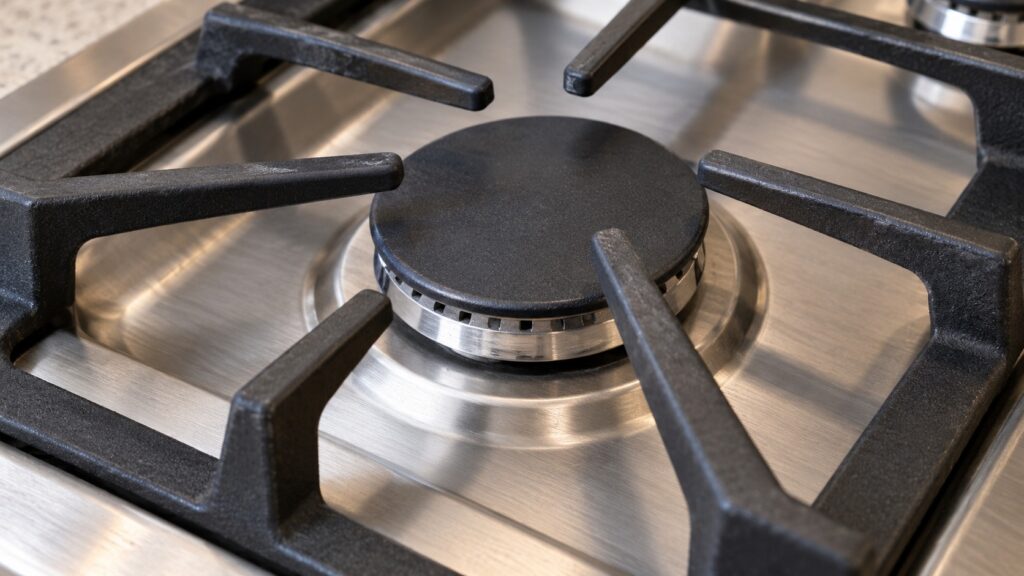
You should expect three things. The technician identifies the range by its model number and confirms the fuel the house supplies. They fit the correct kit for that model, following the instructions with it. Then they check the work at commissioning. Our installation guide says a gas leak check belongs at commissioning, done by the installer and never with a flame, and that every burner should light within a couple of seconds from cold with a stable blue flame that holds a low simmer. Those checks are the technician’s, not yours.
You can help by clearing space around the range, having the manual and the model number ready. Ask for the work and the checks to be written on the invoice.
What if you smell gas or a burner will not light?
If you smell gas at any point, do not turn anything on or off, do not use a lighter or a match and do not try to find the leak. Leave the house, then call the gas utility or 911 from outside. Do not go back in until you are told it is safe. We do not recommend any leak test by the owner, including soapy water.
If there is no smell but a burner will not light or lights unevenly, read our Bosch range burner not igniting guide for the quick checks, such as whether the burner cap is seated properly. Stop at those. The same guide says gas valves and gas lines are regulated components and should be left to a qualified technician. The Bosch error code database lists codes such as E011, an ignition failure on a surface burner, and E013, a gas valve problem on the oven burner; see the error code database for the wording on our pages.
Can we convert your range?
We are an independent repair company, not the manufacturer and not a gas utility. For gas supply work, use a licensed plumber or gas fitter. If your range was already installed and something is not right afterwards, Bosch range repair starts with a diagnostic visit, and we confirm the estimate before any work begins. Ask when you book whether the work you need is something a technician can do at your home, because gas work has local licensing rules that vary by state.