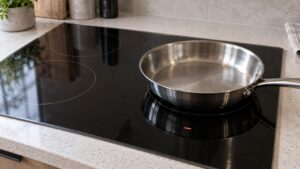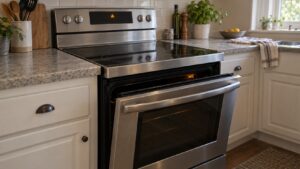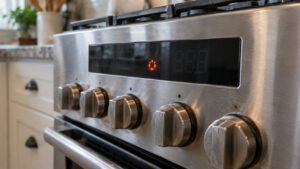
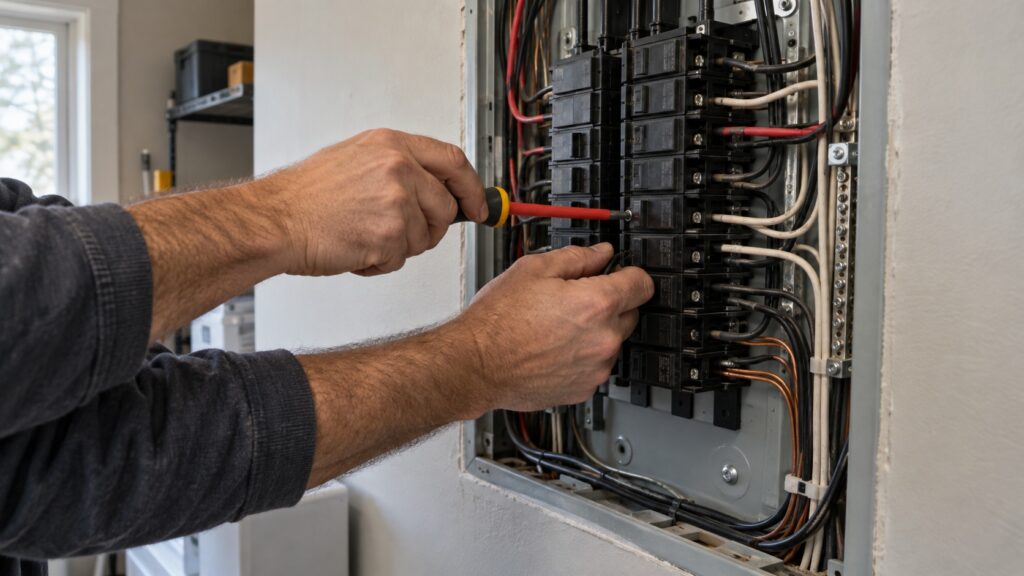
Bosch induction range circuit requirements come down to one dedicated 240-volt line sized to the nameplate, because an induction range draws far more power than a standard 120-volt outlet can deliver and cannot be plugged into one at all. Getting that circuit wrong before delivery day is the single most common reason an induction range installation gets delayed.
Why does an induction range need its own 240-volt circuit?
An induction range generates heat electromagnetically, directly in the cookware, and driving that induction process across multiple cooking zones simultaneously takes considerably more current than a standard household outlet is built to supply. A 120-volt outlet is designed for small appliances and lighting loads; an induction range’s cooking elements, control electronics and often a built-in oven cavity together demand a 240-volt supply on a circuit sized specifically for that one appliance. There is no adapter or workaround that lets an induction range run safely on a 120-volt circuit — the range simply will not operate as intended, and forcing the attempt risks the circuit, not just the appliance.
This is different from some gas ranges, which may only need a 120-volt outlet for igniters and electronics. An induction range has no gas burner to fall back on, so the entire cooking function rides on that 240-volt supply.
What amperage breaker does a Bosch induction range need?
Large induction ranges commonly call for a 40 or 50 amp breaker, but that number is not universal across every model, and it is not the number to plan around until you have confirmed it. The nameplate on the range — usually inside the storage drawer or on the back panel — states the exact amperage and voltage the manufacturer specifies for that specific model. A range built with a larger built-in oven or additional cooking zones can call for a higher rating than a compact model, and installing a range on a breaker sized below its nameplate requirement is not a minor mismatch; it can trip repeatedly under normal cooking loads or, worse, overheat the circuit.
Because this number varies by model, treat any figure you read online — including the range given above — as a starting expectation to verify, not a substitute for reading the actual nameplate of the unit you are installing.
What kind of outlet or receptacle does it need?
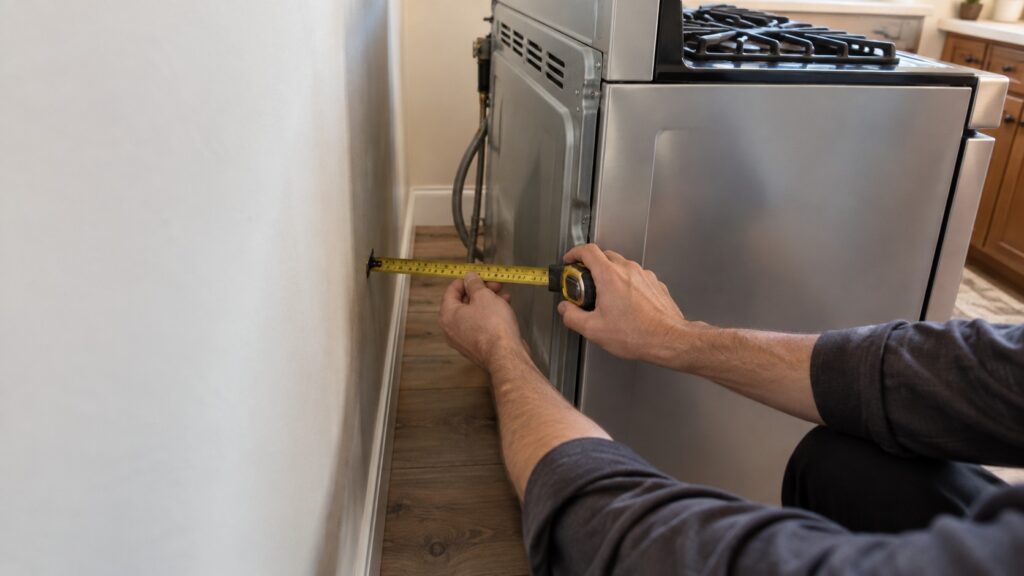
Most induction ranges connect through a NEMA-rated range receptacle matched to the circuit’s amperage, plugged into a compatible range cord, though some installations hardwire the range directly to a junction box instead of using a plug-and-cord connection — check which your specific model expects before the circuit is finished, since the receptacle type has to match. A licensed electrician will confirm which receptacle configuration the local code and the range’s nameplate call for; this is not a detail worth guessing at, since an incorrectly rated receptacle can be a fire hazard as well as simply the wrong physical fit for the cord.
If the range is replacing a gas range that used only a 120-volt outlet for its electronics, expect that the existing wiring will need to be replaced entirely, not just the receptacle swapped — a 120-volt circuit’s wire gauge is not rated for the amperage a 240-volt induction circuit carries, regardless of what plug gets attached to the end of it.
What else does the electrical side of an induction install involve?
Beyond the circuit itself, confirm the panel has an available slot for a double-pole breaker of the correct amperage, and that the panel’s overall capacity has room for the added load — an older panel already near its rated capacity may need an electrician to assess before adding a large new circuit. Also confirm the run from the panel to the range location uses wire gauge rated for the amperage in question; undersized wire on an otherwise correct breaker is a hazard the breaker will not necessarily catch immediately.
An anti-tip bracket is also required on any freestanding range installation, induction or otherwise, but that is a structural requirement rather than an electrical one — our freestanding range installation guide covers the anti-tip bracket, the opening size and leveling in full, so this guide does not repeat that ground.
What happens if the circuit is wrong when the range is delivered?
A range that shows up to an outlet it cannot use does not just sit unplugged — most delivery teams will decline to leave a large appliance connected to a circuit that does not match its nameplate, and in some cases will decline to leave it in the intended location at all until the electrical work is corrected. That typically means rescheduling delivery, which for a range that has to be craned, delivered on a truck route, or coordinated with a kitchen renovation timeline can mean a delay of days or weeks rather than a same-day fix. It is a far smaller inconvenience to confirm the circuit against the nameplate a week ahead of delivery than to discover the mismatch with the range already on the loading dock.
If you are replacing an existing induction or electric range with a new one, do not assume the existing circuit is automatically adequate just because the old range also ran on 240 volts. Amperage requirements have crept upward across some newer, larger induction ranges as manufacturers add cooking zones and more powerful elements, and an older circuit sized for a smaller or simpler range from a decade ago may fall short of what a new, larger unit’s nameplate calls for.
Should you hire an electrician for this, or can it wait until delivery day?
Plan and complete the electrical work well before the range arrives, not on delivery day. A delivery crew is generally not equipped or licensed to run a new circuit, and discovering on delivery day that the existing outlet is 120 volts or that the breaker is undersized means the range gets set aside until the wiring catches up. A licensed electrician confirming the nameplate amperage against the panel and running or verifying the circuit in advance is the difference between an install that goes smoothly and one that stalls with a range sitting in a box in the kitchen.
We are an independent repair company, not a factory service arm, so we are glad to answer nameplate and circuit questions before your installation even if the eventual work is done by your electrician. If the range is already in and something in the induction cooktop is not heating correctly, our induction zone not heating guide is the next step, and Bosch range repair covers diagnosis once the range is powered and running. You can schedule a visit for either.