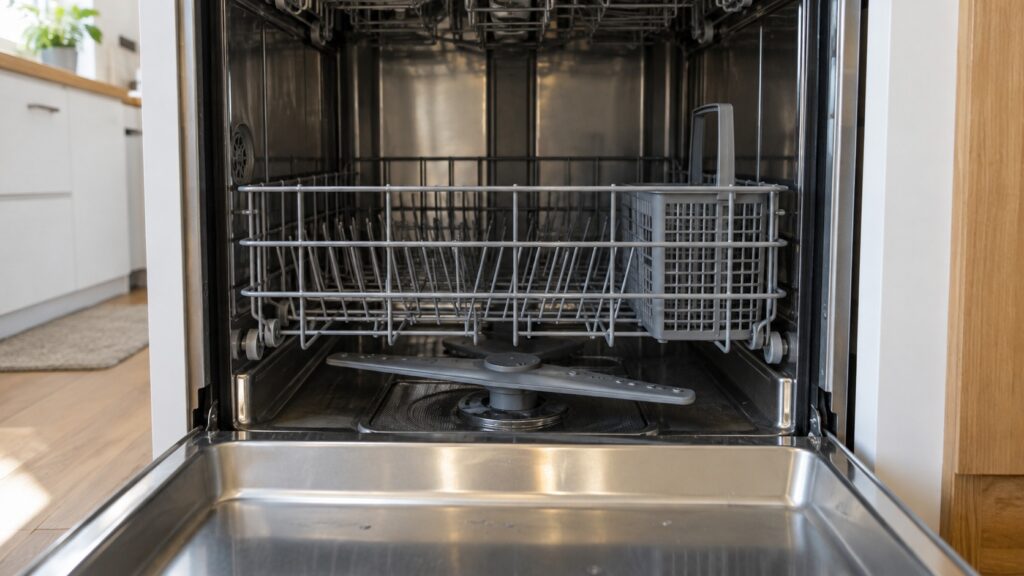
Bosch PrecisionWash is a targeted spray-arm system built to aim more of a dishwasher’s water pressure at the parts of a load that are actually dirty, rather than spreading the same spray pattern evenly across every rack position. It is a real, named piece of Bosch engineering, not a marketing label for the standard spray arms every dishwasher ships with, and understanding what it changes helps explain why some cycles clean better than others on the same load.
What is Bosch PrecisionWash?
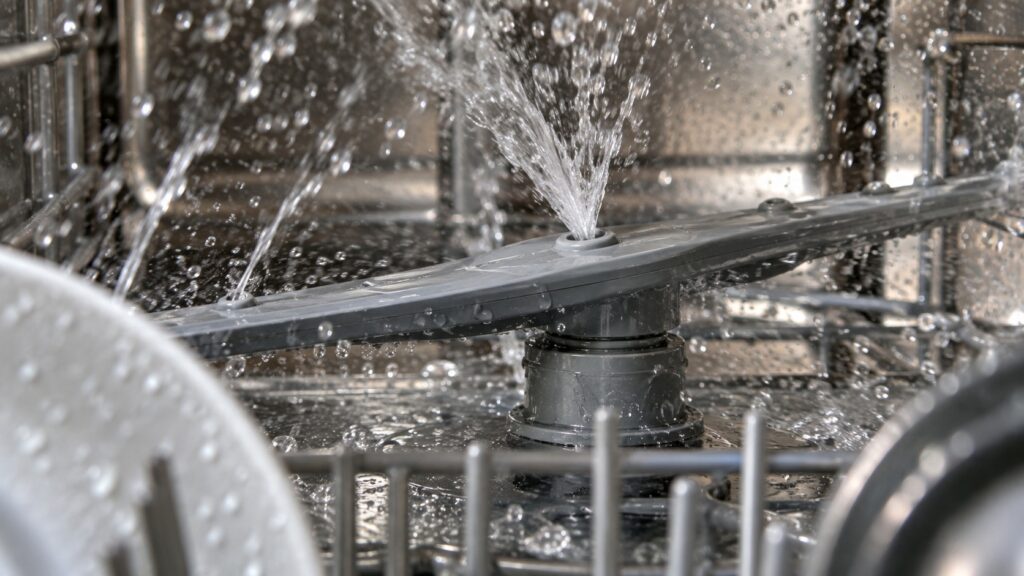
PrecisionWash describes a generation of Bosch spray arm and nozzle design that concentrates water pressure on the zones of a dishwasher tub that ordinarily carry the heaviest, most stubborn soil — the areas a standard, evenly rotating spray arm has to treat the same as everything else. Instead of one spray intensity spread across the whole rack, the nozzles are shaped and angled so that more of the available pressure lands where it is most useful, then less-demanding zones get comparatively lighter coverage.
The name refers specifically to this spray-arm and nozzle engineering. It is not a cycle name you select on the control panel, and it is not the same thing as the detergent dispenser or the rinse-aid system — those are separate parts of the wash process that PrecisionWash does not touch.
How is PrecisionWash different from a standard spray arm?
A standard dishwasher spray arm rotates and distributes water roughly evenly as it turns, on the reasoning that a full rotation eventually covers every dish equally. That works well for a lightly soiled, evenly loaded rack, but it treats a baking dish with dried-on residue the same as a barely used glass sitting next to it. PrecisionWash’s nozzle geometry instead varies the spray intensity by position, aiming a stronger, more concentrated stream at zones that statistically need it — closer to where larger, more heavily soiled items tend to sit on a typical load.
The practical difference shows up most on mixed loads: pots, baking sheets and heavily used plates loaded alongside glasses and lightly soiled items. A standard arm has to compromise between cleaning the heavy soil and not blasting the delicate items too hard; a PrecisionWash system is engineered to manage more of that difference within a single cycle.
Does PrecisionWash change which cycle to choose?
It changes what a given cycle is capable of, more than it changes which cycle button to press. A PrecisionWash-equipped dishwasher can generally handle a heavier mixed load on a normal cycle where an older or simpler machine would need a dedicated heavy-duty cycle to get the same result on the worst items. That said, PrecisionWash is not a substitute for basic loading sense: items still need to face the spray arms rather than nest inside one another, and a rack overloaded to the point that water cannot reach the center will underperform regardless of nozzle design.
Our guide to Bosch dishwasher cycles and settings covers which cycle suits which load, and it is worth reading alongside this glossary entry if you are trying to decide whether a heavier cycle is still worth running on a PrecisionWash machine.
What can go wrong with a PrecisionWash spray arm?
Because PrecisionWash relies on specifically shaped and angled nozzles rather than a simple open arm, a partially clogged nozzle has a bigger effect on cleaning than it would on a basic spray arm — the whole point of the design is that each nozzle is doing a specific job, and a blocked one leaves a gap in coverage rather than just slightly reducing overall pressure. Hard water deposits, small food particles and detergent residue are the usual culprits, and they tend to show up as a consistent dirty patch in the same part of the rack, load after load, rather than a random miss.
Checking and clearing the spray arm nozzles is routine maintenance rather than a repair, and our dishwasher spray-arm maintenance guide walks through removing the arms and clearing the nozzles safely. If cleaning the nozzles does not resolve a consistent dirty patch, the issue is more likely water pressure reaching the arm at all — worth checking against our inadequate water filling guide.
Is PrecisionWash worth paying attention to when buying a dishwasher?
If a household regularly runs mixed loads with genuinely dirty cookware alongside everyday dishes, PrecisionWash is one of the features worth checking for specifically, since it targets exactly that scenario. If most loads are lightly soiled glasses and everyday plates, the difference is smaller day to day, though it still means less pre-rinsing on the occasional heavy load. It is not something you set or adjust — it is part of the dishwasher’s built-in spray hardware, so the value is decided at purchase, not at the control panel.
It is also worth noting that PrecisionWash is a feature of the spray system, not a stand-alone selling point that appears the same way on every model. Different Bosch series pair it with different rack and filtration hardware, so two dishwashers that both list PrecisionWash can still clean somewhat differently overall depending on what else is built into that particular tier. Reading the full feature list for a specific model, rather than a single named technology, is the more reliable way to compare two units under consideration.
Does PrecisionWash affect cycle time or noise?
Directing more pressure at specific zones does not inherently make a cycle longer or shorter — cycle length on a Bosch dishwasher is set by the cycle selected, the soil-sensing feedback the machine reads during the wash, and the drying method at the end, not by which spray-arm generation is installed. Where PrecisionWash does help indirectly is by reducing how often a heavier, longer cycle is actually needed for a given load, since a normal cycle can handle soil that would otherwise call for an extended one.
Noise is a separate consideration, and a more targeted, higher-pressure spray can be marginally more audible at the moment it concentrates flow on a specific zone than a spray that spreads pressure evenly. In practice this difference is small next to the overall noise level of the pump and the motor, and it is not something most owners notice as distinct from the dishwasher’s normal running sound.
We are an independent repair company, not a factory service arm. Bosch dishwasher repair covers spray-arm and nozzle issues along with the rest of the wash system, and you can schedule a visit if a persistent dirty spot does not clear with routine cleaning. Our dishwasher series comparison is a good next read if you are comparing which Bosch tier includes PrecisionWash and which uses a simpler spray system.