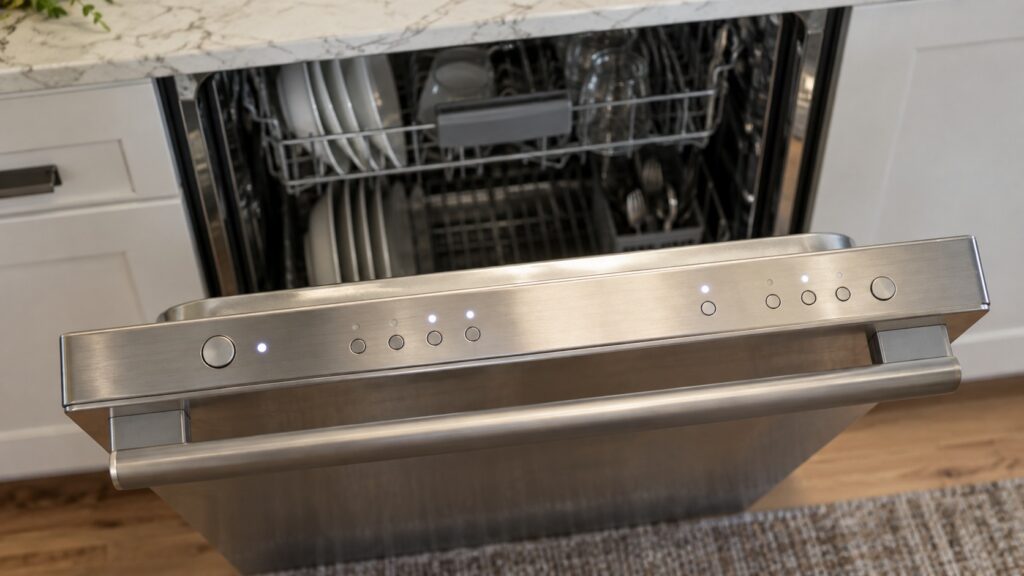
Bosch dishwasher error codes are not a flat list of unrelated numbers. They are organized into families, and the first digit after the E tells you which system the machine is complaining about. Once you can read that structure, a code you have never seen before still tells you roughly where to look — and, just as usefully, which codes are worth trying to clear yourself and which are not.
What Bosch dishwasher error codes are actually describing
Every code names a condition the machine detected, not a part that has failed. That distinction explains most of the frustration people have with them. E24 does not mean “the drain pump is broken”; it means water did not leave within the time the program allowed. A sock in the pump, a blocked filter, a kinked hose and a genuinely failed pump all produce the same number.
The practical consequence is that the code tells you which half hour of checking is worth doing, and nothing more. Start with the cheap, reversible causes in that system before assuming a component. Our archive of Bosch dishwasher error codes covers each one individually.
The three you will actually meet
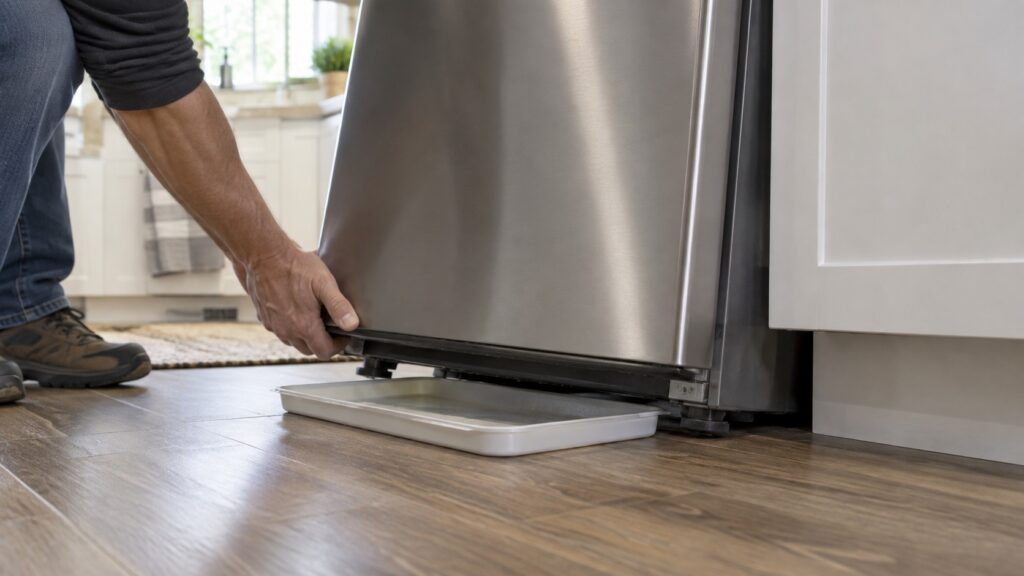
E15 is the drip tray float. Water has collected in the base of the machine and lifted a float, which shuts the fill valve and starts the drain pump. The machine is protecting your floor. It is often not a leak in the usual sense — an overfill, a detergent foam-over, or a rinse aid spill can trip it. Tilting the machine back gently to drain the tray clears it; if it returns within a cycle or two, something is genuinely leaking and that is a service visit.
E24 is drainage. The filter stack at the bottom lifts out by hand, the drain pump impeller sits beneath a cover in the same well, and the hose run to the disposer or air gap is where the rest of the blockages live. A disposer installed without its knockout plug removed is a classic, and it produces E24 on a brand new machine.
E92 is configuration and communication between the control board and the user interface. It comes in variants — E92-10, E92-20, E92-40 — and they mean genuinely different things. We keep a page for each: E92, E92-10, E92-20 and E92-40.
What to do before looking anything up
- Write the code down exactly. The suffix matters. E92-10 and E92-40 are different faults on different parts.
- Cut the power for two minutes. Many codes are latched and clear on restart. A code that returns immediately is reporting a live condition.
- Look in the tub. Standing water points at the E2x family whatever number is showing. A dry tub with a fill complaint points at E1x.
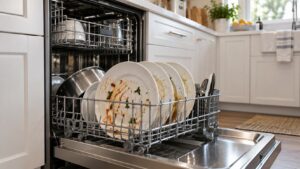
- Clean the filter. It costs five minutes and resolves a surprising share of drainage and cleaning complaints on its own.
Stop before the door lock assembly, the heater, or anything behind the side panels. Those sit against mains wiring and, on a fully integrated machine, behind a cabinet front that has to come off first.
Why the same code appears on very different machines
Bosch builds dishwashers across a wide range of trim levels on a small number of platforms, so the same fault numbering runs from an entry machine to a top-of-the-line one. What changes between them is how the code is shown: an entry machine may blink a program light a set number of times, a mid-range machine shows the code on a small display, and a fully integrated machine hides the display inside the door so nothing is visible until you open it.
That matters when you are looking something up. A “flashing light” description and an “E24” description can be the same fault, and a machine with no visible display is not a machine without codes. If your model has no display, count the flashes of the program indicator and check that count against the code list rather than assuming there is nothing to read.
Codes that are not really faults
Two situations produce a code on a machine that is working correctly. The first is a new installation: a drain hose that was never looped high enough, a disposer knockout left in, or a supply valve only partly open will all raise a code on the first few cycles. Our installation requirements guide covers the connections that cause this.
The second is detergent. Too much, or the wrong kind for a machine that also has rinse aid, produces foam that behaves like a leak and trips the protection system. If a code appeared the week you changed detergent, change back before diagnosing anything — and our guide to cycles and settings covers the dosing side.
What a code does not tell you
Three limits are worth knowing before you spend an evening on a diagnosis. A code records the condition, not its cause, so a sock in the pump and a failed pump motor share a number. A code can be stale: some machines latch the first fault they see and keep showing it after a later, unrelated problem appears, so a machine left with a code on the display for weeks may be describing something that was fixed long ago. And a code says nothing about severity — E15, one of the most alarming-looking, is usually the cheapest thing on this page to resolve.
Treat the number as a direction, confirm it against what the machine is actually doing, and only then decide whether a part is involved.
When the code is telling you to call
A code that returns immediately after a power cycle, a code that appears with water on the floor, and any code in the E0x or E9x families are the ones to hand over. Those are boards, sensors and the Aqua-Stop system rather than filters and hoses. The same is true of any code that comes back after you have cleared the obvious cause twice — the machine is telling you the condition is real.
We are an independent repair company, not a factory service arm. Pricing starts from a diagnostic visit and we confirm the estimate before any work begins. Bosch dishwasher repair covers the fill, drain, heating and control systems, and you can schedule a visit online. If the machine is older, our repair or replace guide is worth reading before you spend anything.