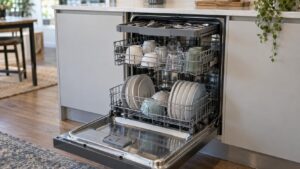
When your Bosch dishwasher water filling is inadequate, dishes come out dirty and cycles run longer than expected. Insufficient water in the wash chamber means the spray arms cannot generate enough pressure to clean effectively. This guide walks through every cause of low water fill, from simple supply issues to faulty components, so you can identify and resolve the problem quickly.
How Bosch dishwasher water filling works
During a normal cycle, the water inlet valve opens and allows water to flow into the tub for a timed interval. A float switch or flow meter monitors the water level and signals the control board when the correct amount has entered. If either the valve, the sensor, or the water supply itself is compromised, the dishwasher will underfill or fail to fill entirely.
Check the water supply first
Before opening any panels, verify the basics. Locate the water shut-off valve under the kitchen sink and confirm it is fully open. A partially closed valve restricts flow and causes slow or incomplete filling. Next, check for kinks in the supply hose running from the valve to the dishwasher. Even a slight kink can reduce flow by 50% or more.
Test water pressure by disconnecting the supply hose from the dishwasher (place a towel and bucket underneath) and briefly opening the valve. Strong, steady flow indicates adequate pressure. Weak flow points to a house-wide plumbing issue or a partially clogged valve. Bosch recommends a minimum of 20 psi water pressure for proper operation. You can verify this with an inexpensive pressure gauge from any hardware store.
Inspect the inlet valve filter screen
The water inlet valve has a small mesh filter screen where the supply hose connects. Over time, sediment, mineral deposits, and debris from your water supply accumulate on this screen and restrict flow. To inspect it, turn off the water supply, disconnect the hose from the valve, and look inside the valve inlet. If the screen is discolored or clogged, clean it gently with an old toothbrush and vinegar. If the screen is damaged or cannot be cleaned, the entire inlet valve should be replaced.
Test the water inlet valve
The inlet valve is an electromechanical component that opens when the control board sends voltage to its solenoid. If the solenoid coil fails, the valve will not open regardless of water pressure. To test the valve, unplug the dishwasher, locate the valve (typically behind the lower kick plate on the left side), and disconnect the wiring harness. Using a multimeter, measure resistance across the solenoid terminals. A healthy Bosch dishwasher inlet valve reads between 500 and 1,500 ohms. A reading outside this range or no continuity at all means the valve needs replacement. This is a common part that costs $30 to $50 and takes about 45 minutes to swap.
Related error codes
Bosch dishwashers display specific error codes related to water filling problems. Error code E17 indicates insufficient water entering the unit, often triggered by low water pressure or a failing inlet valve. E18 signals a fill timeout, meaning the dishwasher waited for water but the tub never reached the required level. E22 points to a clogged filter that may be preventing proper water circulation after filling. If you see E92, this relates to a configuration mismatch that can affect the fill sequence on certain Bosch models.
Float switch and flow meter issues
The float switch sits at the bottom of the dishwasher tub. As water rises, the float lifts and eventually triggers a switch that tells the control board the tub is full. If the float is stuck in the raised position due to debris or food particles lodged underneath it, the board thinks the tub is already full and stops filling prematurely. Remove the lower rack and spray arm, then locate the float assembly. Lift it by hand to check for free movement and clean any debris beneath it.
Some newer Bosch models use an electronic flow meter instead of a mechanical float. The flow meter counts impeller rotations as water passes through. If the impeller is jammed or the sensor fails, the board receives inaccurate fill data. Flow meter diagnosis typically requires a technician with Bosch-specific diagnostic tools.
Reset the dishwasher
After addressing any physical cause, perform a reset to clear stored error codes. Press and hold the Start button for three to five seconds until the display clears, then close the door and start a new cycle. If the dishwasher still will not fill properly, unplug the unit for 60 seconds and plug it back in to perform a full power reset. This clears the control board memory and forces it to reinitialize all sensors. For a complete walkthrough, see the Bosch dishwasher troubleshooting page on bosch-home.com.
When to call a technician
If you have verified adequate water pressure, cleaned or replaced the inlet valve filter, tested the valve solenoid, and confirmed the float switch moves freely but the dishwasher still underfills, the control board may not be sending voltage to the inlet valve. This requires board-level diagnosis with a multimeter while the machine is powered on, which should only be performed by a qualified technician. Schedule Bosch dishwasher repair for same-day diagnosis and resolution.